




经纬度:“全网最低价”为什么必须叫停



保录用、全额奖学金!三星、SK海力士争抢韩国大学“顶尖芯片人才”

Intel’s stock rises as investors hope memory chips can mark the next step in its turnaround
Costco expands Uber Eats delivery partnership to 47 states

Don't trust Lean4 alone
Early this week, Open AI announced that they had resolved the Navier-Stokes problem[1] . A few hours later, at a workshop dinner, a frantic inquiring professor came up to my table: "Does anyone here understand Lean? Can it be wrong? Is the solution of Navier-Stokes necessarily true?". I'm choosing to write my response as an open letter.
Yes, Lean can be wrong. Moreover, Lean should be trusted less specially in the case of difficult problems solved by agent swarms.
The proof of Navier-Stokesis likely correct, but I do not trust it just because of Lean. The additional context surrounding the problem is important. The peer review of Navier-Stokes is not yet complete, despite the Lean proof.
"[False statements being accepted by Lean] is going to keep happening. AIs are really good at exploiting soundness bugs in the kernels" - Leo de Moura, Lean's creator[2].
Epistemic status
I have high confidence that Lean continues to have vulnerabilities which can be exploited by adversarial proofs - I give a 95% chance than in the next 12 months the Lean4 C++ codebase is patched for at least one soundness bug. I am less confident that these soundness bugs will be covertly used by AI agents - I give a 75% chance that in the next year a formalized result of a major theorem will be publicly circulated which later gets retracted due to Lean bug knowingly exploited by the agent which generated it.
How can Lean be wrong?
A timeline of Lean4 bugs
Lean4[3] had its official stable release in 2023. Quickly, people found bugs in the program - cases where Lean4 mistakenly accepted false statements. The design philosophy behind Lean is to be maximally runtime efficient, and the expense of being more logically complex[4]. As such, Lean (and particularly Lean4) is more bug-prone than other formal verifiers.
Motivated by the early bugs, Mario Carneiro launched Lean4Lean[5] , a Lean formalization of the foundations of Lean. This project is ongoing, and the most bug-prone parts of the Lean foundations have yet to be incorporated into the project[6]. The process of developing Lean4Lean has been useful for finding failures of Lean.
In the last few months (summer 2026), there has been a renaissance of Lean bug-finding due to increased AI capabilities. A prominent early bug in this wave was found by Patrick Hulin[7], who's GPT-5.6 Sol was able to find a soundness issue after 3.5h of work on the following prompt :
"i'd like to audit the lean kernel. see if you can find an assumption-free proof of false. your primary task should be reading the source code and docs and building an understanding of how the kernel works to find the seams. treat this like a cybersecurity task." - Patrick Hulin's bug-finding prompt
A few days after Patrick Hulin's result, another Lean soundness bug was found by Ramana Kumar[8] which gained widespread publicity due to the fact that it was not originally released as a soundness bug. Kumar's result was released and circulated under the guise of being a proof of the Collatz conjecture, though at the time of posting Kumar knew it was soundness bug[9].
Shortly after Hulin and Kumar's bugs, the Lean Focused Research Organization, in partnership with OpenAI, launched a systematic AI-assisted search for bugs in the Lean kernel[10]. This search uncovered six new soundness bugs, and prompted the Lean Focused Research Organization to change several of their security practices.
What bugs inside the Lean kernel look like
The Lean4 programming language is implemented in C++, in an open-source GitHub repository. Within this repository there is a file called "src/kernel", which is ~8K lines of code, referred to as the "Lean kernel". The Lean kernel contains an implementation of the Lean type theory. The src/kernel code is not self-contained, in the sense that it uses some external libraries (such as a C++ library called GMP for fast arithmetic with large integers).
The correctness of the Lean kernel depends on the correctness of all of its dependencies. For instance, the soundness of the Lean kernel relies on the fact that GMP's implementation of the Fast Fourier Transform is correct. Faulty interactions with these external dependencies was the sources of two of the bugs found in the recent bug-hunt (#14838 and #14833).
Some of Lean's kernel soundness bugs are the sorts of bugs typical of software. A good example was the bug found by Patrick Hulin (pull request #14498). His bug exploited a type-checking oversight. There are three Lean functions which add declarations: add_definition

Salesforce Partners with OpenAI to Expand Missionforce Government AI
Salesforce on September 16, 2026 announced new Missionforce capabilities that give government agencies greater control over how they develop, customize, and deploy AI, alongside a new Missionforce partnership with OpenAI to bring OpenAI's AI models into secure government environments. Salesforce said the new capabilities are designed to reduce manual work for government teams and support always-on missions while streamlining policy execution, enhancing operations, and improving citizen support…

OpenAI Tests Sponsored Agents and Rolls Out AI Tools for ChatGPT Ads
OpenAI on September 16, 2026, introduced new AI-powered advertising experiences for ChatGPT Ads, including a test of Sponsored Agents, natural-language campaign and creative tools for advertisers, and integrations with HubSpot and Shopify that the company described as its first CRM and ecommerce partnerships. Sponsored Agents Enter US Testing When a relevant ad appears in ChatGPT, users can choose to enter a clearly labeled conversation with a business-sponsored agent. In that conversation…
MSK and OpenEvidence Announce Two-Way Oncology AI Integration
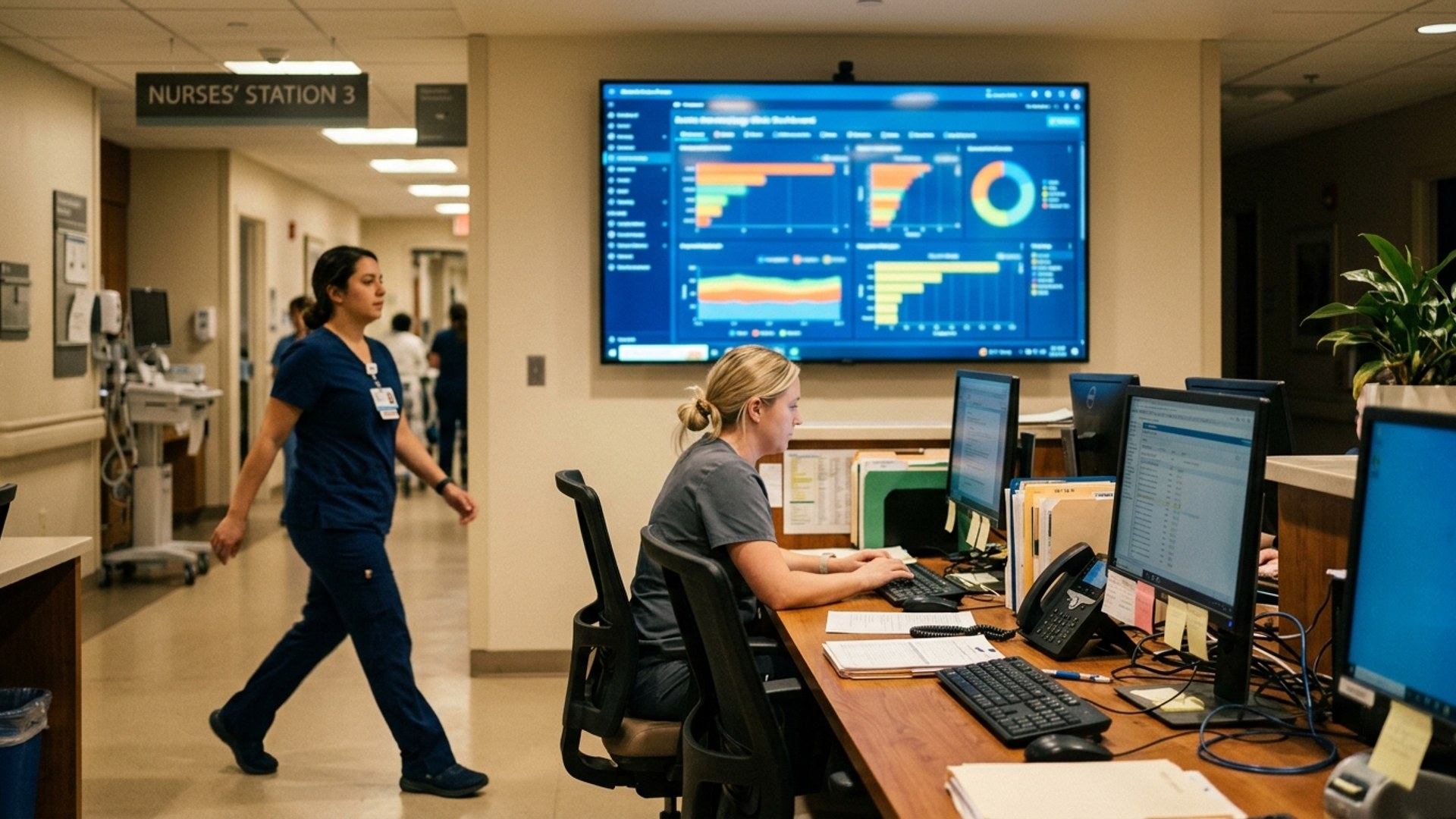
Memorial Sloan Kettering Cancer Center and OpenEvidence announced a partnership on September 16, 2026, that pairs the integration of OpenEvidence's medical AI platform into MSK's Epic electronic health record workflow with the integration of OncoKB, MSK's precision oncology knowledge base, directly into OpenEvidence for broader use by providers outside MSK. How the Integration Works at the Point of Care The partnership includes both the integration of OpenEvidence within MSK's Epic workflow and…

Mozilla's new Smart Window assistant runs on Mistral's models
Mistral and Mozilla are teaming up to offer AI-powered browsing that puts privacy first.
The article Mozilla's new Smart Window assistant runs on Mistral's models appeared first on The Decoder.

TopAccess: Freelancer Review
The new offer for freelancers. For $29.95 a month, you stop depending on any single job platform's algorithm, any single marketplace's acceptance rate, any single recruiter's mood. Or at least that's the promise. TopAccess — a subscription RemoteOK started selling this year — bundles your freelance profile into five platforms at once: Toptal, Arc.dev, PeoplePerHour, NoDesk, and We Work Remotely, on top of everything in RemoteOK's own premium tier.
RemoteOK puts the combined value at "$110+/month." For a freelancer whose income depends on staying visible across as many hiring pipelines as possible, that's genuinely a great deal.
But "five platforms" only means something if it means five separate companies - five distinct algorithms, five different incentives to actually surface your profile to a client. Look a little closer, and it's not so straight forward anymore.
Top Access - Where Are You Applying To
Start with Arc.dev, one of the five. If you've job-hunted as a freelance developer or designer, you've probably run into it — the platform that grew out of Codementor and rebranded in 2021 as a slicker, more independent-feeling alternative to the big freelance marketplaces. It has spent years marketing itself on exactly that positioning: curated, indie, its own thing.
Its own privacy policy tells a different story. The current version opens like this:
"Peeridea, Inc and its parent company, Toptal, LLC, ('us', 'we', or 'our') operate arc.dev ('Arc') and codementor.io ('Codementor')..."
There was no press release about this. No "Arc joins the Toptal family" announcement. It's sitting in a legal document — exactly the kind of place this sort of thing tends to live until someone reads the fine print.
Given how much of Arc's identity has been built on not being Toptal, that's worth knowing before you decide where to put your profile, your applications, or your money. And it's the detail that makes the rest of TopAccess worth a second look, because Arc.dev isn't the only Toptal-adjacent name in the bundle.
What Are You Buying With TopAccess?
TopAccess costs $29.95/month, billed monthly over a 12-month commitment, with no free trial — per RemoteOK's own terms of service and FAQ. RemoteOK sells it as an upgrade from its plain "RemoteOK Premium" tier ($14.95/month, RemoteOK only), and the bundle stacks in four outside platforms plus a rewards program on top of that:
Toptal Marketplace — automatic entry into Toptal's screening process as a priority applicant. Listed value: $14.95/month.
Arc.dev — the platform above, now disclosed as Toptal-affiliated. Listed value: $14.95/month.PeoplePerHour— priority review (within one business day), 10 monthly project-proposal credits, and 1 featured credit, on top of a regular account. Credits don't roll over and can't be cashed out. Listed value: $39.95/month.
NoDesk — a curated remote job board, unlimited applications, job alerts. Listed value: $9.95/month.
We Work Remotely — the "Job Seeker Pro" subscription on one of the largest remote job boards. Listed value: $14.95/month.
Add those five figures to RemoteOK's own $14.95 Premium tier and you get $109.70 — a few cents shy of the "$110+" RemoteOK advertises.
It's a small gap, but it's a telling one: the headline number is rounding up on math that was already generous to begin with, since every one of those figures is a list price set by the same companies selling you the bundle, not necessarily an independently verified market rate.
Two Owners, Not Five?
So who actually owns what? RemoteOK itself doesn't appear to be owned by Toptal — it's contracted in its own terms as "Remote OK," public trademark filings still tie it to its original founder, and there's been no acquisition announcement for it the way there has been for other companies Toptal has bought.
TopAccess, in other words, looks like a commercial partnership between RemoteOK and Toptal, not a merger of the two. Arc.dev is the one company actually sitting inside Toptal's corporate structure, according to its own privacy policy.
That means two of the five "independent" platforms in your bundle — Toptal Marketplace and Arc.dev — already answer to the same parent company.
If part of what you're paying for is diversifying where your applications go, five logos on a pricing page don't necessarily represent five independently owned companies. And RemoteOK, the company actually selling you that diversification, has its own ownership question hanging over it right now — one that's playing out in public, not in a privacy policy footnote.

The RemoteOK Mystery
RemoteOK was built by Pieter Levels, a well-known "indie hacker" who has spent over a decade publicly building and running a portfolio of bootstrapped products — Nomad List, RemoteOK, Photo AI, and others — while being vocal about not needing to sell any of them. In one video, he laid out his own math on why:
"It doesn't make sense for me to sell for 5x or 4x. Most of my revenue is profit. The margins are really high, especially RemoteOK, where the margin is like 94% pre-tax. I'd say 10x. After 10x it gets interesting... I might as well wait 3 or 4 years and sit in this chair, and the sites will probably keep running because they are fully automated."
That's part of why a post asking "Has @levelsio sold RemoteOK?" picked up over 400,000 views on X in late August 2026. It pointed to two things: RemoteOK is no longer listed among the projects in Levels' X bio (which at the time named PhotoAI, VibeJam, InteriorAI, Nomads.com, and others, but not RemoteOK), and We Work Remotely — a RemoteOK competitor — now sells the same TopAccess bundle that includes RemoteOK itself.

Replies piled up fast, several speculating that Toptal had quietly bought RemoteOK too, alongside a separate wave of complaints that RemoteOK's job listings have gotten noticeably worse.
It's a fair thing to wonder about, but as of now the public evidence doesn't confirm it. RemoteOK's own July 2026 terms of service s
338 Founders, Zero Ad Spend: Inside Creatives Takeover
1. What is your company in 2–5 words?
Creatives Takeover is a business development platform for startup founders & first-time business owners.
2. Why is now the time for your company to exist?
Because there are many unoriented founders with almost no support or guidance, we want to make startup formation accessible to everyone. Unfortunately, founders no longer rely on the approval of external entities (e.g., accelerators).
3. What do you love about your team, and why are you the ones to solve this problem?
The commitment to our purpose and values; they were alongside me the whole journey throughout the ups and downs, they never give up. We truly want to bring something special.
4. If you weren’t building your startup, what would you be doing?
Building a startup has always been a personal goal, and at this point in my life, I can't imagine investing my time in anything else.
5. At the moment, how do you measure success? What are your metrics?
Right now success for me is measured by how many founders actually move through the roadmap and engage with the tools, rather than by signups or credit purchasing alone.
6. In a few sentences, what do you offer to whom?
We offer early-stage founders and first-time business owners an AI-guided roadmap that takes them from finding their ideal customer all the way to raising investment, backed by real mentors and stage-specific services along the way.
7. What’s most exciting about your traction to date?
We grew from 49 to 338 founders and 51 mentors entirely organically, with zero pounds spent on acquisition, which tells us the demand is real.
8. Where do you think your growth will be next year?
A year from now I expect us to have moved well past the direct-to-founder model into a real B2B2C engine, with dozens of accelerators and universities running Creatives Takeover for their cohorts and a much larger base of paying founders behind it.
9. Tell us about your first paying customer and revenue expectations over the next year.
Our first paying customer was a solo founder who used the ICP Builder to nail down her audience in a weekend, then upgraded to Rising within her first month; looking ahead, we expect steady growth from founder subscriptions plus our first institutional partnerships over the next year.
10. What’s your biggest threat?
I do not feel threatened at all, I am enjoying my time building this. No job can give you this type of fulfillment.
This startup founder interview template is based on HackerNoon Founder & CEO David Smooke’s ten questions for startup founders.
Would you like to take a stab at answering some of these questions? The link for the template is HERE.
The App That Turns Finding a Bin Into a Game
1. What is your company in 2–5 words?
Gamified bin-mapping for travellers.
2. Why is now the time for your company to exist?
Sustainability has never been more front-of-mind for young travellers — but most "green" tech is preachy and dull, so it doesn't actually change behaviour. Meanwhile, gamification and community apps have proven they can drive real-world action at scale. KrapMaps sits right at that intersection: it takes a moment where caring about the planet is culturally urgent and makes doing the right thing genuinely fun. The tools (smartphones, maps, AI verification) and the audience (a generation that wants to travel and do good) have both finally caught up.
3. What do you love about your team, and why are you the ones to solve this problem?
We're small, scrappy, and we've actually lived the problem. I built KrapMaps after ten months backpacking Southeast Asia — this isn't a boardroom idea, it came from standing on a beautiful beach with rubbish in my hand and nowhere to put it. My co-founder runs our content and community. We don't have big-company resources, but we've got the two things that matter: we genuinely care, and we move fast. Best of all, we're building something we'd use ourselves.
4. If you weren’t building your startup, what would you be doing?
Honestly, probably still travelling — and getting annoyed that an app like KrapMaps didn't exist. I've always been a builder; if it wasn't this, it'd be another product fixing something that bugged me. But I can't really picture not building. This is the thing I want to give everything to.
5. At the moment, how do you measure success? What are your metrics?
Real-world impact over vanity numbers. Day-to-day: bins mapped by the community (800+ across 29 countries), how many get verified, and how active our mappers are week to week. We also watch partnership momentum — hostels onboarded, ambassadors signed — because that's what drives growth. Long-term, the test is simple: are there more bins on the map, is there less litter around them, and is the community growing? Revenue follows engagement, so engagement is what we obsess over.
6. In a few sentences, what do you offer to whom?
For travellers: a free, fun app to find a public bin wherever you are, plus a community mission to be part of — map bins, earn rewards, help hit shared goals. For partners: hostels get a feel-good guest activity and a genuine sustainability story; brands get to sponsor real environmental action in front of an engaged travel audience; and councils and tourism boards get on-the-ground bin-infrastructure data they can't easily source elsewhere.
7. What’s most exciting about your traction to date?
The partnerships. We went from an idea to live across all 24 Mad Monkey Hostels properties in Southeast Asia — the biggest hostel brand in the region — as their launch partner. That one relationship has opened doors to more: press features, inbound interest, and proof that a bin-mapping app can genuinely earn a place in the travel world. The most exciting part isn't a number — it's that people who don't have to care about us keep saying yes.
8. Where do you think your growth will be next year?
Two directions. Geographically — beyond Southeast Asia into Europe and globally, through hostel chains and country ambassadors (the Mad Monkey model, repeated). And in engagement — leaning into big real-world moments like World Cleanup Day to rally the community. A year from now, I want KrapMaps to be the app a backpacker instinctively opens in a new city, with a genuinely active global community behind the map.
9. Tell us about your first paying customer and revenue expectations over the next year.
Here's the honest bit: our "customers" aren't our users — the app is free and always will be. Our first revenue comes through partnerships: a signed travel-insurance affiliate (Genki), plus eSIM and booking affiliates our travellers already use. Over the next year we expect revenue from three places — brands sponsoring our community sustainability goals, those travel affiliates scaling with our user base, and early data-licensing pilots with councils and tourism boards. We're deliberately not building the business on charging people to do good; we monetise the value around them.
10. What’s your biggest threat?
Two, honestly. The obvious one: a giant like Google Maps could add bin data someday — but our defence is the thing they'll never build: the community, the game, the culture. Google will never make mapping bins fun, and an empty map is useless, so the data and community we've already built are the real moat. The quieter threat is the classic early-stage one — focus and runway. As a small team there are a hundred things we could do; the discipline to do only the few that matter, and to fund them, is the real fight.
This startup founder interview template is based on HackerNoon Founder & CEO David Smooke’s ten questions for startup founders.
Would you like to take a stab at answering some of these questions? The link for the template is HERE.