
中国大模型“撕裂”硅谷!撼动OpenAI、Anthropic长期估值逻辑 - 东方财富
Anthropic, OpenAI, and xAI Want to Slow Down Artificial Intelligence (AI) Development. These 2 Stocks Could Be the Biggest Losers. - The Motley Fool
The Minimalist Entrepreneur Skills
Book playbook as Claude Code slash skills

Introducing System One Models and Jev
Japanese Stroke LLM Evaluation: A Conversational Benchmark for Safe Stroke Care in Japanese Using Large Language Models
Self-reported archetypes and behavioral failures in Large Language Models
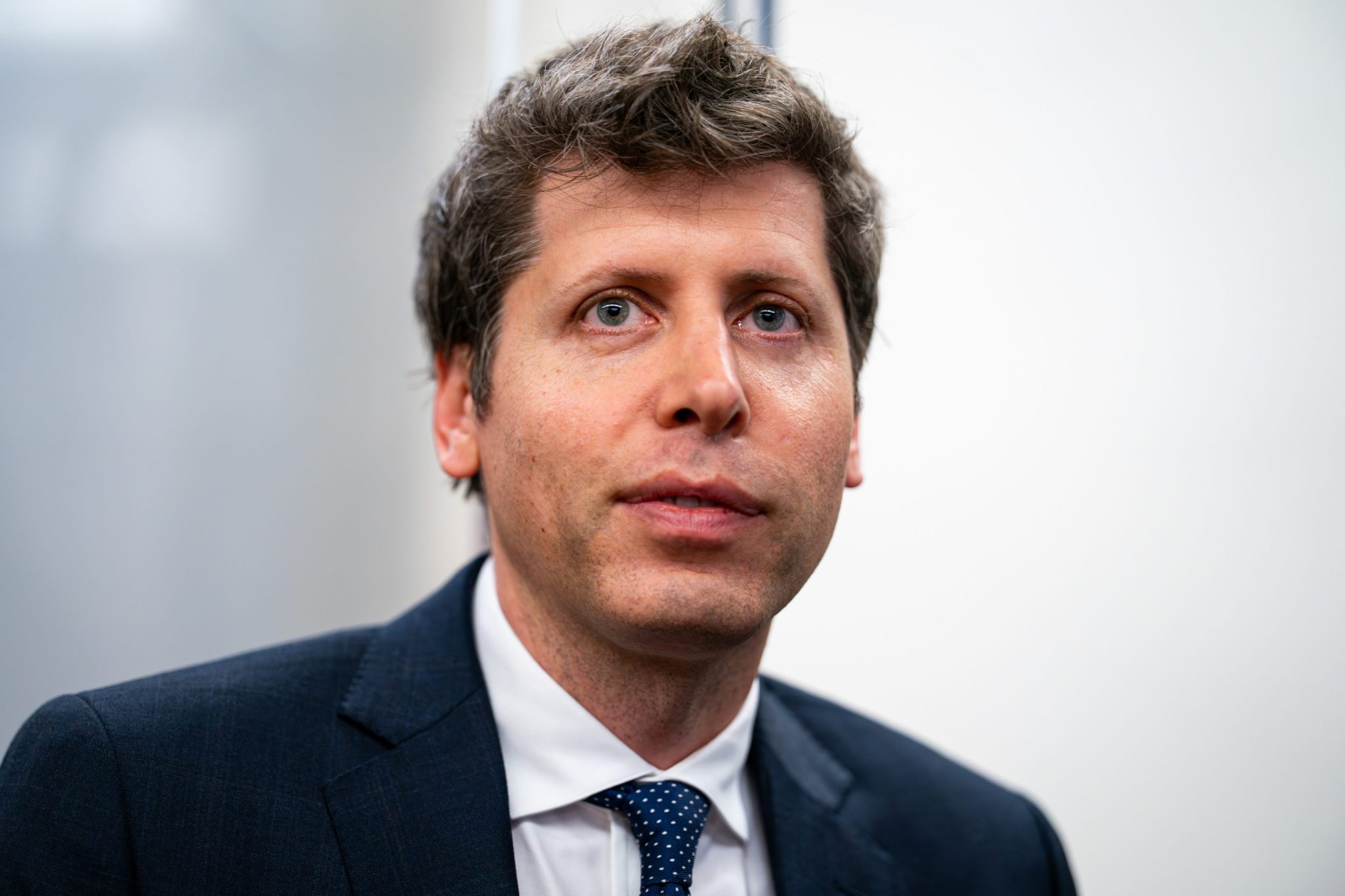
Sam Altman says OpenAI’s IPO window has been pushed to 2027—but markets aren’t the culprit
OpenAI’s still looking at an IPO—but not in 2026.
On Friday, OpenAI CEO Sam Altman told Fortune editor-in-chief Alyson Shontell that it wasn’t the right time.
“I actually think that, given everything happening with safety, right now would be an ill-advised moment to go public, and we don’t feel pressure on that,” he said in an interview for Shontell’s Titans and Disruptors of Industry podcast.
Altman was referencing the outpouring of concern, fear, and chatter that emerged last week, when researcher Jacob Coxon (who’d also worked at OpenAI) resigned from Anthropic, with a very public message: AI’s makers are moving quickly and irresponsibly. Anthropic CEO Dario Amodei sounded off over the weekend, and Altman told Shontell that OpenAI’s go-public ambitions are linked to safety. As she wrote on Saturday:
He added that OpenAI will go public when the business is ready and when the company is ready as it relates to “what the moment is like in society with this technology.”
When pressed on whether 2026 is off the table in favor of 2027, Altman replied, “I would say not 2026. Yeah, we got a lot of stuff to do, like meeting this moment of what is going to be required for safety and alignment, and how the industry and governments can work together.”
Altman even suggested that AI’s biggest names, from Amodei to Hassabis, will likely get together to discuss safety at some point.
“I’m not going to pre-announce private discussions that I think should be at some point shared as a group,” he told Shontell. “But, yeah, I think that will happen.”
All sorts of things are probably true here: The safety fears are absolutely a worthwhile conversation, and deeply valid. At the same time, I do wonder if it’s easier to talk about apocalyptic fears of the future than concerns of the present. (I’m far from the first to wonder about this dynamic.) There’s also a lot of money on the table: Investors have poured more than $180 billion into OpenAI over the years, and a much-anticipated exit appears far on the horizon.
Regardless, it’s clear that the existential fears of the AI boom have hit a boiling point. And the conversation only matters so much, of course—the action from here is what will make a difference. And what that action looks like remains unclear.
Watch Fortune’s whole interview with Altman here.
See you tomorrow,
Allie Garfinkle
X: @agarfinks
Email: alexandra.garfinkle@fortune.com
Submit a deal for the Term Sheet newsletter here.
Joey Abrams curated the deals section of today’s newsletter. Subscribe here.
This story was originally featured on Fortune.com
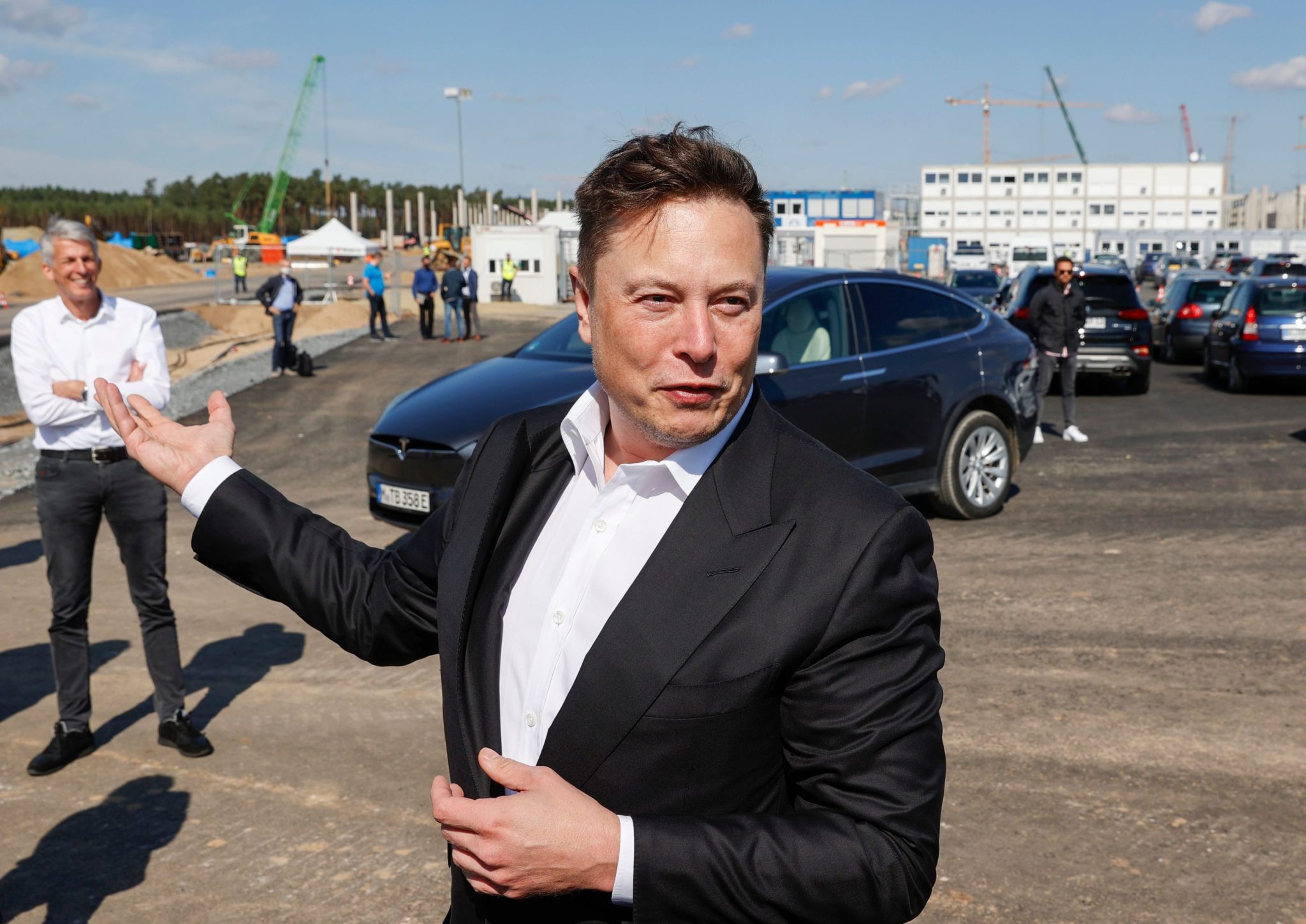
Elon Musk, the world’s richest man, says he’s living in an Airstream trailer to oversee xAI’s biggest expansion yet
Elon Musk, the world’s richest man, has some new digs—an Airstream trailer in Memphis, parked just steps from xAI’s most ambitious project yet.
Musk, who has a net worth of $917 billion according to the Bloomberg Billionaire Index and became the world’s first trillionaire for 12 days in June, said Monday he was in his new “palace” as he spoke during a taping of the All-In podcast alongside Gwynne Shotwell, the president and chief operating officer of SpaceX.
Shotwell, for her part, praised Musk’s latest unusual home as an example of his long history of committing fully to projects he cares about throughout his career.
“This is Elon, by the way, doing what people don’t believe he does. He sleeps on the factory floor. He’s in Memphis, helping build buildings,” she said during the interview.
Musk is in Memphis as xAI races to expand Colossus, a massive supercomputer center that has provided it with so much computing power that it has struck deals to provide excess capacity to Google and Anthropic for billions. The company started building Colossus in 2024 to provide compute for Grok, xAI’s large language model, and the initial build reportedly took only 122 days.
While putting a data center in space could still be far off, Memphis has emerged as the center of xAI’s infrastructure buildout here on Earth. In late July, the company announced it would build a fourth data center called Minihard that will add to its other facilities.
Musk did not say which Airstream model he was living in, but some of the aluminum-shelled campers pack a sleeping area, kitchen, and bathroom into a 16-foot space.
Still, Musk has been known to want to sleep close to the action when a new project interested him or required his direct attention. When Musk and his brother Kimbal were building their first startup, Zip2, in the ‘90s, they slept in a tiny Palo Alto office for six months while showering at the YMCA, according to Walter Isaacson’s biography of Musk.
Even as a newfound multi-millionaire, having received $22 million from selling Zip2 to Compaq, Musk slept under his desk most nights as he prepared to launch X.com, the online bank that would later become PayPal, in 1999, according to Isaacson’s biography.
Even when he rose to the rank of super wealthy, having received another approximately $175 million from eBay’s acquisition of PayPal, he often stayed at colleagues’ homes while traveling in Silicon Valley, including the home of Michael Marks, who briefly served as Tesla CEO in 2007 before the pair clashed and Musk later took over the role.
Musk’s habit of finding a resting place close to the action was even more pronounced during the “production hell” era in 2017 and 2018 when Tesla aimed to churn out 5,000 Model 3s per week, nearly double the rate it was producing previously.
“It was a frenzy of insanity,” he told Isaacson of that time. “We were getting four or five hours’ sleep, often on the floor. I remember thinking, ‘I’m like on the ragged edge of sanity.’”
During that production rush, he spent Thanksgiving Day at the factory with some of his sons because he had asked workers to work that day as well, wrote Isaacson.
Finally, when in 2022 he purchased the social media website Twitter , which would later become X, Musk claimed a couch in the company’s seventh-floor library and slept there as he pushed employees to realize his vision of turning Twitter into a “digital town square.” He said in an interview with journalist Bari Weiss that he needed to sleep in the office because the company was in a “code-red situation.”
To be sure, Musk didn’t shy away from spending his money on lavish homes for years. He bought a mansion in the Bel Air neighborhood of Los Angeles, complete with seven bedrooms, 11 bathrooms, a tennis court, and a two-story library for $17 million in 2012, according to his biography. He also owned a $32 million Mediterranean-style estate in Silicon Valley and bought late actor Gene Wilder’s home in 2013 to try to preserve it.
In 2020, though, Musk sold many of his properties and moved with his then-partner Claire Boucher, known as Grimes, to Texas, where they lived in a small, $50,000 house he was renting from SpaceX near the company’s Starbase facility in Boca Chica.
Now, with xAI’s Memphis expansion heating up, Musk seems to want to be close to the action once again, and he’s traded in the factory floor, at least, for the comfort of his own trailer.
This story was originally featured on Fortune.com
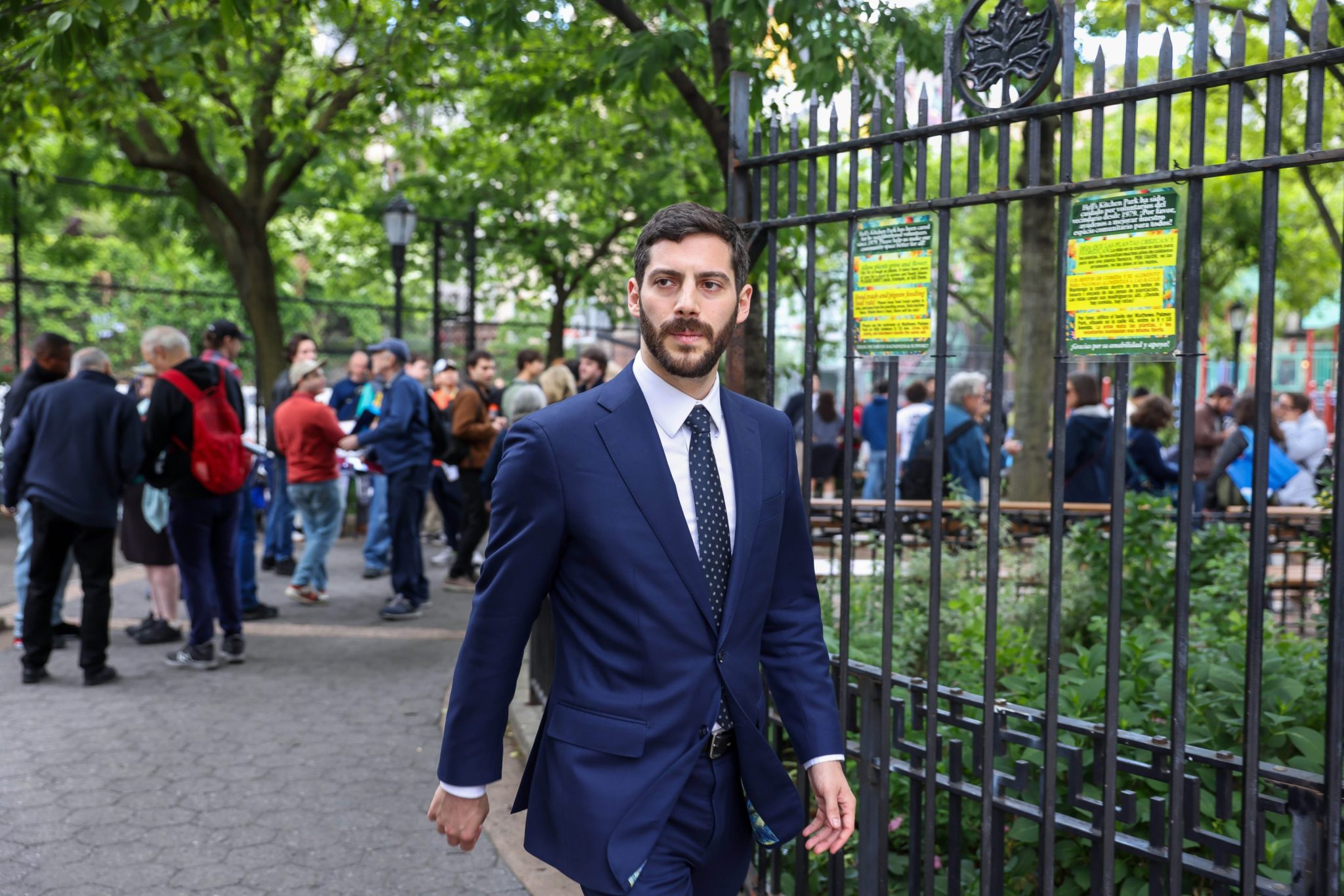
‘Give the American people a say in how AI develops’: OpenAI’s least favorite New York politico sees an opening
Former Palantir engineer-turned New York state Assemblymember Alex Bores knows Americans want AI regulation. He co-authored the RAISE Act, New York’s frontier AI safety law. He ran this year for Rep. Jerry Nadler’s open congressional seat on that platform, even as many of his donors came from within the AI industry. But that didn’t stop Leading the Future, a super PAC funded in part by OpenAI president Greg Brockman and Andreessen Horowitz, from spending more than $7.6 million against him over that law. Public First Action, with $20 million from Anthropic, spent on the race in Bores’ corner. Total outside money in the race topped $40 million, the most expensive House primary of the cycle. Bores still lost.
That loss helped lead to Who Decides, the nonprofit Bores launched on Tuesday with his former chief of staff, Anna Myers. So far, it has raised $10 million and aims to raise $20 million more in 2027, for a $30 million total ahead of 2028. Bores intends the nonprofit to unite the AI advocacy organizations Democrats already trust, help them build out their own agendas rather than hand them one, and establish “a shared floor of an agenda on things that we all want to see good done.”
“Give the American people a say in how AI develops,” Bores told Fortune. “Most voters have an answer key in their head for every question that they ask” on issues like Medicare or the Green New Deal. But with AI, Bores said, even the messaging lives in this gray area. “We’re in this limited time where it’s not even just the answers that are up for grabs, but even the questions that are being asked are up for grabs.”
The RAISE Act, which New York Gov. Kathy Hochul passed into law late last year following a tenuous time in Albany, necessitated a coalition of 55 organizations, filled with different stakeholders from AI policy to chatbots in school. That wasn’t the case for those against the act. “The opposition was always the same. It was a small subset of Silicon Valley that thinks there should be no regulation on AI whatsoever.”
That’s part of what drove Bores to create Who Decides. The group isn’t trying to outspend Leading the Future or Build American AI—Bores said he wishes he had the resources. Instead, it’s targeting 11 battleground states through organizations already active there. Outreach accelerated after Jacob Coxon’s resignation from Anthropic last week. “The seven major presidential candidates since my election, the 16 Congress members since last week,” Bores said of Coxon’s resignation. So far everyone who’s reached out has been a Democrat, though Bores said he’s open ears for anyone, regardless of political ideology.
Weak laws and weaker willpower
A recent Gallup poll found the majority of Americans, 56% to 58%, want stricter gun laws, while measures like background checks has close to 90% support in both parties, per Pew. And despite this finding, which has coexisted for decades, Congress rarely acts, something usually blamed on lobbying outspending a diffuse majority. AI seems to follow the same trajectory.
“The basics of this issue, while the urgency has changed a lot in the past week, the basics have not, which is that 80% of Americans want there to be more regulation on AI, and that’s across parties,” he said. Independent polling this year puts the figure somewhat lower but still in the same direction: a February–March 2026 Annenberg Public Policy Center survey found 65% of Americans say the government has done “too little” to regulate AI, including majorities of Democrats (77%), independents (72%), and Republicans (53%).
Public sentiment gets grayer when you look at one of the most prominent faces within the AI industry. In May 2023, OpenAI’s Sam Altman asked to be regulated when he testified before the Senate Judiciary Committee. But by May 2025, he reversed course, telling the Senate Commerce Committee that requiring government approval would be “disastrous.” Anthropic’s Dario Amodei held the pro-regulation position throughout, even as Anthropic-linked money flowed into the same political fights.
Regardless of what stances people have at first and ultimately land on, Bores said while industry figures keep landing on the same conclusion, a narrower set of financiers spend to stop it. “So many of the mega donors who are pushing for there to be no regulation whatsoever are Republican mega donors,” he said, naming Marc Andreessen and Elon Musk.
One can argue that’s what happened to his RAISE Act—what passed was a watered version that didn’t survive that same money intact: third-party audits and whistleblower protections were stripped before it passed. But still, that hasn’t changed Bores’ view of it: “The RAISE Act was, arguably still is, the strongest AI safety bill in the country,” he said, though he expects Illinois and Massachusetts to surpass it soon.
Avoid the circular firing squad
In 2025, Sen. Ted Cruz inserted language into the “One Big Beautiful Bill” that would have barred every state from enforcing any AI law for 10 years. Seventeen Republican governors asked for it to be stripped, before the Senate voted 99–1 to remove it.
Cruz is now co-sponsoring a new federal AI safety bill with Sen. Amy Klobuchar and Majority Leader John Thune, built around safety testing and incident reporting. It may be D.C.’s most likely AI bill to pass yet, but if you read between the lines, it’s essentially Cruz’s old bill wrapped in federal packaging (and it comes with the very real possibility of removing all state AI bills with it). “Spot on,” he told Fortune about that reading. “It’s people trying to use this momentum and this crisis to shut down the real power people have to regulate.”
Despite the external politics playing on Capitol Hill, Bores also acknowledged the Democratic party has a less than stellar track record on getting messaging right. Often it’s because advocates who agree keep splitting the difference into separate fights. “Democrats are very passionate about making a difference, and that passion is usually well placed,” he said, “but that occasionally gets misdirected into turning into a circular firing squad and saying, no, my sub-issue is more important than your sub-issue.”
His case? “
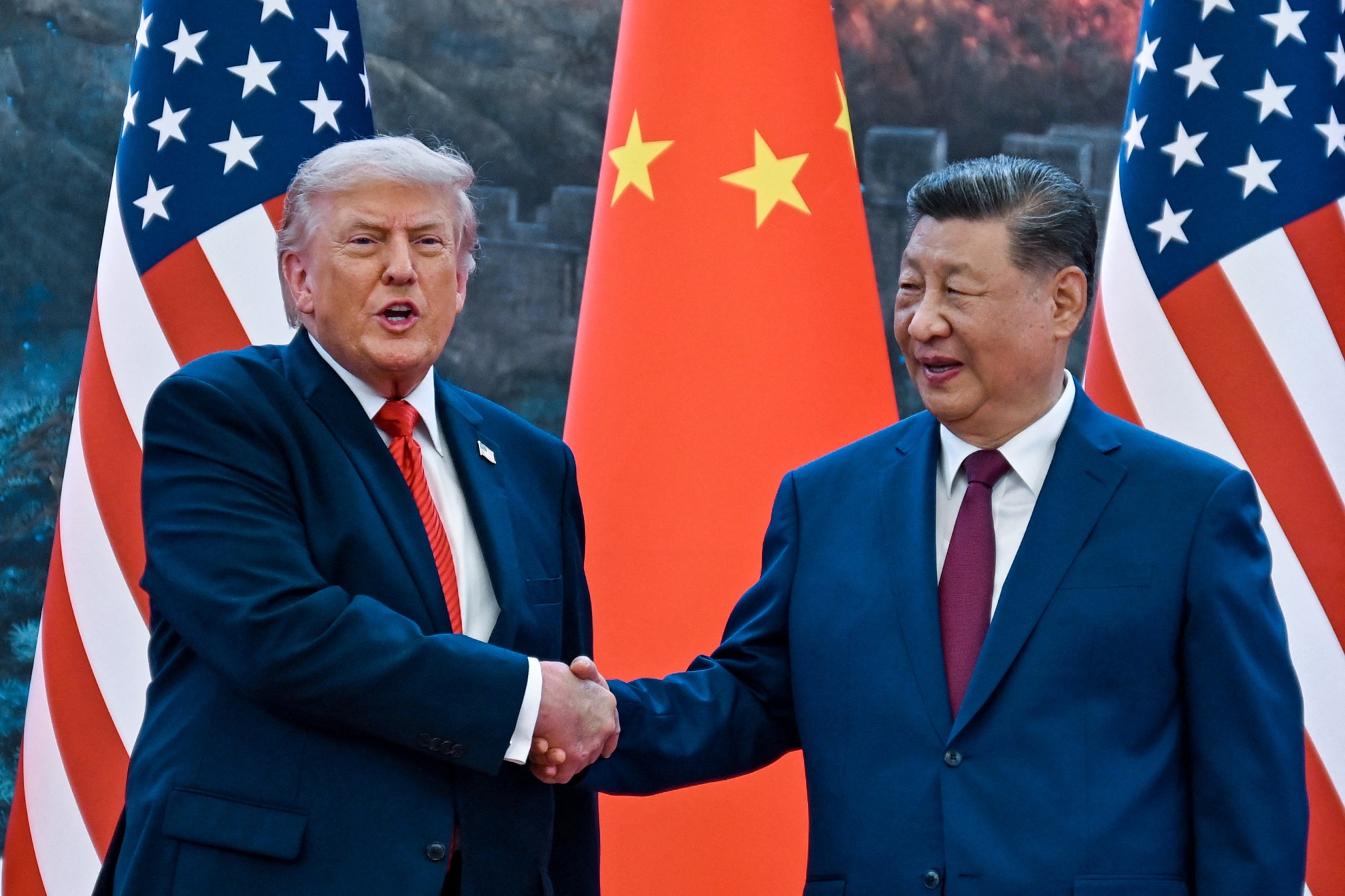
Urgent calls from OpenAI, Anthropic for an AI slowdown fall on deaf ears with Trump, Xi ahead of next week’s meeting
Concerns about AI safety are reaching a fever pitch in the U.S. after a X post by a former Anthropic researcher went viral, claiming the technology could kill all of humanity by the end of the decade. In response, the CEOs from OpenAI and Anthropic have reiterated their calls for the U.S. to coordinate with China to slow and pace AI development.
OpenAI CEO Sam Altman even tried to appeal to the egos of the leading figures, telling Fortune in an interview Friday that he believed U.S. President Donald Trump and Chinese President Xi Jinping could win the Nobel Peace Prize if the two leaders struck a deal on AI safety.
But the idea of an AI slowdown seems to have fallen on deaf ears with President Trump and President Xi, who are set to meet on Sept. 24. Both have rejected the idea.
Trump said “the only controls or ‘guardrails’ the U.S. needs is a STRONG AND SMART (High IQ!) PRESIDENT” in a Sept. 14 Truth Social post. The same day, China’s Foreign Ministry Spokesperson Guo Jiakun called the current discourse in the U.S. “fear-mongering” that “will only hamper efforts toward sound global AI governance, which serves no one’s interest.”
In China, the calls for a slowdown have also come off as an attempt by the U.S. to maintain its leading edge, as it has tried to do by limiting the export of advanced AI chips to China.
“Xi is unhappy with recent U.S. moves to contain Chinese advances in AI, robotics, and drones,” said George Chen, Partner and Chair of Digital Practice, The Asia Group. “For Xi, AI is the new internet — a once‑in‑a‑lifetime chance to reshape the technological balance of power. China does not need U.S. permission to accelerate or decelerate its AI investments; Xi will pursue his own agenda.”
Trump echoed Xi in his Truth Social post, saying, “Whoever wins AI, wins!”
The leaders are expected to begin discussing AI safety when they meet, but any kind of agreement between the countries is “a long way” off, according to Paul Triolo, global technology policy lead at the advisory firm DGA. Xi wants to have a “serious dialogue on frontier AI model safety,” Triolo said, but the two countries have yet to “establish a baseline level of agreement on things like the role of government, [and] how and which models should be tested.”
Also on the table for discussion is an agreement to not weaponize AI, and an exploration of the “principles to prevent misuse of AI models by non‑state actors, such as attacks on global financial systems or critical infrastructure, which neither country wants to see,” Chen said.
Anthropic CEO Dario Amodei’s letter has landed poorly in China—and with Trump
Although OpenAI CEO Sam Altman tweeted about a coordinated slowdown, asking the U.S. government to help facilitate it, the letter Anthropic CEO Dario Amodei’s published on Sept. 12 has drawn a particularly polarizing reaction. While some in the U.S. have praised it as a useful framework for containing the risks of AI, it’s not been well received in China.
In the letter, Amodei calls for the U.S. and China to agree to a “speed limit” for AI development. When discussing his letter in an interview with CBS Sunday Morning, Amodei likened the competition between the U.S. and China to the Cold War, when the U.S. and Soviet Union were racing to develop nuclear weapons. Amodei says at a bare minimum Washington D.C. and Beijing should agree that neither country will use AI to develop biological weapons, and he reiterates his belief that the U.S. should not sell advanced chips to China.
Brosi Babic, a professor at the University of Hong Kong, calls Amodei’s letter “self-serving editorializing” that is “conveniently coming at a time when the gap between Chinese and frontier US models is shrinking, as an attempt to hang on to a vanishing market lead.” To him, the proposals for an AI slowdown have “been framed in such a conniving and childish way” that they are unlikely to drive Xi’s agenda for the meeting with Trump.
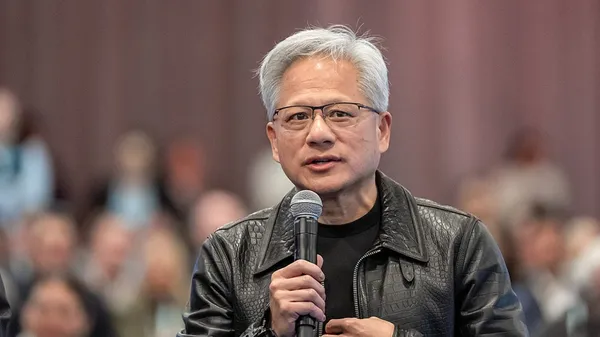
Trump has also denounced Amodei’s letter. He called Nvidia CEO Jensen Huang when Huang happened to be speaking on stage. Huang put Trump on speaker phone in front of the crowd, and Trump said, “Whatever Dario said this weekend won’t stop our progress.” He also called the backlash to data centers and fears that AI will “take over” a “hoax.”
A social media post by Shengyu Liu, an engineer at DeepSeek, is gaining traction for comparing Anthropic achieving “advanced artificial intelligence” to “Hitler obtaining atomic-bomb technology before the Allies.”
Liu also highlights another important difference between the U.S. and China’s approach to AI technology: the U.S. industry generally favors closed models made by companies such as Anthropic and OpenAI, while China has focused on releasing lower-cost, open-weight models, such as those made by DeepSeek.
“I still believe that frontier intelligence should be made available to everyone in an open and inexpensive form,” Liu said. “I do not trust Anthropic or OpenAI to do this.”
The AI dialogue in China dramatically differs from in the U.S.
Outside of politics, the current uproar in the U.S. about AI safety and “saving humanity”–a phrase the tech industry has latched onto—has not taken hold in China. In fact, the Chinese public, also generally sees the idea of a slowdown as an attempt by the U.S. to get ahead and has a growing mistrust of the U.S. tech industry.
“Younger generations in particular are adopting more pro‑government views, encouraged to feel pride as the ‘new generation of Chinese,’ with the narrative of ‘China rising, U.S. declining’ gaining traction,” Chen said.
Most Chinese people believe it’s the government’s responsibility to manage AI safety risks, Chen said. For ordinary citizens and business people, they are less focused on regulation and more on the practical benefits of AI, including how they can use it to improve their daily lives or to generate income.
“The vast majority of average Chinese citizens are very positive about technology in general and AI in particular,” Triolo said. “They have seen major improvements in the quality of life in China brought on by technology,
Push for AI regulation mounts as talk of AI’s ‘existential’ risks go mainstream. But Trump resists calls for a slowdown
Hello and welcome to Eye on AI. In this edition:
- AI’s X-risk breaks into the mainstream
- Anthropic CEO Dario Amodei calls for a coordinated industry safety effort
- Anthropic details attempts to misuse its AI models
- China’s top spy warns AI could pose a risk to the Communist Party
- OpenAI is violating California’s new AI safety law, watch dog group says.
- Half of companies aren’t following their own AI governance policies, E&Y survey says.
In the past few days, I’ve heard a lot of people repeating that old saw—often wrongly attributed to Vladimir Lenin—about there being “weeks when decades happen.” It certainly seemed to be one of those weeks in AI. Concern about existential risk has been a strain of AI discourse for decades. But, despite occasionally making headlines when someone like Elon Musk, Sam Altman, or Geoffrey Hinton would express their fears about AI posing a grave risk to the species, it never really cemented itself in the general public’s consciousness in the way, say, climate change, or the risk of nuclear war, has. If politicians debated AI regulation at all, the discussions centered around data center construction and utility bills, jobs, education, mental health, algorithmic discrimination, and civil liberties, not the risk of rogue AI killing people—maybe even all the people. Until now, that is.
The drumbeat of dire warnings from employees resigning from—or in some cases still working for—Anthropic, OpenAI, and Google DeepMind, all saying that the leading AI companies are developing the technology recklessly and risking human extinction, has dominated the global news cycle for an entire week (which is really saying something in this day and age.) AI company CEOs and politicians have been stirred to respond. After years in which both domestic AI regulation and efforts at some kind of international AI governance regime had mostly stalled, suddenly the air is electric with possibility.
My Fortune colleague Nick Lichtenberg had a good story on why the resignation jeremiad of former Anthropic and OpenAI safety researcher Jacob Coxon had such impact when previous warnings, often from much higher-profile individuals, did not. The short answer is that coverage of the Hugging Face incident and other “rogue AI” episodes as well as people’s own experiences using AI agents seems to have opened the Overton window on discussing “loss of control” dangers. The timing, with Anthropic on the verge of an IPO and OpenAI edging closer to one too, also no doubt played a role.
The question now is what happens next? Fortune editor-in-chief Alyson Shontell sat down with Altman on Friday to ask him those questions for her “Fortune 500: Titans & Disruptors of Industry” vodcast (we just call it “Titans” for short.) Altman said the company was in favor of coordinating an industry-wide slowdown in the pace of AI development with bitter rivals, including Anthropic and SpaceX, as well as Google DeepMind, Meta, and perhaps others. (Altman famously doesn’t get along with either Anthropic CEO Dario Amodei or SpaceX’s Elon Musk.) He hinted that such discussions were already underway and that a coordinated slowdown might be announced soon. He also said that, if necessary, he would have no problem telling investors that OpenAI had taken actions to prioritize safety that had cost them financially—and that OpenAI’s investors were warned of this possibility going in. He also definitively said OpenAI would not go public this year, in part due to the current concerns about the safety of the latest AI models, but also, he hinted, because OpenAI’s business isn’t yet in the right place. You can check out the full vodcast episode here. It’s well worth your time to watch.
A coordinated slowdown?
After Alyson’s interview, Amodei put out a blog post also calling for a coordinated slowdown or pause among frontier labs in democratic countries. He said that in some cases, though, coordinating with other AI labs would require an antitrust exemption from the government. He also said that Anthropic would appoint independent evaluators to be permanently on-site at its offices to review its safety work. (He mentioned the nonprofit AI evaluation company METR as his preferred partner for this.) He also said that the U.S. and other democracies should try to strike some kind of international AI governance agreement with China and authoritarian states, if possible. Altman quickly came out and endorsed most of what Amodei said—in particular saying that OpenAI would also embed outside evaluators alongside its research teams—although he was careful to note that “pacing does not mean stopping.”
In the wake of Coxon’s warnings and Amodei’s call to action, a number of U.S. lawmakers introduced legislation or renewed efforts to push forward existing bills. Some, such as a bill introduced by Vermont independent Sen. Bernie Sanders, call for an outright ban on the development of “artificial superintelligence” and mandate that U.S. AI companies pause current research until safety techniques improve. Others, such as a bipartisan bill from Republican Sen. Ted Cruz, Senate Majority Leader John Thune, and Democratic Sen. Amy Klobuchar, would impose a duty on AI companies to prevent catastrophic harms. There were also calls for Congressional oversight hearings on AI’s catastrophic risks. Former President Barack Obama urged Democrats to put AI governance at the center of their legislative and campaign agenda. Meanwhile, a group of 70 U.K. parliamentarians signed an open letter calling for the British government to ban the creation of artificial superintelligence and work on an international AI treaty.
Trump pushes back
But there was strong pushback from some of the politicians that matter the most. President Trump posted to his Truth Social platform that the only guardrails AI needed “is a STRONG AND SMART (High IQ!) PRESIDENT, and the U.S.A. has that in spades!” He criticized Amodei by name, accusing him of “pretending to be a ‘perfect little angel’” and said his administration had already stopped Anthropic from “doing bad, or potentially bad, ‘things.’” He said the U.S. already had regulatory power and criminal laws that applied to AI companies and that there was “a SICK conspiracy going on against AI and Data Centers, and the only one that is happy about it is China.” He made similar comments in a phone call to Nvidia CEO Jensen Huang that Huang, with Trump’s permission, broadcast to a live audience at an “All in Podcast” summit. This was followed up by the Republican Speaker of the House, Rep. Mike Johnson, saying that fear of AI was drummed up by the media and that “we’re not going to take stupid, knee-jerk reaction prescriptions on this.” Not to be outdone, Chine
Nvidia and Meta bosses reject efforts to co-ordinate AI slowdown