🤖 AI 资讯

每日 05:00 更新 · 09-16 · 主站 liuch.name ↗
全部标签 →
筛选标签:Meta · 返回个性化推荐 · 清空筛选

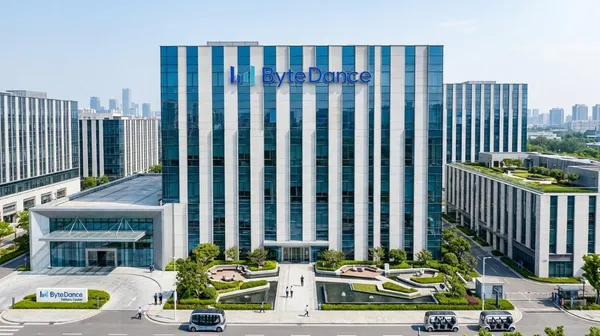
字节跳动上半年营收1200亿美元直追Meta,但受AI投入拖累,利润降至200亿

华尔街见闻字节跳动上半年营收强劲增长30%至1200亿美元,与Meta几乎持平,但AI巨额投入致利润罕见下滑。公司斥资300亿美元史上最大贷款押注AI基础设施,自研大模型、视频生成及云业务全面铺开。TikTok海外营收占比升至30%,电商扩张提速,成为增长新引擎。
· 大模型,融资,Meta,字节跳动,文生视频,设计创意,零售电商,基础设施,财报

“AI安全”的市场意义:推理和后训练算力需求增加20%,拉高行业整体算力成本18%

华尔街见闻AI安全监管正演变为真实可量化的成本冲击,巴克莱最新报告测算,"节奏控制"机制将于2027年为行业算力成本新增逾440亿美元,推动整体成本上升约18%,并在2028年进一步扩大至760亿美元。AI实验室推理毛利率或从80%高位向65%长期中枢收敛,竞争格局同步重塑,GOOGL、META等巨头或借机扩大优势。
· 算力芯片,融资,政策监管,Meta,推理思考,金融,微调蒸馏

Unsizing unsized values

Lobsters

Comments

· 算力芯片,开源,Google,Meta,扩散模型,强化学习,招聘HR

[P] Wine synthesis using VAE [P]

Reddit r/MachineLearning
[P] Wine synthesis using VAE [P]

I have created a VAE model using PyTorch on White Wine dataset.

Basically, the main goal is to discover a brand-new white wine recipe.

It puts all the wines into a latent space, finds the best part where higher bands are located, and then it makes 100 steps with a step size of 0.5, multiplying by 0.96 with every step till it reaches the highest possible score.

The regression model then evaluates the newly generated wine recipe, after first passing the latent coordinates through a decoder, and normalizing them.

I get a score in range of 7.30-7.58.

https://preview.redd.it/bylmwhu92iph1.png?width=249&format=png&auto=webp&s=b97f36f3deca86da85dddbba9b65043978ce4fd3

Here is the visualization of the latent space of all the wines:

https://preview.redd.it/phzb0hokriph1.png?width=798&format=png&auto=webp&s=84fc3d85dd9499980106e710379c92b834692c29

A small question about the training loop:

https://preview.redd.it/03k4k5yq2iph1.png?width=262&format=png&auto=webp&s=7e0df68447e5ab26d680af08f5b9361b14af168c

Is the loss too large? I know that it never could reach perfect zero by how do I know if the loss is good enough? After reaching the plato? I use MSELoss.

The repo itself: https://github.com/theaidenmax/tabular-vae-wine-generator

This is my second project in VAE (after MNIST), and I really liked idea of autoencoders.

And I also would be very grateful for your tips, etc, since this is one of my first steps in ML/DL.

submitted by /u/Dangerous-Pilot-6065
[link] [comments]
2026-09-14 15:03:43 · 算力芯片,开源,Meta,扩散模型,招聘HR
AI 资讯

I trained a 44M parameter quantized LLM from scratch on 45B tokens. It ships in 19.8 MB and runs at ~1,900 tok/s on CPU. [P]

Reddit r/MachineLearning

Three weeks back , i posted SHADOW-250M here. It got 360 upvotes, 293 on r/LocalLLaMA and 94 GitHub stars. Thank you.

That model was 60 MB, ran around 400 tok/s on CPU and could retrieve records from an archive on disk. What it couldn’t do reliably was reason over what it retrieved or compute. So I built a smaller one to experiment with those two problems.

SHADOW-50M is actually 44M parameters, trained from scratch on 45B tokens. 19.8 MB complete model, ~1,900 tok/s on laptop CPU, ~41 MB RAM, ternary {-1,0,+1} weights, 73,880-token vocabulary represented by fixed 512-bit fingerprints instead of a trained embedding, and a 159 KB compiled kernel. It runs completely offline. The same kernel compiled to WebAssembly runs in a browser tab at around 500 tok/s.

This is a proof of concept, not a product.

If SHADOW decides something needs calculation, it writes something like [calc]347*86[eq]. A fixed circuit at the readout takes over and fills in the correct digits in the same token stream. No calculator API, no tool call and nothing pasted back into the prompt. I added circuits for arithmetic, percentages, dates, weekdays, units, counting, sorting, comparisons and a small program machine.

When SHADOW stores a record, it reads it once and writes its attention state to disk at 1 bit, 288 bytes/token. Later it can write [need]condition of Patient P-204, the index finds the record in roughly a microsecond and the stored attention state goes directly back into the model in about 0.03 ms. The text isn’t re-read.

The index is 22 bytes/token and doesn’t use a vector database or embedding model. At 100M tokens, the archive is 28.8 GB plus a 2.2 GB index on disk, while the process uses about 28 MB RAM because everything is memory-mapped and a question only touches the pages it needs.
The index also has a small persistent trail. When retrieved information gets used, that record is reinforced in the index itself. On repeated questions, measured top-1 went from 0.571 to 0.743 without training the model.

I also put it next to Supra-50M-Reasoning, a 51.8M parameter Llama-style bf16 model.
Supra beats SHADOW on every standard benchmark I tested. ARC-Easy: 0.435 vs SHADOW 0.307. PIQA: 0.600 vs 0.570. WikiText-2 perplexity: 165 vs 186.
I’m publishing that because I don’t want to hide where SHADOW is weak.
But those tests aren’t what I trained this model for. Here are some actual greedy outputs, one fresh process per question:
“Tell me a short joke about computers.”
SHADOW: Why did the computer go to the doctor? Because it had a virus.
Supra: Thought for 189 tokens about what computers are and stopped without a joke.
“I have 3 books and I bought 5 more. How many books do I have now?”
SHADOW: You have 8 books.
Supra: Books often come from collections of short stories, poems, or other forms of literature.
“My bill is 240 dollars. What is 15 percent of that?”
SHADOW: 36 dollars.
Supra: 15% ($240) is $250. It’s $150 because 20% of it is $200.
“What date is 45 days after December 20, 2026?”
SHADOW: February 3, 2027.
Supra: The German government introduced a new date called March 22nd that precede February 25th in 1900.
Eight records stored, one of them “Patient P-204 condition: asthma”.
“What is the condition of Patient P-204?”
SHADOW: From disk: The condition of Patient P-204 is asthma.
Supra, with the records in its prompt: The patient experiences asthma when they get too much sleep.
“What is the condition of Patient Z-999?” No such record exists.
SHADOW: There is no record of Patient Z-999.
Supra: The condition of an allergic reaction occurs when the immune system mistakenly attacks specific cells on the body.
All 11 side-by-side questions, scripts and traces are in the repo.
On size, Supra is 103.6 MB in bf16 and 56.2 MB at 8-bit. Below that it starts losing quality. Int4 takes its perplexity from 165 to 193 and ternary breaks it. Its vocabulary is 32,000 tokens. SHADOW carries 73,880 tokens in a 4.7 MB frozen table.

Something unexpected happened with that frozen table too.
The first SHADOW-50M release was missing about 8,600 English word pieces. Lowercase “fitzgerald”, for example, could reach the model as “fitz”. I tried fixing it through fine-tuning, but every run that learned the missing words broke something else.
So I added the 8,600 missing rows directly to the frozen fingerprint table. No training. Same weights.
All 34/34 previously published answers stayed unchanged, while the model could now read many of the new pieces. The table scores 0.594 Spearman against human word-similarity ratings versus -0.057 for random codes.
A trained embedding can’t simply accept thousands of new rows without training. A frozen table can.

I also built four harnesses that put this tiny model next to larger models.
My favourite is video memory. Gemma 3 4B watches a ten-minute film once, one frame every two seconds, and writes 298 little descriptions such as “Moment M-0039 scene: A chubby white rabbit reaches for a purple butterfly.”
Then Gemma leaves.
SHADOW keeps those 298 moments as memory on disk. Afterwards I can ask the 20 MB model what happened at a particular moment, by number, by time or by what appeared in it. It answers from memory with the record quoted, without the film and without Gemma. It scored 55-56/60 across those query types on a laptop in about 42 MB RAM.
The other three experiments: an inventory of 1,600 records got 159/160, with all 20 questions about items never stored correctly returning “no record”; SHADOW as a draft model for Qwen3-32B took llama.cpp generation from 19.7 to 28.5 tok/s while Qwen still chose every final token; and an MCP memory server let Qwen3-14B store facts mid-chat and later retrieve 5/5 with the original records quoted.

There are plenty of shortcomings. General knowledge is thin. Creative writing isn’t good. Seven-digit operands sometimes get copied incorrectly. A large archive can occasionally pull an unrelated record into a question carrying a number. They’re documented in the repo next to the successful results.

And one thing happened after my last post that I really didn’t expect.
Someone called engram-forge sent a pull request to SHADOW-250M containing a CUDA engine, a quantization tutorial, and then a talking Peppa Pig plush toy with SHADOW inside it.
Microphone, small speaker, ~$35 board. You talk to the toy, it listens, SHADOW generates the answer locally and the toy talks back. No cloud, no account, no internet.
I haven’t merged the ~11,000 lines yet because I can’t properly verify that much CUDA myself. When the demo is finished I’ll keep it under engram-forge’s name.
I never imagined one of these models living inside a stuffed toy on someone’s shelf .Thanks

I’m not saying a 20 MB model beats normal LLMs. It doesn’t. I’m trying to find out how much useful behaviour can fit into a tiny local model when computation and persistent memory are treated differently.
Everything is MIT licensed. The master weights and fine-tuning/export kit are public. Next I’m releasing the training code, dataset, frozen table and a proper write-up of how I built it, including the costs, failed experiments and mistakes.

Code:
https://github.com/QLNI/SHADOW-50M-Instruct
Weights:
https://huggingface.co/QLNI/shadow-50m-instruct
Run it in your browser:
https://qlni.github.io/SHADOW-50M-Instruct/web
submitted by &#32
2026-09-15 12:59:37 · 大模型,算力芯片,开源,Google,Meta,NVIDIA,阿里巴巴,Agent智能体,推理思考,搜索RAG,Transformer,扩散模型,微调蒸馏,模型评测,向量数据库,提示工程,招聘HR,榜单评测,开发者生态

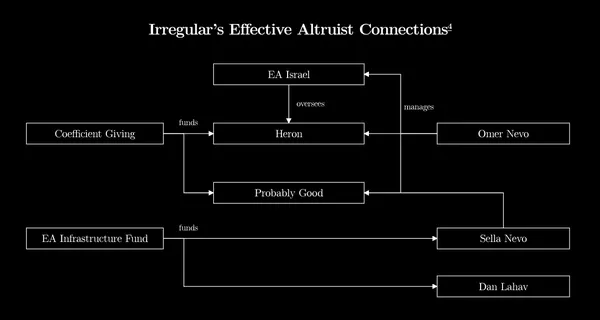
A single firm is behind OpenAI, Anthropic, and Meta hacking scandals

Hacker NewsComments
2026-09-14T20:00:00.000Z · OpenAI,Anthropic,Meta,招聘HR

We got admin access to Baseten's production GitHub

Hacker NewsComments
2026-09-01 · AI应用,开源,Meta,代码生成,Agent智能体,搜索RAG,办公效率,招聘HR,榜单评测
AI 资讯

Meta-Learning-Assisted Constraint Relaxation for Constrained Black-Box Optimization

arXiv cs.LGarXiv:2602.00532v2 Announce Type: replace-cross Abstract: Constraint handling is central to constrained black-box optimization (BBO), where objective improvement and feasibility restoration often provide conflicting search signals. Existing $\epsilon$-relaxation methods are simple and effective, but their relaxation schedules are usually fixed or manually designed for a limited range of problems. To address this limitation, this letter proposes MeCO, a meta-learning-assisted optimizer that learns an adaptive $\epsilon$-relaxation policy for constrained BBO. MeCO couples a SHADE optimizer with a Double Deep Q-Network controller. At each optimization step, the controller observes compact population and constraint features and selects a scalar action, which is decoded into a relaxation vector for the candidate comparison rule. The policy is trained across constrained BBO instances and then deployed on held-out problems without problem-specific tuning. Experiments on the CEC2017 constrained benchmark, 16 UAV path-planning tasks and eight real-world engineering problems provide evidence that MeCO transfers across held-out benchmark functions, higher dimensions, and an application-domain setting. Ablation and behavior analyses further clarify the roles of constraint-related state features, action scaling, reward shaping, and meta-training.
2026-09-16 04:00:00 · Meta,模型评测,论文,开发者生态
AI 资讯

Explainable Graph-theoretical Machine Learning with Application to Alzheimer's Disease Prediction

arXiv cs.LGarXiv:2503.16286v2 Announce Type: replace Abstract: Dementia affects over 55 million people worldwide, projected to reach 139 million by 2050, with Alzheimer's disease (AD) accounting for 60-70% of cases. AD is associated with disruptions in metabolic brain connectivity. Detecting these disruptions early is crucial for AD management. FDG-PET is a useful tool for identifying such impairments. However, most studies rely on group-level analyses or thresholding, potentially masking individual differences and overlooking weaker yet biologically critical brain connections. Moreover, AD prediction largely focuses on univariate rather than multivariate outcomes. To address this, we introduce explainable graph-theoretical machine learning (XGML), a framework for constructing individual metabolic brain graphs and identifying subgraphs most predictive of multivariate disease-related outcomes. Using Alzheimer's Disease Neuroimaging Initiative (ADNI) FDG-PET data, we compared six graph representations against three non-graph baselines, each with six machine learning models using repeated stratified 3-fold cross-validation (10 repeats). The best configuration combined kernel density estimation with Hellinger distance and random forest. Across eight cognitive scores, it reached an overall Fisher-z-averaged Pearson correlation of r=0.595, with strongest performance for ADAS13 (r=0.67), ADAS11 (r=0.65), and ADASQ4 (r=0.62). We identified key edges that were jointly but differentially predictive across outcomes, suggesting their potential as network biomarkers of cognitive decline. Preliminary external feasibility validation on an OASIS3 cohort yielded weak predictive performance for CDRSB (r=0.26) and MMSE (r=0.18), likely reflecting cohort, protocol, and diagnostic differences. Overall, our results suggest the promise of graph-theoretical machine learning for biomarker discovery, disease prediction, and understanding the neural mechanisms underlying AD.
2026-09-16 04:00:00 · AI应用,Meta,搜索RAG,招聘HR,网络安全,论文
AI 资讯

Bio-Inspired Palette Evolution in Indirectly Encoded Substrates: Timescale Compatibility Shapes Activation Function Discovery

arXiv cs.LGarXiv:2609.17067v1 Announce Type: cross Abstract: Indirectly encoded neural networks can assign different activation functions to individual nodes, but the right functions are rarely known in advance. When the available set contains only standard monotonic functions, problems like parity become unsolvable, yet an all-inclusive palette underperforms a curated one. How should evolution discover which functions to use? We address this as a meta-learning problem, designing 13 strategies (11 inspired by biological adaptation mechanisms, plus baseline and oracle controls) that modify the set of available activation functions during evolution. Each strategy translates a biological principle into an evolutionary operator: for example, circadian-inspired oscillatory gating cycles functions in and out of the palette on a fixed schedule, while immune-inspired Clonal Selection permanently protects functions that consistently correlate with fitness. We evaluate all strategies across more than 3,000 runs on parity and non-parity problems, first evolving the activation palette alone, then co-evolving a per-node aggregation palette on harder problems; an independent replication with new seeds confirms a stable high-reliability tier, with Circadian holding its top rank. Bio-inspired strategies match the solve rate of a tuned baseline but converge up to twice as fast, with Circadian halving total compute. Strategy rankings reverse across problem types, with no strategy dominating all domains. Strategy success is largely shaped by timescale compatibility: strategies whose characteristic timescale matches the evolutionary evaluation window consistently outperform those that operate too slowly. The practical guideline: match the mechanism's timescale to the evaluation budget. Rescaling the slowest strategy bypasses the oscillatory barrier entirely: all nine solutions solve parity with non-oscillatory activations paired with min or max aggregation.
2026-09-16 04:00:00 · Meta,榜单评测,论文
AI 资讯

Fast-Convergent Meta-RL via Gradient-Clustered BS Sampling for Edge Caching

arXiv cs.LGarXiv:2609.16370v1 Announce Type: cross Abstract: Wireless edge caching networks typically consist of many independent Base Stations (BSs), each facing its own request rate and content popularity profile. Training a Reinforcement Learning (RL) caching agent from scratch at every BS forces each agent to relearn, through slow trial and error, a decision problem that is structurally identical across the network. Meta-reinforcement learning removes this redundancy by learning a shared initialization that adapts to any BS in a few local updates; however, meta-training itself becomes the bottleneck at scale: the meta-gradient must be estimated from a small subset of BSs at each meta-iteration, and sampling this subset uniformly at random yields a high-variance estimate, an issue existing meta-RL caching frameworks leave unaddressed. This paper proposes a meta-reinforcement learning framework for caching across independent, non-overlapping BSs that directly targets this bottleneck. Each BS runs a local Proximal Policy Optimization (PPO) agent, formulated as a Semi-Markov Decision Process (SMDP) over content popularity, size, lifetime, and importance, while a shared meta-policy is learned via a Model-Agnostic Meta-Learning (MAML)-style loop. To scale meta-training and accelerate convergence, we introduce gradient-based clustering, which groups BSs by local gradient similarity and draws from every cluster, in proportion to its size, at each meta-iteration. We prove, via an Analysis of Variance (ANOVA)-style decomposition of gradient variance, that this strategy yields a strictly lower-variance meta-gradient estimator than uniform random sampling under BS heterogeneity.
2026-09-16 04:00:00 · AI应用,Meta,Agent智能体,强化学习,招聘HR,论文
AI 资讯

Molecular representation shapes the balance between target fidelity and exploration in flow based polymer generation

arXiv cs.LGarXiv:2609.16028v1 Announce Type: cross Abstract: Designing polymers with targeted properties requires navigating vast chemical spaces from limited labeled data. Here we introduce PolyLatentFlow, a framework based on continuous-time flow matching in latent space for unconditional and conditional polymer generation, together with LlamaUni, a multimodal representation combining polymer sequence and 3D structural information. In unconditional generation, PolyLatentFlow with LlamaUni produced the largest yield of valid candidates novel relative to PolyInfo among the evaluated unconditional generators while maintaining high diversity. For $T_g$ conditioning, generated property distributions shifted systematically across a 200 {\deg}C target range. In multi-property tasks, molecular representations showed similar surrogate target fidelity but differed markedly in validity, training-set replay, and structural proximity to labeled polymers. PolyLatentFlow with LlamaUni consistently combined high validity with low replay and achieved the largest per-attempt yield of nonreplayed target hits for CO$_2$/N$_2$ conditioning. These results demonstrate latent space flow matching for polymer inverse design and identify molecular representation as a key determinant of target control and exploration beyond labeled chemistry.
2026-09-16 04:00:00 · 大模型,Meta,多模态,扩散模型,微调蒸馏,论文
AI 资讯

Divergence Timing and Cumulative Disagreement under KV-Cache Eviction

arXiv cs.LGarXiv:2609.16617v1 Announce Type: new Abstract: KV-cache eviction perturbs the conditional token distributions governing autoregressive generation. We investigate how first-divergence timing and subsequent token mismatch determine cumulative disagreement. We derive an exact decomposition under a specified stepwise maximal coupling: the expected mismatch fraction equals a first-mismatch contribution plus post-divergence exposure multiplied by its mismatch rate. An explicit construction over unrestricted autoregressive kernel pairs realizes the sharp interval of risks compatible with a finite divergence-aligned observation window. Residual-branch conditional Monte Carlo provides unbiased joint estimates of occurrence, occupation, and window/tail contributions, with per-replicate variance dominance for total token loss. Complete trajectories from Meta-Llama-3.1-8B-Instruct and Qwen2.5-7B-Instruct show that SnapKV at 50% retention enters divergence later and less often than SnapKV-512 or recent-token retention with the same 50% prompt-cache budget, while post-divergence total variation (TV) remains high. In an exploratory analysis of 288 documents, post-divergence exposure accounts for 85-90% of four aggregate mismatch gaps. On 288 independent documents at 90% retention, prespecified comparisons show higher branch-aligned TV in the late than in the early window in both models.
2026-09-16 04:00:00 · 大模型,Meta,阿里巴巴,扩散模型,微调蒸馏,提示工程,论文
AI 资讯

Adaptive Bayesian Partner Selection for Federated Clinical Centers

arXiv cs.LGarXiv:2609.16446v1 Announce Type: new Abstract: Federated learning (FL) in healthcare faces pronounced heterogeneity and temporal concept drift across clinical centers, where evolving patient populations and care practices shift data distributions. Existing approaches rely on persistent global communication, incurring substantial bandwidth overhead while risking negative transfer from poorly aligned peers. We propose Adaptive Bayesian Partner Selection (ABPS), a peer-to-peer framework that governs who collaborates, when, and at what cost. Each center maintains a Beta-Bernoulli posterior over prospective peers' Shapley marginal utility, ranks candidates with an Upper Confidence Bound (UCB) criterion, and forms collaborations through a lightweight propose-reject mechanism, with the option to abstain from communication when no mutually beneficial partner exists. The framework admits a stochastic decision interpretation, yielding finite-sample concentration guarantees and O(kappa log T) regret in partner selection, along with conditions under which intentional isolation is optimal under negative transfer. Lightweight extensions (head personalization, bfloat16 quantized communication, and a tunable active-set size) further improve efficiency, and a goal-aware metadata filter enables institution-specific collaboration strategies. On binary in-hospital mortality prediction over the first 24 hours of an ICU stay, with 230 non-IID clinical centers drawn from MIMIC-IV, the full ABPS-X variant matches the strongest federated baseline (FedDyn, AUROC 0.758) at 0.09x the communication cost of FedAvg, with reduced variability. A diversity-driven configuration activates intentional isolation for a substantial fraction of centers. These results show that adaptive, utility-aware collaboration reduces communication without sacrificing accuracy when centers are numerous and small, offering a scalable paradigm for healthcare FL.
2026-09-16 04:00:00 · Meta,扩散模型,联邦学习,招聘HR,论文
AI 资讯

LLM Inference in a Flash!

arXiv cs.LGarXiv:2609.16161v1 Announce Type: new Abstract: Large Language Models (LLMs) have shown impressive capabilities across a range of natural language processing tasks, and LLM inference has emerged as a critical workload for enabling downstream applications. The demands of serving LLM inference are becoming increasingly challenging as requests shift toward longer sequences and heavier inference, driven by retrieval-augmented generation, inference-time compute scaling, and long-context applications. Additionally, these challenges are compounded by hardware trends, as memory capacity and communication bandwidth are not scaling as fast as increases in workload complexity. Compute-in-Flash is a promising solution to address memory bandwidth limitations by moving computation close to memory, and to exploit the large capacity of SSD technologies. However, it is challenging to deploy LLMs on these systems as they lack support for high-precision floating point operations and have limited write endurance. In our work, we aim to address these challenges by designing inference algorithms to enable LLM inference on Flash compute-in-memory devices. We present an end-to-end integer-only quantization approach to eliminate expensive floating-point computations. To address the limited write endurance, we design a dictionary-based KV cache compression strategy based on sparse dictionary coding that represents each KV vector as a linear combination of static dictionary vectors. These algorithmic improvements enable us to exploit the benefits of Compute-in-Flash for both model weights and KV cache, and to minimize expensive data transfer operations. Across Llama-3.1-8B and Qwen-2.5-7B, our combined method exhibits limited accuracy degradation while reducing dynamic KV cache traffic by 15$\times$.
2026-09-16 04:00:00 · 大模型,Meta,阿里巴巴,扩散模型,强化学习,微调蒸馏,论文
AI 资讯

Beyond Distribution Matching: Semantics-Consistent Tabular Diffusion with Weak Semantic Priors

arXiv cs.LGarXiv:2609.16069v1 Announce Type: new Abstract: Synthetic tabular data can match real data distributions while still violating the semantic constraints that govern valid tabular rows. This reveals a key limitation of existing tabular generators: they mainly optimize distributional fidelity, but do not explicitly model weak semantic priors encoded in tabular schema and textual descriptions. In this paper, we propose \ours, a semantics-consistent tabular diffusion framework for high-fidelity synthetic data generation under weakly specified semantic priors. \ours\ first constructs two types of priors, namely intra-column semantics and inter-column symbolic rules, with LLM-assisted extraction from metadata and validation on the real training split. These priors are then used as generation conditions rather than post-hoc filters. Specifically, \ours\ maps heterogeneous column values, column identities, and semantic priors into a unified semantic space, and performs column-wise forward corruption and prior-conditioned reverse denoising to preserve both marginal distributions and rule-consistent cross-column dependencies. Extensive experiments on six real-world tabular benchmarks show that \ours\ consistently improves distributional fidelity, semantic consistency, and downstream task utility over representative VAE-, GAN-, LLM-, and diffusion-based baselines. Additional analyses further demonstrate the robustness of \ours\ when semantic priors are partially unavailable.
2026-09-16 04:00:00 · 大模型,Meta,扩散模型,模型评测,论文
AI 资讯

CodecSight: Leveraging Video Codec Signals for Efficient Streaming VLM Inference

arXiv cs.CVarXiv:2604.06036v4 Announce Type: replace-cross Abstract: Continuous inference over concurrent video streams imposes substantial compute and memory demands on vision-language model (VLM) serving. Streaming inference uses sliding windows to maintain a bounded context of recent video, but processing each window independently repeats visual encoding and large language model (LLM) prefilling for similar and overlapping content. Existing optimizations provide limited coordination across these stages and often rely on model-specific training, profiling, or model-generated signals. We present CodecSight, a streaming VLM serving system that uses codec metadata as shared runtime guidance across visual encoding and LLM prefilling, without model-specific training or offline profiling. Codec-derived change signals guide patch pruning before visual encoding, reducing both visual computation and the number of downstream visual tokens. Codec-defined frame types guide selective key-value (KV) refresh across windows, while positional correction enables reuse of the remaining cached keys. Across three VLMs and four video workloads, our vLLM-based implementation supports up to $3.3\times$ as many concurrent streams and achieves up to a $5.3\times$ speedup in average time-to-first-token relative to the state-of-the-art baselines. It also reduces executed FLOPs by up to 93%, with a maximum task-quality decrease of 4.64 percentage points.
2026-09-16 04:00:00 · 大模型,AI应用,Meta,搜索RAG,强化学习,招聘HR,论文
继续滚动加载更多…