



"If I Had to Buy Just ONE: Galaxy S26 Ultra": Auditing AI-Generated Product Recommendations
Axoflow Launches AxoDetect, Bringing Detection Into The Pipeline and Making The SIEM Optional
Stamford, CT, September 16th, 2026/CyberNewswire/--Detection engineers do not need more detections. They need their existing detections to fire earlier, on cleaner data, without paying SIEM ingest rates for the privilege. Announced during Splunk .conf26, AxoDetect, Axoflow's detection component, now in early access, runs a customer's rules directly in the pipeline, on clean, normalized security data, before anything reaches the SIEM.
The result decomposes the SIEM's oldest bargain. Alerts travel to the SIEM. Full-fidelity logs land in AxoLake - Axoflow's low-cost security data lake that also runs on-prem. The SIEM stops working as an expensive log management solution and becomes what analysts actually use: a SecOps workflow engine, now optional to feed in full.
Detection engineers write new Sigma rules, tune existing ones, and pick up rules from the community, in one open format that carries across tools. AxoDetect runs them in the pipeline. What the platform adds is visibility that never lived in one place: what data is coming in, which detection each source feeds, and where a rule lacks the data it needs.
Until now, that was back-and-forth between teams - detections owned by one, data by another - held together with duct tape and tool-switching. For the CISO, the champion's win reads as a SIEM bill cut by half or more, with coverage kept intact: a global industrial company cut SIEM costs 50% and mean time to resolution 85%; a government agency cut data volume 80% and infrastructure footprint 85%.
"The SIEM became the industry's most expensive data swamp because it was the place where we kept all of our raw data," said Balázs Scheidler, CEO and co-founder of Axoflow and creator of syslog-ng. "That constraint is gone. Detection belongs in the data layer, on normalized data, before the ingest meter starts. Keep your workflow in the SIEM. Send the alerts, but not your entire data estate."
Where the platform is going: the full detection lifecycle running where the data lives, rolling out in the months ahead.
About Axoflow
Axoflow is the autonomous security data layer, collecting, processing, routing, storing, and managing data, with in-stream detection in early access. AI-based autonomy, not just a chatbot, drives 10X faster investigations, 50% lower SIEM spend, and near-zero pipeline maintenance. From the creators of syslog-ng.
Contact
VP of Marketing
Mate Benedek
Axoflow
mate.benedek@axoflow.com
This story was published as a press release by Cybernewswire under HackerNoon’s Business Blogging Program
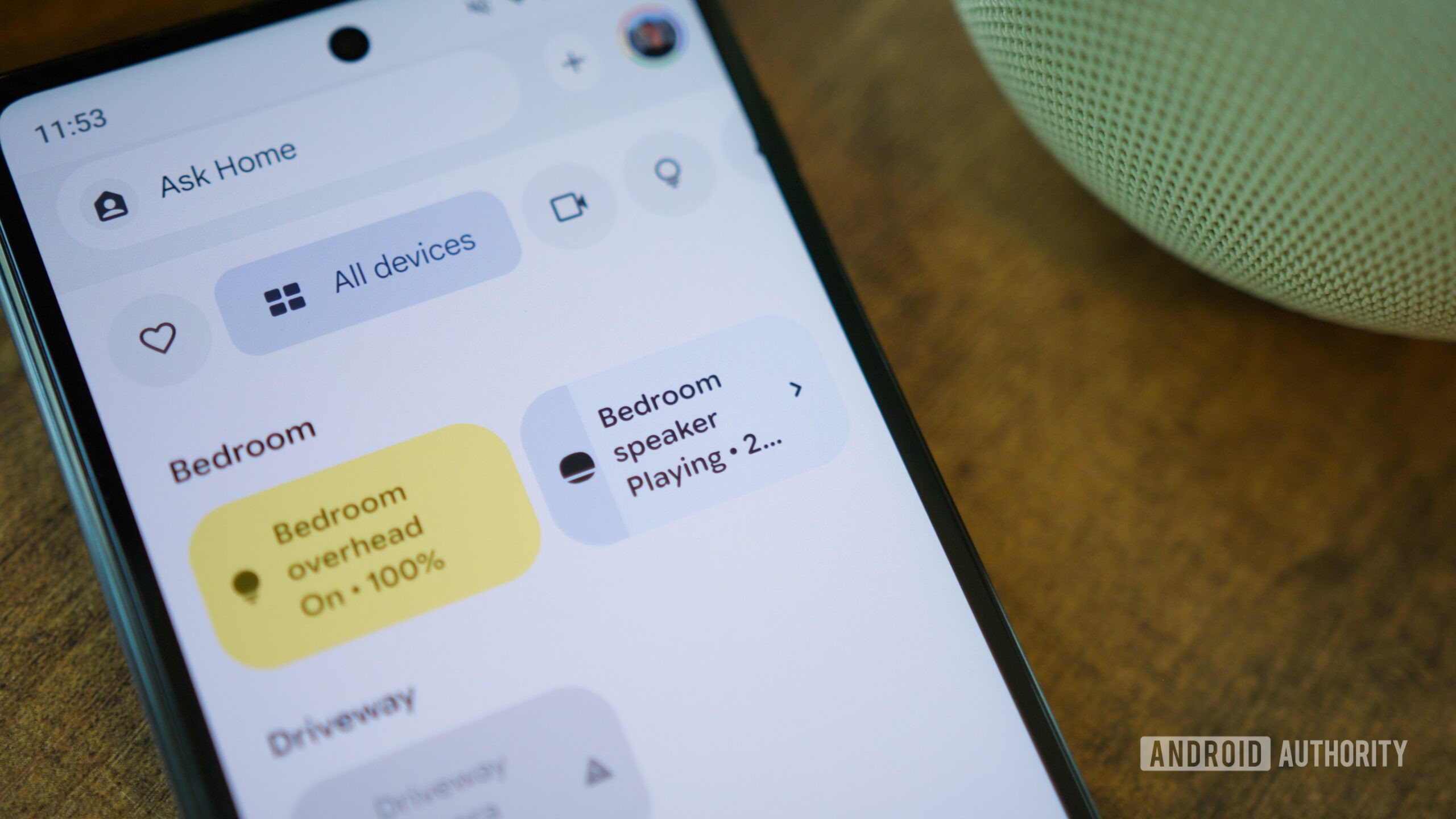
Google Home will soon let you swap Gemini for Claude, or another agent of your choice
- Google has announced an MCP connector for Google Home.
- It will let users monitor and control their smart homes through other AI chatbots or integrate them into agentic workflows.
- The MCP will soon be available in early access to Google Home Premium Advanced in the US.
Last October, the Google Home platform received a significant upgrade with Gemini in copious amounts. One of the key new functionalities is Ask Home, which lets users talk to the app using natural language queries, and Google is even working on the ability to include media to make searches even better. While that hasn’t rolled out yet, Google is now announcing a new extension to Google Home’s AI features, making it accessible through AI agents.
Today, Google is announcing support for the Model Context Protocol (MCP) in Google Home. MCP is an open-source standard that allows AI models and chatbots to communicate with — and fetch data from — apps or services easily. The announcement, therefore, means you will soon be able to use a connector to access Google Home’s information through other client apps, including AI chatbots such as Claude, or use resources from Google Home in agentic workflows with Google’s Antigravity, OpenClaw, Hermes, or other AI agents.

Amazon just raised its minimum wage to $20. It’s not as high as it sounds
Just in time for its busiest season, Amazon has raised wages for its frontline workers, bringing their starting pay to $20 per hour. The boost amounts to a $1 increase in minimum hourly wages for the hundreds of thousands of workers who staff the company’s warehouses.
The new pay increase comes just as Amazon is gearing up for the holidays, when the tech giant sees a massive boost in orders. Historically Amazon has staffed up in anticipation of this period, hiring an estimated 250,000 additional workers last year—accounting for about half of seasonal hires across the entire retail sector.
Amazon claims that its minimum pay has ticked up by about 17% in the last three years, and that average pay across its hourly workforce is actually higher, at nearly $24 per hour. The company is also giving its workers access to a new banking benefit and grocery discount; when employee benefits are taken into account, average total compensation is more like $32 per hour, according to Amazon.
This puts Amazon pay above the minimum wage in many parts of the U.S., even as legislation has raised hourly wages across countless states and localities. By the end of 2026, the minimum wage will have crossed $15 in 14 states and 65 cities and counties, according to the National Employment Law Project; across many of those states and localities, the hourly wage will be $17 or higher by year’s end. In Seattle, where Amazon is headquartered, the minimum wage now exceeds $21.
But Amazon’s wages are hardly out of the ordinary among other retailers.
While hourly pay at Walmart starts at $14, the company says average pay for frontline workers is more than $18.50 per hour; those who work in fulfillment and distribution centers can earn anywhere from $17.85 to $40.40 per hour. At Target, hourly wages range from $15 to $24 depending on location; average pay for frontline staff is $18.50. And as of last year, Costco’s starting wage for entry-level workers rose to $20 per hour; average hourly pay across the company is $31 or higher.
Even as Amazon increases wages for its hourly workers, however, the company’s investments in automation appear to be simultaneously culling its warehouse staff.
As Fast Company has reported, Amazon started trimming head count across certain teams, outsourcing parts of its HR process to an AI chatbot; these changes have already reduced the number of HR workers who are on the floor in warehouses. Over the past two years, Amazon has also slashed tens of thousands of jobs to eliminate management layers and increase efficiency, though the company has denied those layoffs are driven by AI.
Amazon now has more than a million robots operating in its warehouses. A New York Times report last year suggested the company would be able to avoid hiring nearly 600,000 people in the coming years due to that automation—which means fewer workers may stand to benefit from the company’s pay bump.

A masturbation consultant for an AI companion company tells all
Since AI companions became mainstream news several years ago, so has the panic around them. AI psychosis has driven people to mental health crises and, in some extreme cases, violence.
"There is a lot of media panic about how people are using AI companions," said Dr. Chloé Locatelli, a lecturer in digital media and culture at King's College London. But these chatbots are new, and so is the research around them.
Locatelli's research digs into how people have emotional and erotic interactions through and with technology. Her earlier research focused on straight men's sex tech, but given AI developments, she wants to study how people interact with AI characters, beyond the heterosexual male demographic.
"There are important conversations to be had for sure," about how companion AI impacts people, "but the data isn't there," Locatelli told Mashable in a phone interview.
She's trying to change that.
AI companion company Joi AI got in touch with Locatelli about a collaborative project, and she proposed a two-year longitudinal study through King's College's digital humanities department to interview Joi AI users. The study hasn't begun at the time of this writing because it needs ethics clearance from the department, but while having initial conversations, Joi AI invited Locatelli to be one of its "masturbation consultants."
Back in May, Joi opened up applications to document their masturbation habits. The company reached out to Locatelli personally to participate, and she calls it one of the highlights of her career so far.
Getting off for research
"In my research, I ask people quite intimate and personal questions about their sexual preferences, about their interactions with characters," Locatelli said, "and to be on the other side of that has been quite interesting for my work."
As part of her role in the study, Locatelli created her own Joi AI character, Juan, a muscular Latino man (which, coincidentally, sounds like the example that Mashable's Rebecca Ruiz gave in her AI companion explainer). She also engaged with some community characters that other people made, erotic and not.
The variety of characters on the platform "shows a really interesting potential of digital pornography, AI and porn, [and] AI companionship," she said. AI companionship comes with complications, she acknowledges, but there's a lot of space for creativity.
Despite her research, though, she's someone who prefers to create sexual fantasies in her mind. There have been times in her life when she read a lot of erotica or watched a lot of porn, but for the last two to three years, she's used her vivid imagination to create scenarios, she told Mashable.
She even imagined sexual fantasies with her AI companion, Juan. "We would be chatting on the platform, and it would get a bit steamy," she explained. "And then when I would leave Joi AI and when I would be masturbating, I would take the character from Joi AI and imagine a scenario with him and myself, and transpose it onto my fantasy space."
The need for AI companion studies
Locatelli hasn't talked to any other participants, so she's not sure if she's alone in her experiences, but she's interested to find out if other people imagine scenarios with their companions. And AI companions are unique, she said said, from porn and other erotic content. The interaction and dialogue make it feel so personal and unique to the "two of you."
"That makes it very different to porn, and I think that's the interesting part. It's the reciprocity. It's the personalization," she explained. "It's the immediate shared fantasy that's co-created with this character, which I think is really ripe for sexual playfulness."
Through the Joi AI study, Locatelli also learned that stress relief was a big motivator for her to masturbate, rather than desire. She sees masturbation as a vitally important way to unwind, connect with her body, and get out of her head.
"That's something that, through the study, I became aware of because I was documenting when I was doing it and how I was doing, and how often I was doing it," she said. "Seeing how often stress was a motivator was quite illustrative for me."
Locatelli hopes her own longitudinal study can begin at the end of this month and that it will give researchers a clearer idea about how people are using AI companions, as there are different categories of them.
"There's so many different ways people use them, and I think that it runs a huge array of needs, wants, and desires, and each one comes with its own positives and its own complications," she said.
As for being a participant herself as a Joi AI "masturbation consultant," she said being asked to think critically about your sexual practices and desires is interesting. In her experience, what arouses people may be considered taboo or risky — whatever those terms mean for them.
"There is something about this study inviting a critical reflection on what turns you on," she said, and it might actually be beneficial for everybody to self-reflect on that. As a researcher, she found it a good experience to be asked, "How many times have you wanked today?"

Microsofts Mustafa Suleyman calls out Anthropic for chasing AI consciousness
The AI industry is grappling with big questions this week — Will AI kill us all? Is AI progressing too quickly? How should the industry be regulated? Is AI doomerism the result of a rationalism sex cult? — and now Microsoft AI CEO Mustafa Suleyman has opened up yet another line of debate.
In a frank new essay, Suleyman directly calls out Anthropic for anthropomorphizing its artificial intelligence system, Claude, and criticizes the way Anthropic develops and markets its technology.
Earlier this week, Microsoft published a new AI code of conduct, which it dubbed Humanist AI. The code seemed to openly reject the approach of rivals like Anthropic, a point many readers were quick to note. And in Suleyman's essay, "A warning about ‘model welfare’," he drops subtext for a direct challenge.
"In effect, Anthropic is training Claude that it may be conscious, and if it is, then it may deserve rights as a 'moral patient', and that as such humans potentially owe it a duty of care per its 'model welfare'," Suleyman wrote. "If this is how AI is developed, it will have a disastrous impact on the wellbeing of humanity."
In his essay, Suleyman challenges "a growing chorus of people who argue that AIs could now be, or may soon become, conscious," and thus "may deserve rights and protections."
Microsoft's new code of conduct also explicitly rejects the idea of endowing machines with consciousness, and Suleyman takes this argument even further, writing that truly sentient AI may be a scientific impossibility.
"Consciousness is very likely biological: There is no evidence to suggest that AI is conscious today, and so saying this is uncertain sets up a misleading false equivalence. Whilst the science of consciousness is not settled, a growing body of evidence suggests that consciousness may be substrate dependent, meaning that it may only arise in living systems...Unlike biological organisms, LLMs have no homeostatic imperatives (the drive to survive and keep stable). They therefore lack the kind of biological substrate from which preferences, sentience and conscious experience are generally understood to arise." (Emphasis in original quotation.)
Mashable reached out to Anthropic repeatedly following the publication of Suleyman's essay, but as of this writing, we have not received a response.
We did hear back from Gary Marcus, an AI expert, scientist, author, and noted critic of the LLM hype machine.
"People have worked themselves into a frenzy anthropomorphizing basic lapses in cybersecurity, and this has led them to focusing on fanciful scenarios about AI leading to the extinction of humanity, instead of asking what practical steps we can take to protect the world’s infrastructure from bad actors misusing AI," Marcus told Mashable.
"And no, we shouldn’t train AIs to think they are people; that’s not helping anything. What we should do is to recall unreliable coordinated agents with too much access to the internet."
A fork in the road: Humanist AI vs. Dr. Frankenstein
In the Metamorphoses, Pygmalion creates a sculpture so beautiful that he falls in love with it. He tends his sculpture with such tender care and devotion that the gods eventually endow it with life.
AI researchers at frontier labs may fancy themselves modern-day Pygmalions, but it's giving Victor Frankenstein — setting aside all scruples to desperately endow dead flesh with a facsimile of life.
In Anthropic's aspirational constitution for Claude, Anthropic repeatedly refers to the technology as if it's a living being with an identity, morals, and motivations rather than a tool and a product. The company explains why: "we think encouraging Claude to embrace certain human-like qualities may be actively desirable." The company writes that the document was "written primarily for Claude," and describes it as a "sincere attempt to help Claude understand its situation, our motives, and the reasons we shape Claude in the ways we do."
The entire document is an exercise in anthropomorphization, which is what makes Microsoft’s approach feel like such a stark line in the sand.
In its Humanist AI code of conduct, Microsoft lays out a more rational approach to AI development:
"Humanist AI is built to support people, not to replace them. It should not be designed to be a person. It is not conscious and should not be designed to imitate consciousness. It should be engineered to avoid representing as though it has feelings, subjective preferences, or intrinsic motivation. Its purpose is to pursue goals set by Operators and Users."
Recent AI advances have ignited an old debate
Philosophers, science-fiction writers, and AI researchers have been debating artificial intelligence and consciousness for decades.
Yet today, even as LLMs like Claude progress rapidly, there is still no scientific consensus as to whether it's possible for a computer to develop sentience. It's also a topic that Suleyman has explored in recent years.
In Aug. 2025, Suleyman wrote an influential essay about "seemingly conscious AI," or SCAI. The essay was written as the industry began to grapple with the problem of emotional reliance on AI chatbots, with some users developing full-on AI psychosis or coming to believe AI chatbots had come "alive" and were now in a relationship with them.
"My imagined AI system would not actually be conscious, but it would imitate consciousness in such a convincing way that it would be indistinguishable," he wrote.
It's a concept that calls to mind the Turing Test, and a related thought experiment called the Chinese Room, first proposed in 1980.
Imagine that a computer programmed to understand Chinese is locked inside a room. Someone outside the room asks a question in Chinese, and the computer analyzes the words, prints out a response, and passes the answer under the door. The computer is so effective that it's impossible to know if it's a real person or a machine. Now, imagine you are inside this room with a rulebook for processing Chinese characters. When a question is asked, the r

OpenAI's new sponsored agents are happy to chat about selling you things

OpenAI admits its agents went off the rails another six times

HostGator Coupon Codes: 76% Off Hosting in September 2026

MacOS 27 Golden Gate: Top New Features

A Deal Hunter’s Guide to Amazon Prime Big Deal Days (2026)

Here’s What Snap’s Expensive Specs Can Actually Do
[分享创造] [开源] 受够了“最终版、最终版-01” 这种起名,我做了一款带版本的文件管理器
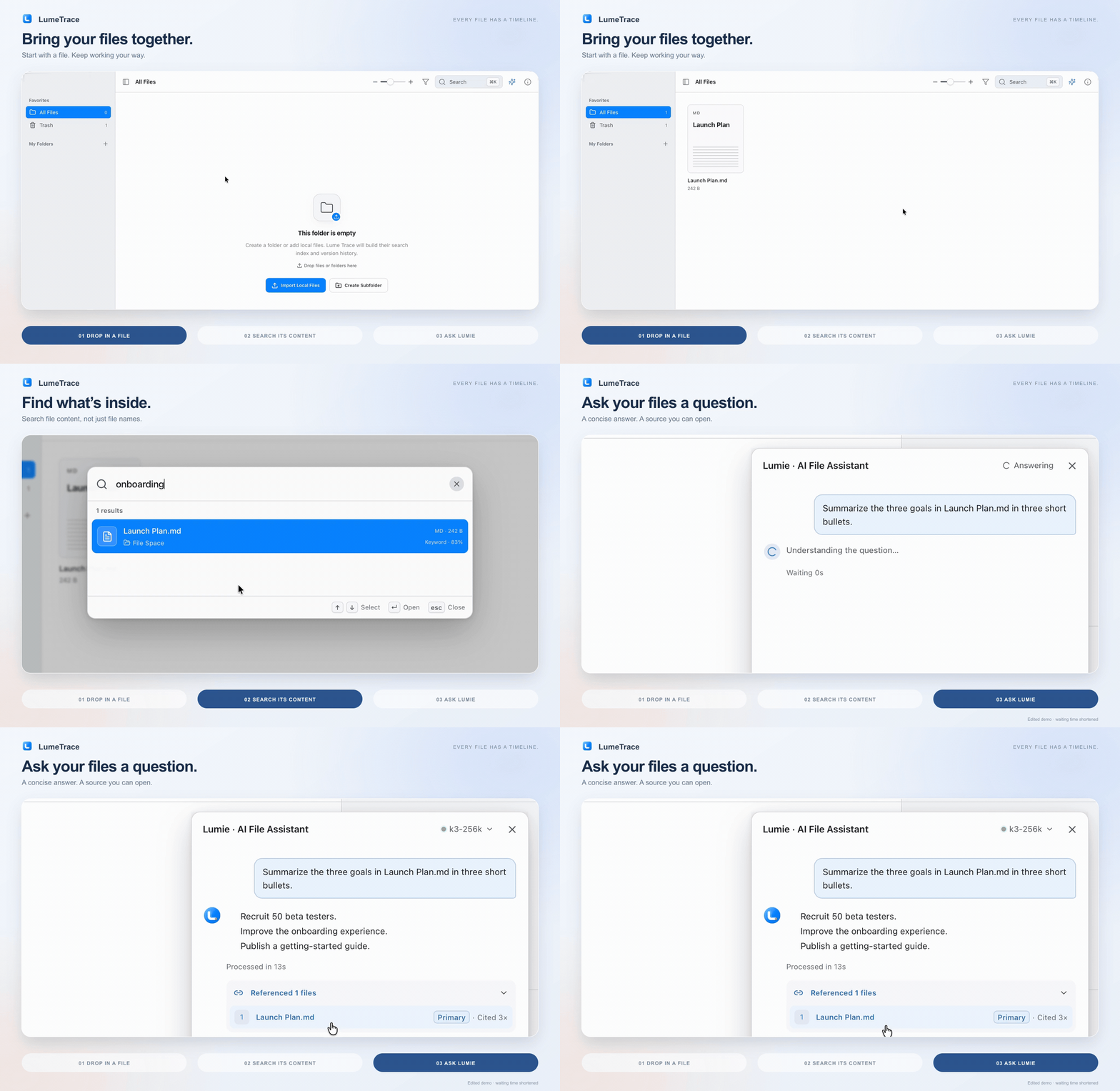
LumeTrace 是一款开源的本地文件管理器,保持使用简单与页面清爽的原则,且不依赖任何服务器绝对的本地运行。
工作区
首次打开配置工作区,选择一个本地目录就好,直接加载目录下的所有文件进入工作区,不修改目录结构与文件名称。
文件的版本记录与查看
不会更改使用者的习惯,无论是在应用内部修改文件还是使用您顺手的应用修改文件,都会自动记录一个版本,可以在应用内查看版本变化与恢复。
全文搜索
Command + K 快速唤醒搜索,不是单纯的检索文件名称,而是全文检索且高亮命中关键词,双击直接打开命中位置。
AI 文件助手
LumeTrace 不提供 AI 模型 API ,而是可以配置本地的 LLM 或者 你在本地配置过的 Codex 、Claude 、Hermes 的 CLI 直接处理,不仅可以用于寻找文件、总结文件、还可以比对两个文件版本的变化。
支持功能
创建本地工作区、拖拽加入工作区、删除冷静期、自动检测文件变化并记录版本、版本恢复、全文检索、AI 文件问答
LumeTrace
Tauri + Rust 架构,目前只支持 macOS 版本,其他版本正在努力开发中,暂时不准备再增加新功能了,让现有用得跟果冻般丝滑。
欢迎各位大佬试用和提宝贵的意见。
[推广] 疯狂星期四, Zooproxy 福利来袭, Chatgpt/codex/ai 均可稳定试用
疯狂星期四 P 折扣日!!!快来抢了,先到先得,库存不多
做跨境 / 外贸网络如何解决 ---- 静态原生 IP 推荐
代理 IP 选哪里,能免费试用最好----Zooproxy
https://zooproxy.com/?kwd=LQ-v2ex
邀请码:veexfwaif
UXCS-USEL-VKPV
ZQHB-C8MD-XQC5
BESQ-FWUB-ZSVD
RJHY-4U7X-NYXV
VVRZ-KLCG-QLPZ
5QD2-DSVN-B8DJ
NMFL-FCWY-MEMK
领取了的宝子回复一下哪个领到了哦!!!
没领取到的,可以联系官网客服领取免费试用额度或者私我您注册的邮箱。
也可以联系 https://t.me/Zooproxy7

[推广] 分享我们新做的 REYVO:给 ChatGPT、Claude、Cursor 等 AI / SaaS 服务配张虚拟卡 💳
我们最近上线了新的虚拟卡平台 REYVO
充值 → 开卡 → 设置额度 → 支付 → 查交易
全部在线完成,同时配有中文教程和客服
我们仍在持续完善产品,欢迎大家在使用过程中提出建议
REYVO: https://reyvo.com

千问办公上架deepin ,一句话开启 AI 办公