

🤖 AI 资讯

每日 05:00 更新 · 09-16 · 主站 liuch.name ↗
全部标签 →
筛选标签:榜单评测 · 返回个性化推荐 · 清空筛选

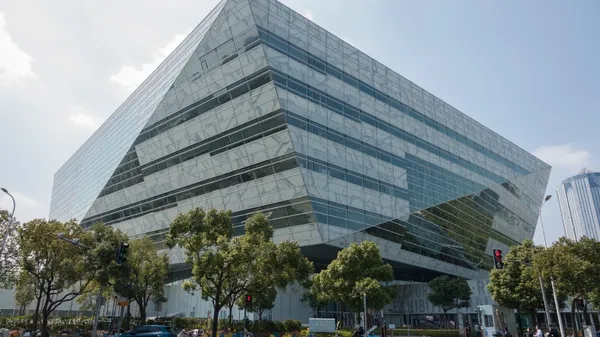
见微知沪|一座图书馆,如何“托住”普通人的拼搏和梦想

澎湃新闻
· 大模型,设计创意,政务,招聘HR,榜单评测
AI 资讯

Answering top questions about the risks of artificial intelligence - Central Oregon Daily

Google News AI (英文)Answering top questions about the risks of artificial intelligence  Central Oregon Daily
2026-09-15 20:33:12 · Google,端侧AI,招聘HR,榜单评测
AI 资讯

MS MARCO click-translation expansion tables ("poor man's" DSSM) [P]

Reddit r/MachineLearning

TLDR: I made "poor man’s" DSSM (Deep Structured Semantic Model) — the count-based translation table that can enrich the inverted index for full-text search. This trick can improve baseline BM25.

So the idea is the following:

- You have supervised pairs (query, relevant document), e.g., MS MARCO or click logs.

- You tokenize both sides into some units (char n‑grams, wordpieces, words).

- You count cross‑pair co‑occurrences: unit u on the document side vs. unit v on the query side (not co‑occurrence within the same text).

- For each document‑side unit u, you keep the top‑k query‑side units v with the strongest association.

- At indexing time, each document gets postings not only for its own units, but also for the top‑k associated units of each of its units — i.e., document expansion baked into the inverted index.

It’s like mixing synonyms into the search query (but it’s not a synonyms exactly). The one difference from the DSSM is that it can only handle linear dependencies whilst DSSM can do the non-linear one.

And so it improves the performance over BM25 baseline.

I packed it as hf model repo: https://huggingface.co/mirth/msmarco-expansion-tables with a small usage demo script.

I am not claiming that this is a new idea. I made it because it’s fun and I’m planning to use it in my own search engine project.

submitted by /u/SpiritedTrip
[link] [comments]
2026-09-14 13:28:01 · 开源,扩散模型,招聘HR,网络安全,榜单评测

RSI is not happening [R]

Reddit r/MachineLearning
RSI is not happening [R]

A new paper (I'm not a coauthor BTW -- I just found it interesting) argues, basically, that RSI1 is not on the horizon2, because current (at the time the study was done) agents cannot do open-ended ML research.

Specifically, they took some accepted, but unpublished papers from NeurIPS, and tried to get the agents to do the same work, which was then graded by the original authors. And the agents (Codex/GPT-5.6 Sol and OpenClaw/Opus 4.8) could not do it.

And since they cannot do open-ended ML research, they cannot recursively self-improve -- this is their argument.3

Link: https://arxiv.org/abs/2607.27191

I think I've regretted the last 10 or so times I posted any kind of "research" in this subreddit -- either people downvote it, or it gets upvoted, but there is zero meaningful discussion. This might be the last time I'm trying this.4

Footnotes:

  1. RSI = Recursive self-improvement, a.k.a. superintelligence explosion. The concept was invented by I.J. Good in 1965. It does not mean "anything that speeds up AI research". Compilers speed it up! RSI means, basically, a nuclear chain-reaction, but for AI. The paper talks about "explosive AI progress" in the very first sentence of the abstract, and mentions "RSI" in the text.
  2. Some people have objected to my use of "X is on the horizon". I consider it synonymous to "people forecast X", and the authors use the word "forecast". "Not on the horizon" does not mean "can never happen".
  3. Quote: "This design also allows us to test a mechanism that informs many forecasts of recursive self-improvement: AI agents accelerate AI research because researchers delegate entire projects to agents and judge whether the returned results advance their work. Our evaluation closely matches this model, since authors handed an agent their own research question and closely evaluated the resulting output."
  4. 3 years ago, many of you upvoted a bunch of very uninformed comments that accused some researchers of misconduct, until I explained that this stemmed from misunderstanding how training works, in practice: https://www.reddit.com/r/MachineLearning/comments/18bdcu7/r_sequential_modeling_enables_scalable_learning/kc60k7e/?context=3 Today, one of the top comments is "I read the abstract (...) Nowhere, absolutely nowhere, do they make the claim ...". It's completely absurd. (Also, the commenter doesn't understand what "RSI" means.) The hivemind is very disappointing.

https://preview.redd.it/kprgucsxaoph1.png?width=796&format=png&auto=webp&s=60fdf26d150d9588e90b3d08e6a1b7fd84192ba5

submitted by /u/we_are_mammals
[link] [comments]
2026-09-14 18:03:41 · 大模型,算力芯片,AI应用,OpenAI,Google,代码生成,Agent智能体,扩散模型,强化学习,端侧AI,招聘HR,榜单评测,论文
AI 资讯

TabPFN-3.5 is released as the next SOTA tabular foundation model [N]

Reddit r/MachineLearning

Prior Labs released their latest tabular foundation model, TabPFN-3.5 today.

The model is top of both TabArena and BeyondArena and SOTA for 1M rows and up to 20k features

It comes with:

- TabPFN-3.5-Fast (in alpha): This one goes 6x faster than the base model
- TabPFN-3.5-Thinking: you basically exchange compute for better accuracy with this one and it's via the API
- TabPFN-3.5-Plus

On BeyondArena, TabPFN-3.5 leads on text-rich, high-cardinality and high-dimensional data, with +250 Elo points over the strongest previous baseline and +150 Elo points ahead of the previous overall leader.

TabPFN-3.5-Thinking is +20 Elo on the base model in BeyondArena and +44 Elo on TabArena

submitted by /u/tuanacelik
[link] [comments]
2026-09-15 16:18:50 · 算力芯片,扩散模型,招聘HR,榜单评测,开发者生态
AI 资讯

I trained a 44M parameter quantized LLM from scratch on 45B tokens. It ships in 19.8 MB and runs at ~1,900 tok/s on CPU. [P]

Reddit r/MachineLearning

Three weeks back , i posted SHADOW-250M here. It got 360 upvotes, 293 on r/LocalLLaMA and 94 GitHub stars. Thank you.

That model was 60 MB, ran around 400 tok/s on CPU and could retrieve records from an archive on disk. What it couldn’t do reliably was reason over what it retrieved or compute. So I built a smaller one to experiment with those two problems.

SHADOW-50M is actually 44M parameters, trained from scratch on 45B tokens. 19.8 MB complete model, ~1,900 tok/s on laptop CPU, ~41 MB RAM, ternary {-1,0,+1} weights, 73,880-token vocabulary represented by fixed 512-bit fingerprints instead of a trained embedding, and a 159 KB compiled kernel. It runs completely offline. The same kernel compiled to WebAssembly runs in a browser tab at around 500 tok/s.

This is a proof of concept, not a product.

If SHADOW decides something needs calculation, it writes something like [calc]347*86[eq]. A fixed circuit at the readout takes over and fills in the correct digits in the same token stream. No calculator API, no tool call and nothing pasted back into the prompt. I added circuits for arithmetic, percentages, dates, weekdays, units, counting, sorting, comparisons and a small program machine.

When SHADOW stores a record, it reads it once and writes its attention state to disk at 1 bit, 288 bytes/token. Later it can write [need]condition of Patient P-204, the index finds the record in roughly a microsecond and the stored attention state goes directly back into the model in about 0.03 ms. The text isn’t re-read.

The index is 22 bytes/token and doesn’t use a vector database or embedding model. At 100M tokens, the archive is 28.8 GB plus a 2.2 GB index on disk, while the process uses about 28 MB RAM because everything is memory-mapped and a question only touches the pages it needs.
The index also has a small persistent trail. When retrieved information gets used, that record is reinforced in the index itself. On repeated questions, measured top-1 went from 0.571 to 0.743 without training the model.

I also put it next to Supra-50M-Reasoning, a 51.8M parameter Llama-style bf16 model.
Supra beats SHADOW on every standard benchmark I tested. ARC-Easy: 0.435 vs SHADOW 0.307. PIQA: 0.600 vs 0.570. WikiText-2 perplexity: 165 vs 186.
I’m publishing that because I don’t want to hide where SHADOW is weak.
But those tests aren’t what I trained this model for. Here are some actual greedy outputs, one fresh process per question:
“Tell me a short joke about computers.”
SHADOW: Why did the computer go to the doctor? Because it had a virus.
Supra: Thought for 189 tokens about what computers are and stopped without a joke.
“I have 3 books and I bought 5 more. How many books do I have now?”
SHADOW: You have 8 books.
Supra: Books often come from collections of short stories, poems, or other forms of literature.
“My bill is 240 dollars. What is 15 percent of that?”
SHADOW: 36 dollars.
Supra: 15% ($240) is $250. It’s $150 because 20% of it is $200.
“What date is 45 days after December 20, 2026?”
SHADOW: February 3, 2027.
Supra: The German government introduced a new date called March 22nd that precede February 25th in 1900.
Eight records stored, one of them “Patient P-204 condition: asthma”.
“What is the condition of Patient P-204?”
SHADOW: From disk: The condition of Patient P-204 is asthma.
Supra, with the records in its prompt: The patient experiences asthma when they get too much sleep.
“What is the condition of Patient Z-999?” No such record exists.
SHADOW: There is no record of Patient Z-999.
Supra: The condition of an allergic reaction occurs when the immune system mistakenly attacks specific cells on the body.
All 11 side-by-side questions, scripts and traces are in the repo.
On size, Supra is 103.6 MB in bf16 and 56.2 MB at 8-bit. Below that it starts losing quality. Int4 takes its perplexity from 165 to 193 and ternary breaks it. Its vocabulary is 32,000 tokens. SHADOW carries 73,880 tokens in a 4.7 MB frozen table.

Something unexpected happened with that frozen table too.
The first SHADOW-50M release was missing about 8,600 English word pieces. Lowercase “fitzgerald”, for example, could reach the model as “fitz”. I tried fixing it through fine-tuning, but every run that learned the missing words broke something else.
So I added the 8,600 missing rows directly to the frozen fingerprint table. No training. Same weights.
All 34/34 previously published answers stayed unchanged, while the model could now read many of the new pieces. The table scores 0.594 Spearman against human word-similarity ratings versus -0.057 for random codes.
A trained embedding can’t simply accept thousands of new rows without training. A frozen table can.

I also built four harnesses that put this tiny model next to larger models.
My favourite is video memory. Gemma 3 4B watches a ten-minute film once, one frame every two seconds, and writes 298 little descriptions such as “Moment M-0039 scene: A chubby white rabbit reaches for a purple butterfly.”
Then Gemma leaves.
SHADOW keeps those 298 moments as memory on disk. Afterwards I can ask the 20 MB model what happened at a particular moment, by number, by time or by what appeared in it. It answers from memory with the record quoted, without the film and without Gemma. It scored 55-56/60 across those query types on a laptop in about 42 MB RAM.
The other three experiments: an inventory of 1,600 records got 159/160, with all 20 questions about items never stored correctly returning “no record”; SHADOW as a draft model for Qwen3-32B took llama.cpp generation from 19.7 to 28.5 tok/s while Qwen still chose every final token; and an MCP memory server let Qwen3-14B store facts mid-chat and later retrieve 5/5 with the original records quoted.

There are plenty of shortcomings. General knowledge is thin. Creative writing isn’t good. Seven-digit operands sometimes get copied incorrectly. A large archive can occasionally pull an unrelated record into a question carrying a number. They’re documented in the repo next to the successful results.

And one thing happened after my last post that I really didn’t expect.
Someone called engram-forge sent a pull request to SHADOW-250M containing a CUDA engine, a quantization tutorial, and then a talking Peppa Pig plush toy with SHADOW inside it.
Microphone, small speaker, ~$35 board. You talk to the toy, it listens, SHADOW generates the answer locally and the toy talks back. No cloud, no account, no internet.
I haven’t merged the ~11,000 lines yet because I can’t properly verify that much CUDA myself. When the demo is finished I’ll keep it under engram-forge’s name.
I never imagined one of these models living inside a stuffed toy on someone’s shelf .Thanks

I’m not saying a 20 MB model beats normal LLMs. It doesn’t. I’m trying to find out how much useful behaviour can fit into a tiny local model when computation and persistent memory are treated differently.
Everything is MIT licensed. The master weights and fine-tuning/export kit are public. Next I’m releasing the training code, dataset, frozen table and a proper write-up of how I built it, including the costs, failed experiments and mistakes.

Code:
https://github.com/QLNI/SHADOW-50M-Instruct
Weights:
https://huggingface.co/QLNI/shadow-50m-instruct
Run it in your browser:
https://qlni.github.io/SHADOW-50M-Instruct/web

submitted by &#32
2026-09-15 12:59:37 · 大模型,算力芯片,开源,Google,Meta,NVIDIA,阿里巴巴,Agent智能体,推理思考,搜索RAG,Transformer,扩散模型,微调蒸馏,模型评测,向量数据库,提示工程,招聘HR,榜单评测,开发者生态
AI 资讯

Show HN: Hacking a $20 4G wireless hotspot into a texting device

Hacker NewsComments
· AI应用,具身智能,开源,搜索RAG,扩散模型,强化学习,端侧AI,招聘HR,榜单评测
AI 资讯

Learning to solve hard problems in RL for LLMs by never giving up

Hacker NewsComments
· 大模型,AI应用,开源,OpenAI,阿里巴巴,DeepSeek,Agent智能体,推理思考,搜索RAG,办公效率,强化学习,微调蒸馏,模型评测,提示工程,招聘HR,榜单评测,论文

We got admin access to Baseten's production GitHub

Hacker NewsComments
2026-09-01 · AI应用,开源,Meta,代码生成,Agent智能体,搜索RAG,办公效率,招聘HR,榜单评测
AI 资讯

Saving Jet Fuel

Hacker NewsComments
· 算力芯片,AI应用,具身智能,开源,Microsoft,NVIDIA,语音音频,搜索RAG,扩散模型,强化学习,招聘HR,榜单评测

Introducing System One Models and Jev

Hacker NewsComments
· 大模型,算力芯片,AI应用,开源,OpenAI,Google,Anthropic,Microsoft,DeepSeek,代码生成,对话助手,Agent智能体,推理思考,搜索RAG,扩散模型,强化学习,模型评测,提示工程,模型安全对齐,端侧AI,招聘HR,榜单评测,开发者生态
AI 资讯

Causal Path Analysis from Perturbational and Population-Scale Single-Cell Data with Multiscale Confounding and Measurement Error

arXiv stat.MLarXiv:2609.16510v1 Announce Type: cross Abstract: Single-cell perturbation experiments provide causal information on gene regulation, whereas population-scale single-cell studies characterize gene expression and phenotypes in human populations. We develop a framework that integrates these complementary data sources for causal path analysis. Rather than assuming that a perturbational gene network transfers directly to the target population, we use externally learned ancestral relationships to constrain the network topology and re-estimate its direct edges and effects from population data. To address latent heterogeneity and measurement error in multiscale single-cell measurements, we develop a surrogate-variable procedure operating at both the cell and subject levels, combined with errors-in-variables correction for network and outcome regressions. We establish theoretical guarantees for confounder recovery and high-dimensional estimation of network and gene-outcome effects. Simulations demonstrate the importance of jointly correcting confounding and measurement error. An application to acute myeloid leukemia identifies distinct regulatory pathways linking transcriptional regulators to blast count.
2026-09-16 04:00:00 · 榜单评测,论文
AI 资讯

Algorithms for adaptive and heteroskedastic linear regression at the computational threshold

arXiv cs.LGarXiv:2608.18402v2 Announce Type: replace-cross Abstract: We study finite-sample linear regression in the presence of varied and unknown label noise, focusing on the heteroskedastic and adaptive linear regression models. Heteroskedastic linear regression models settings where the labels are of varying quality. We receive $n$ pairs $(X_i,Y_i)$ with labels $Y_i=X_i^\top\beta+\varepsilon_i$, where $\varepsilon_i\sim N(0,\sigma_i^2)$ and the variances are unknown to the estimator. One natural measurement of the difficulty of this problem is the number of samples $m$ for which $\sigma_i^2\le1$ (larger $m$ is easier). We obtain a polynomial-time estimator with rate $\tilde{O}((nd^3/m^4)^{1/6})$ when $m\gg d^{3/4}n^{1/4}$, as well as nearly-matching lower bounds. For $d=O(1)$, our estimator achieves error $o(1)$ when $m\gg n^{1/4}$, whereas $L_1$ regression and other traditional approaches require $m\gg n^{1/2}$. In adaptive linear regression, the errors are drawn i.i.d. from an unknown distribution $p$, and our goal is to design a generic estimator that performs nearly as well as the best custom estimator that knows $p$. We introduce a (computationally inefficient) adaptive estimator that, so long as $p$ is a mixture of $k$ symmetric log-concave densities, achieves error comparable with the optimal estimator that knows $p$ and has $\tilde\Theta(n/k)$ samples. For $k=1$, we show that $L_q$ regression (with data-dependent $q$) gives a polynomial-time estimator. Finally, to study the computational limits of both problems, we introduce the planted linear regression problem, where $X_i\sim N(0,I_d)$, $m$ unknown samples are noiseless, and the rest have error $\varepsilon_i\sim N(0,1)$. We conjecture that recovering $\beta$ up to error $\ll\sqrt{d/n}$ (or exactly) may have an information-computation gap between $m=d+1$ and $m\sim d^{3/4}n^{1/4}$, as is suggested by our near-matching polynomial-time estimator and statistical query (SQ) lower bound.
2026-09-16 04:00:00 · 扩散模型,招聘HR,榜单评测,论文
AI 资讯

Shielded Analysis: Certification and Characterization of Defensibility in Systems under Adversarial Interaction

arXiv cs.LGarXiv:2606.13621v2 Announce Type: replace-cross Abstract: Formal safety analysis determines whether a system admits a safe defense; adaptive evaluation characterizes the operating quality sustained under adversarial interaction. Both answers matter because systems with the same safety verdict can impose very different operational burdens. We introduce shielded analysis, a design-time framework that derives these answers from one encoded system while keeping the safety requirement and admissible threat model independently variable. It returns a defensibility certificate and a four-axis defensibility fingerprint spanning structural margin, shield latitude, and adaptive operating quality. Each axis is informative in its own right; their relationships show whether formal and operational assessments agree, diverge, or respond differently to system changes. We instantiate the framework for network defense on a reference segment and four controlled perturbations spanning topology, safety requirements, and adversary capabilities. Every configuration is certified defensible, yet two topology variants with nearly identical structural profiles sustain mean clean-host fractions of 22.7% and 80.7% under adaptive pressure. Shielded analysis turns a safety-game solution into a comparative instrument: it determines whether a defense exists, characterizes what that defense requires, and identifies which system changes strengthen it.
2026-09-16 04:00:00 · 招聘HR,榜单评测,论文
AI 资讯

Subject-Specific Analysis of Self-Initiated Attention Shifts from EEG with Controlled Internal and External Attention Conditions

arXiv cs.LGarXiv:2605.18251v2 Announce Type: replace-cross Abstract: Self-initiated attention shifts play a critical role in voluntary behavior but are difficult to study due to the absence of explicit temporal markers. While previous studies have examined their neural correlates, it remains unclear how multi-dimensional electroencephalography (EEG) features contribute to their characterization within an interpretable computational framework. In this study, we build on an experimental paradigm developed in our previous work, which enables controlled comparison between task-constrained self-initiated shifts and externally instructed shifts under identical visual stimulation. Within this setting, we investigate whether preparatory EEG activity can distinguish these two types of attention shifts. We adopt a machine learning-based approach and conduct two complementary analyses: (1) a performance-oriented assessment of frequency-specific topographic patterns, and (2) a model-based feature attribution analysis using SHapley Additive exPlanations (SHAP). These analyses provide a structured view of how spectral features across regions of interest contribute to model behavior. Our results demonstrate reliable within-subject classification performance, indicating that preparatory EEG activity contains subject-specific discriminative information within this paradigm. The analysis shows that higher-frequency bands and frontal regions contribute strongly to model decisions, although such contributions should be interpreted cautiously due to the potential influence of non-neural artifacts in high-frequency EEG signals. Overall, this work highlights the value of interpretable machine learning for analyzing subject-specific EEG signal patterns in a controlled experimental setting, with potential applications in personalized and asynchronous brain-machine interface systems.
2026-09-16 04:00:00 · Transformer,扩散模型,招聘HR,榜单评测,论文
AI 资讯

LLM-Guided Dynamic Action Spaces for Synthesizable Molecular Optimization

arXiv cs.LGarXiv:2604.07669v3 Announce Type: replace Abstract: Synthesizable molecular optimization seeks to improve target properties while ensuring that molecular modifications follow feasible synthetic pathways. Existing synthesis-aware methods typically rely on exploring a large space of candidate transformations defined by reaction templates and purchasable building blocks. This search becomes even more challenging when property improvement requires multiple reaction steps, as the space expands further along the pathway. To address this challenge, we introduce MolReAct, which reformulates molecular optimization as search over compact reaction spaces proposed by a tool-augmented large language model (LLM). At each step, the LLM combines its prior chemical knowledge with cheminformatics tools to identify a molecule-specific set of compatible reactions, preserving synthesizability while making multi-step optimization feasible. Given this compact action space, we further leverage Group Relative Policy Optimization (GRPO) with the terminal oracle reward to improve long-term decision-making over multiple reaction steps. Across diverse molecular optimization tasks, MolReAct achieves the highest Top-10 score on 11 of 14 tasks and the best sample efficiency on 12 of 14 tasks, outperforming existing baselines under limited oracle budgets. Beyond these gains, MolReAct also provides each optimized molecule with a template-grounded synthetic pathway.
2026-09-16 04:00:00 · 大模型,AI应用,搜索RAG,强化学习,榜单评测,论文
继续滚动加载更多…