



TeleAntiFraud 2.0: A Refreshable, Profile-Grounded, and Audio-Based Benchmark for Telecom Fraud Detection
Correlation-Guided Encoder Selection for Multi-Encoder Large Audio-Language Models
Encoder Awakening via Adapters: Effective Domain-Adaptive Fine-tuning of Speech-LLMs
HearInContext: A Benchmark for Implicit Context in Speech Recognition
A Probe Shift Is Not a Fairness Fix: The Limits of Representation Steering in Speech Models
T-SANDHI: Tone Sandhi-aware Adaptive Network with Decoupled Hybrid Injection for Low-resource Taiwanese Hokkien Speech Recognition
Look Less, Hear Better: Jointly Rewarded GRPO for Streaming ASR
Beyond Routine Compliance: Cunning Data Cultivates Safety Vigilance in Large Language Models
One Color Preprocessing Improves DSATUR
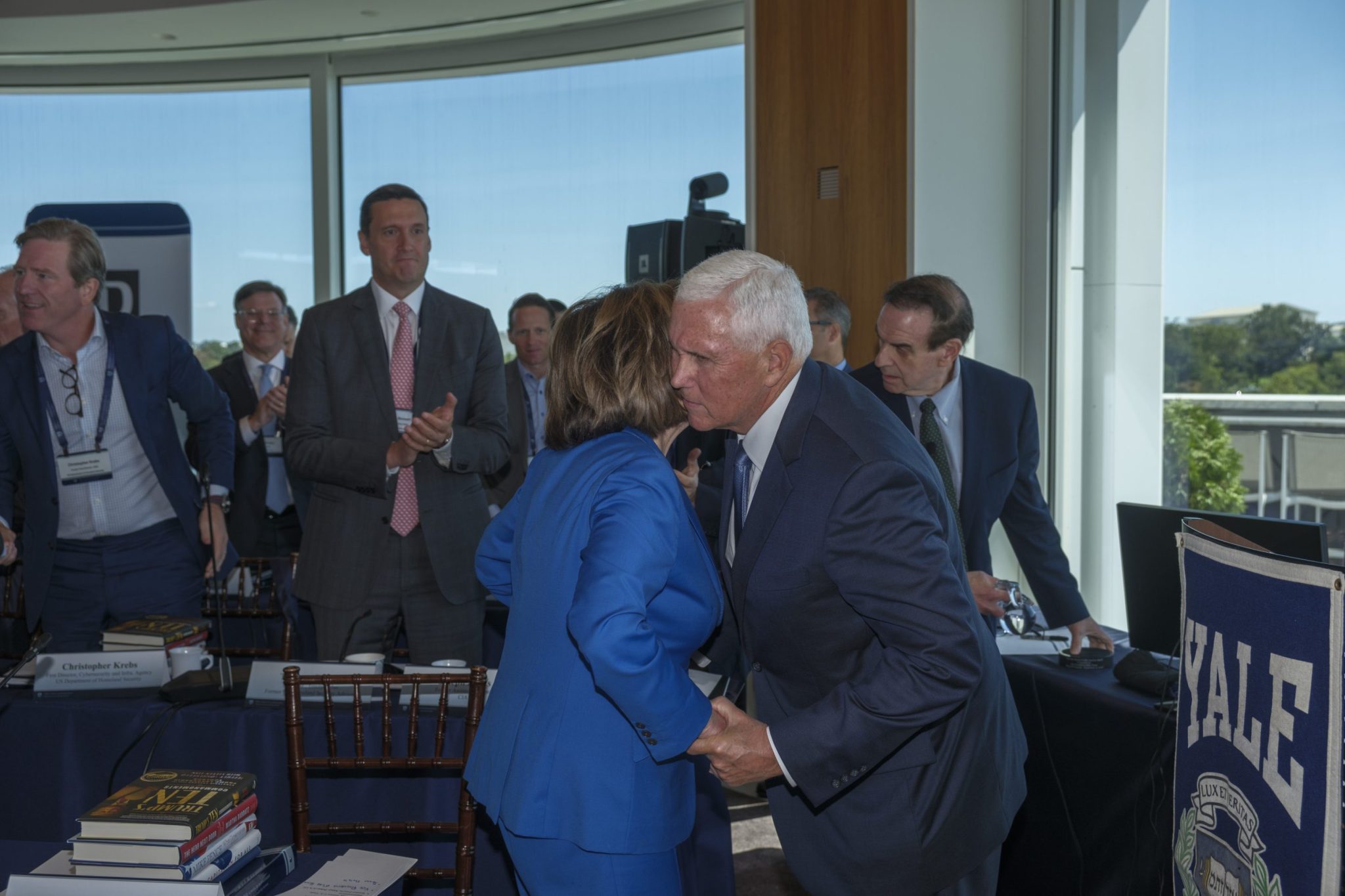
Exclusive: Inside the room where Nancy Pelosi and Mike Pence shared an emotional embrace in front of America’s leadership class
It lasted surprisingly long, roughly 20 seconds. They gripped each other’s hands as they leaned in to whisper. The former Vice President and former Speaker of the House, before each was awarded the inaugural Yale Patriot Public Service Award, paused to embrace each other.
When Nancy Pelosi walked into the room, more than halfway through the event, a hush fell over the crowd and all turned to look. She worked her way through the front, shaking hands, sharing whispers and short side hugs with familiar faces; of which, it seemed, there were several in the crowd. But most surprising of all was when she finally found her seat—next to former Vice President Mike Pence. The two have sat side by side many times before, famously behind Trump during his 2020 State of the Union, when she ripped the President’s speech in half as Pence disparagingly watched.
The House Speaker Emerita—who is completing her final term after nearly four decades representing San Francisco—and the former vice president—who spent January 6, 2021, resisting his own president’s demand that he overturn a certified election—came together in Washington D.C. at the Yale Chief Executive Leadership Institute, hosted by Jeffrey Sonnenfeld, the Lester Crown Professor in Management Practice and Senior Associate Dean at Yale School of Management.
We watched it happen from the floor as Fortune‘s representatives at the closed-door gathering, whose off-the-record ground rules were lifted by everyone named in this article. Whatever else may divide them, the two stood shoulder-to-shoulder as the inaugural recipients of the Yale Patriot Public Service Award for Executive Leadership, built on the idea that they had put the country ahead of their party and themselves. It was “shocking, historic and emotional to all,” Sonnenfeld told Fortune of the unexpected embrace. Pence later posted about the event on X.com.
Two awards, one thesis
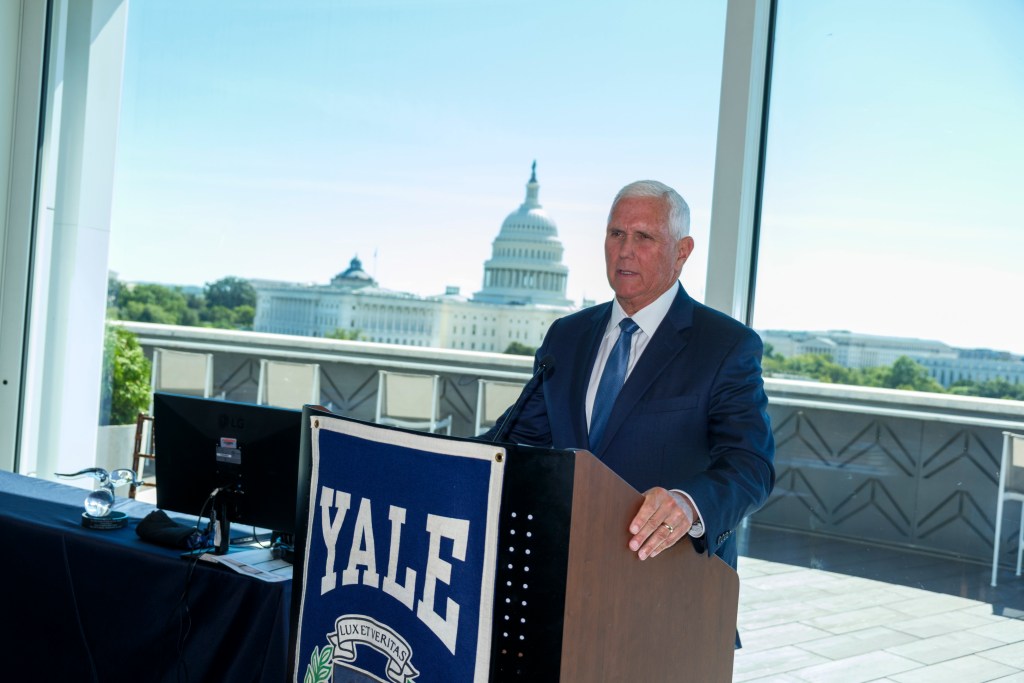
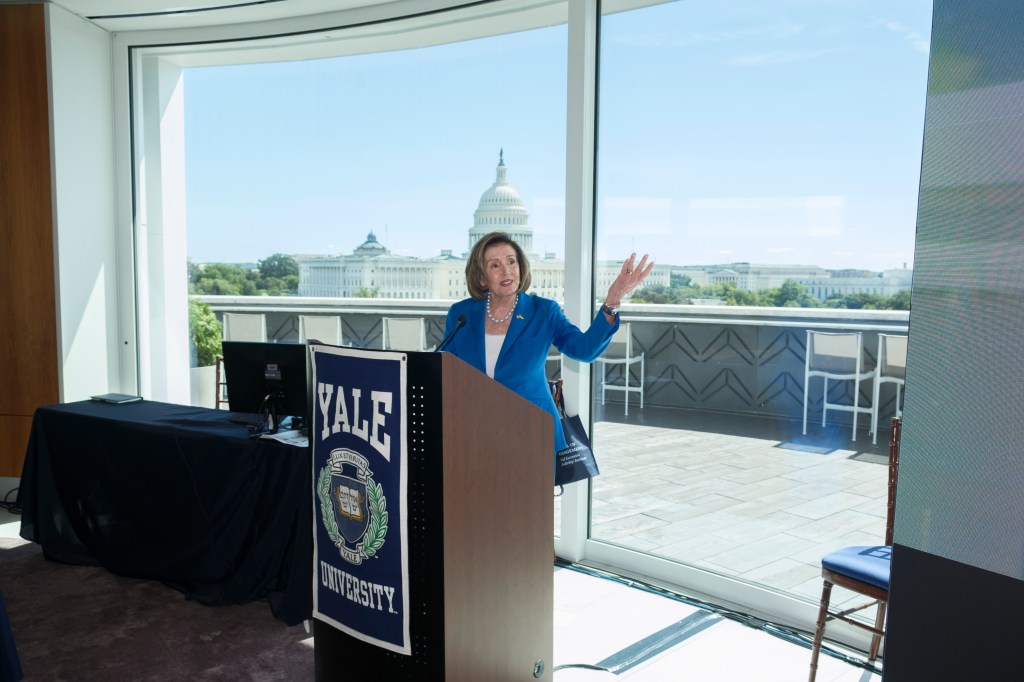
The award, inaugurated this year to mark the 250th anniversary of American independence, went to Pelosi for “Legislative Leadership” and to Pence for “Executive Leadership.” Sonnenfeld, who has run the semiannual CEO Caucus for decades, designed the awards explicitly to honor “Americans of both parties who have devoted their lives to public service and rendered it with integrity, civility and devotion to country above party.”
The presenter list was a bipartisan reunion in its own right. Republican former Transportation and Labor Secretary Elaine Chao, spoke movingly about how “Patriotism is not measured on the easy days. It is measured on the hard ones when doing your duty costs you something. ….On January 6, 2021, the Vice President was asked to set aside the Constitution. Under enormous pressure, in circumstances no one should ever face, he kept the oath he had sworn to protect.”
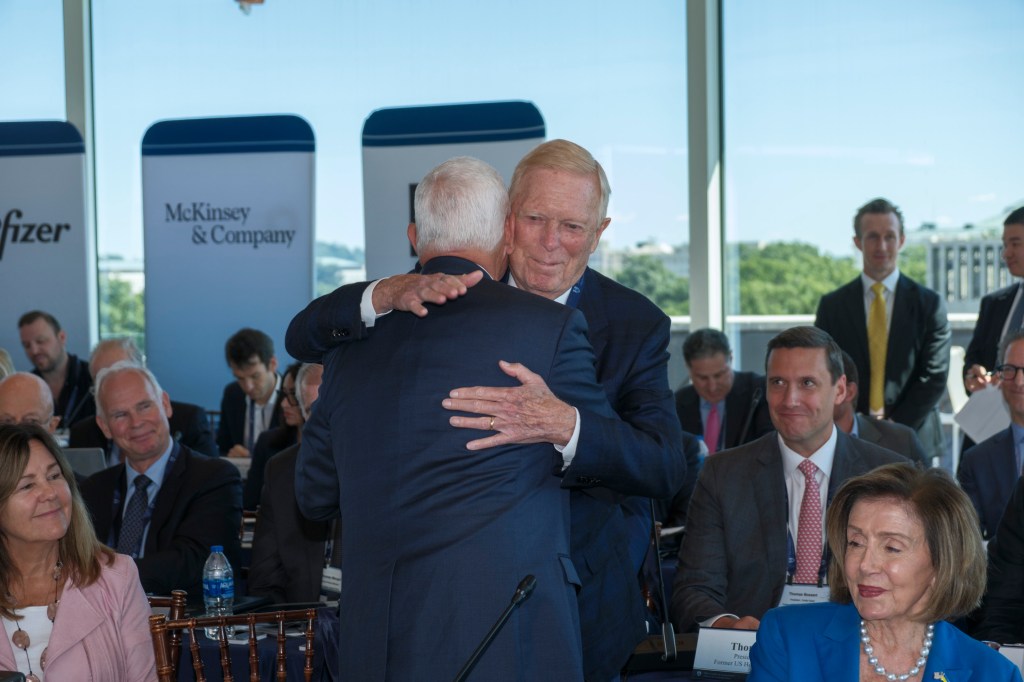
Former Democratic House Majority Leader Dick Gephardt spoke forcefully about how Pence “put country over party, and more importantly, country over self.” He told the room, “Mike Pence is a patriot. He has good character. He did the right thing. He stood for the Constitution, he stood for the laws of this country, and he saved this democracy.”
Carla Hills, a Republican who served as U.S. Trade Representative and HUD Secretary, offered a parallel case for Pelosi: “In these highly partisan days, Nancy Pelosi has really been a model for outstanding government leadership,” she said. “She takes principled positions. Policy over politics. And policy over her own needs for reelection.”
Former Federal Reserve Chair and Treasury Secretary Janet Yellen, unable to attend in person, sent a pre-recorded tribute praising Pelosi’s “remarkable ability to look at seemingly impossible political situations, figure out what can actually be done, and then somehow get it done,” adding that “all of that political skill is grounded in a very clear sense of purpose and a strong moral compass.”
Other attendees who lifted the off-record ground rules to express their support for the awards included former HHS Secretary Sylvia Mathews Burwell, Chief Executive Group CEO Marshall Cooper, USA Networks founder Kay Koplovitz and American Industrial Acquisition Chairman Leonard Levie.
Speaking of their behavior at the summit, Sonnenfeld told Fortune, “many were shocked, and all were moved by this historic embrace of long-standing political rivals who are titans of their respective political parties.” He said he hoped that this could provide a “much-needed pathway for business leaders to help pilot their businesses through the anxieties of the next few weeks and possibly next few months of a divided nation.”
A ‘vivid reminder’
The tributes to Pelosi and Pence were the emotional centerpiece of a caucus otherwise consumed by anxiety: over the ongoing war in Iran, Trump’s upcoming visit to China, and AI’s effect on jobs and markets. And yet Pence and Pelosi both offered several jokes, in keeping with Sonnenfeld’s tone as a free-wheeling master of ceremonies.
Fortune‘s Diane Brady wrote this morning that she “did not expect to return from the Yale CEO Caucus in Washington feeling more hopeful than when I arrived,” crediting the standing ovations for Pence and Pelosi as proof that “what unites them isn’t their politics but their commitment to the Constitution, public service, integrity and something bigger than themselves.”
Reaction from other attendees echoed that relief. Jay Timmons, president and CEO of the National Association of Manufacturers, said manufacturers are “wrestling with enormous uncertainty, much of which has been brought about by populism and extreme partisanship.” He called the joint tribute a “vivid reminder that our nation is at its best when our leaders work together to advance America’s highest ideals.”
Robert Hormats, who served as a senior State Department economic official across five administrations, was more emphatic, describing Pence and Pelosi as “HEROES WHO SAVED OUR DEMOCRACY THAT DAY. … A TRULY MEMORABLE DAY.”
[This report has been updated to add a comment from Elaine Chao.]
This story was originally featured on

Emerald AI, Google and NVIDIA Launch Alliance to Advance Flexible AI Data Centers
AI factories are the infrastructure of the intelligence era. Scaling them responsibly will depend as much on innovation across the grid as inside the data center.
Today, Emerald AI, Google and NVIDIA announced the launch of the AI Energy Management Alliance (AEMA), a first-of-its-kind coalition advancing data centers that can dynamically manage their electricity use in response to grid conditions.
This power flexibility can help unlock faster, larger connections for AI infrastructure while supporting the energy systems and communities that make its growth possible. Getting more watts out of existing infrastructure reduces environmental impacts per watt and supports energy affordability.
The objective is clear: build AI infrastructure that doesn’t just connect to the grid but works with it.
Flexibility Is an Energy Imperative
Power has become a defining constraint on the expansion of U.S. AI infrastructure.
Traditional interconnection processes were designed around facilities with flat, static electricity demand. They weren’t built for computing infrastructure capable of responding intelligently when the power system is constrained.
A flexible data center can adjust its electricity drawn from the grid in several ways — shifting computing workloads, discharging storage, using paired generation or responding to system contingencies. These capabilities allow a large electricity customer to serve as a controllable resource rather than an inflexible load.
Used effectively, flexibility can make more efficient use of existing grid capacity, reduce demand during periods of system stress, and avoid or defer costly infrastructure upgrades. It can also give utilities and grid operators greater confidence to connect AI facilities on shorter timelines.
Technology-Neutral, Performance-Based Requirements
AEMA is technology-neutral and performance-based. Its focus is on the measurable service a facility can deliver — including response speed, duration, predictability and behavior during an emergency — rather than the specific hardware or software used.
Reliability remains paramount. The alliance’s principles call for:
- Defining ride-through, curtailment and contingency-response obligations before a facility connects — meaning the alliance is setting clear rules for facilities regarding staying connected during brief grid disturbances, reducing power use when needed and responding to emergencies.
- Standardizing technical requirements, performance metrics and operational data sharing.
- Creating faster, risk-adjusted pathways for customers that make credible and verifiable flexibility commitments.
- Allocating interconnection costs in a way that reflects actual system impacts and benefits, such as avoided upgrades and improved ramping capability.
These measures can reduce uncertainty for developers while giving system operators the information and control needed to preserve reliability.
Convening the Full AI and Power Value Chain
AEMA convenes the full value chain across computing and power — including AI platforms, infrastructure providers, data center operators, technology companies, power producers, utilities and regional grid operators.
The founding members will be joined by launch partners from across the ecosystem. Together, AEMA will develop technical and operational approaches, collaborate with utilities on interconnection solutions and advocate for policies that recognize grid-responsive demand.
Accelerating US AI Infrastructure
AI factories transform energy and data into intelligence. Power-flexible design gives them the potential to support the grid as they do it.
NVIDIA and Emerald AI are already working with energy and infrastructure leaders on AI factories that can respond to grid conditions in real time. AEMA will broaden that work by bringing the technology, energy and policy communities together around models that can be deployed across the U.S.
The rules governing power for AI are being written now. By creating a common framework for performance, reliability and collaboration, AEMA aims to help the U.S. build the infrastructure of intelligence at the speed and sustainability the moment demands.
Learn more about AEMA and membership opportunities.
Suno Turned an 83-Word App Brief Into a Four-Minute Japanese Theme Song for My App
Amana is a solo-built iOS app that draws the sky outside your window and then tries to get you to put the phone down and go look at the real one. Its design document has a one-line north star: take people out toward a sky they want to name. The app is on the App Store.
In late August I gave the app a theme song. I already wrote about what a month of AI spokespersons and a theme song did for installs — the short answer is not much. This piece is about the song itself: what I actually gave it, what came back, and which parts of the result were decisions rather than luck.
What I gave Suno
This is the entire input, copied from the song's page data:
Gentle Japanese song about looking up at the sky and giving it a name, 72 bpm; two soft breathy female voices in close sister-like harmony, almost whispered, singing simple Japanese lyrics about dusk, clouds catching fire, and going outside to meet the real sky; shakuhachi breath and a sparse koto motif over warm felt piano and airy pads; hushed verse, a quiet bloom on the chorus, then a bare floating outro; wide intimate mix, restrained and serene, wabi-sabi stillness, generous space between phrases
Eighty-three words, 505 characters. Not one Japanese character.
Most of it is texture. The instruments are shakuhachi, a bamboo flute played with audible breath, and koto, a long plucked zither — the same restrained Japanese world as the app's visuals. The mix asks for wabi-sabi stillness and generous space between phrases.
The part that turned out to matter most is different: I described what the song was for, not how it should sound. Looking up at the sky and giving it a name. Going outside to meet the real sky. That is the app's purpose, written as a lyric brief.
What came back
Suno stored the generation in three layers, and seeing them side by side explained a lot.
- My description, as above.
- An expanded arrangement brief it wrote from that description: 109 words that added detail I had not asked for — "delicate unison-to-third movement" for the two voices, "widely spaced voicings" for the piano, "long clean decays."
- The lyrics: 25 lines in seven labelled sections — two verses, two pre-choruses, two choruses, an outro.
I did not write the lyrics. I want to be exact about that, because the next part is the reason this piece exists.
The lyrics restate the design doc
The pre-chorus is two lines:
靴ひもを結ぶ音 / 小さく息を吸う
The sound of tying a shoelace. A small breath in.
That is the moment someone stands up from a screen to go outside — the exact step my app is built around. The chorus:
空に名前をつけよう / ここを出て 会いに行こう / ほんとうの空へ
Let's give the sky a name. Let's leave here and go to meet it — toward the real sky.
And the outro ends on まだ呼ばない名前 — a name not yet called.
I had given it three images: dusk, clouds catching fire, going outside to meet the real sky. It built a small story around them that reads like my design document set to music. I think the reason is unglamorous. When the brief states a purpose — going outside to meet the real sky — the model has something to resolve the song toward. A brief made only of adjectives gives it a mood and nothing to arrive at.
The singers are meant to be the app's two sisters, who are named after the two ends of the day. The elder's hour is dusk — tasogare, originally tasokare, "who is that?", the time when a face can no longer be told apart (Digital Daijisen). The younger's is the half-light before dawn, kawatare (Digital Daijisen).
One generation, two takes
The two files I kept are 4:05 and 3:59. Their embedded creation timestamps are identical to the second. I did not generate twice and pick the better attempt: a single request returns a pair. Every request hands you two songs to compare, so plan your listening time for both.
The limit I only found by sorting durations
Before the vocal song, I had made instrumental background tracks for the app's videos, some on v4.5 and some on the newer v5.5 preview. Only when I lined up the sixteen clips in my workspace list did the pattern show:
|
Model |
Clips |
Durations |
|---|---|---|
|
v4.5-all |
10 |
3:59 to 6:58 |
|
v5.5 Preview |
6 |
1:00, every one |
Suno's own announcement says v4.5 can make songs up to 8 minutes long. The preview model, in my workspace, never went past one minute. Nothing in the create screen told me that. In my runs, every clip long enough for a full video came from v4.5. Listening clip by clip, I would have blamed my prompts; the durations told me to switch models instead.
Where the song does not go
The song is not in the App Store preview, and that is on purpose.
Apple's guidance is blunt: by default, app previews play with the sound muted. A song whose value is its lyrics, in Japanese, playing to a mostly muted, mostly international audience, is a song nobody hears. The preview uses an instrumental shakuhachi track instead, trimmed with ffmpeg, and does its work with pictures and on-screen text. The vocal song lives where people choose to press play: a full-length video, and short clips of the chorus. (Cutting that chorus clip to the song's own silence is its own story, which I covered in an earlier piece.)
The cover art followed the same rule of fit over polish. Both the candidates and the final cover were AI-generated images. I rejected three because none of them showed the sisters — they were beautiful skies, for a song sung by two people. The one I used has a gradient from starry night to sunset, the two of them side by side, and a few town lights on the horizon: the here in let's leave here.
The part that was entirely my fault
The full-length video went up on 28 August. Twelve and a half hours later it had one view. That single viewer listened to 4:04 of the 4:05. So the song was not what was failing; nobody was clicking.
When I checked what I had published, much of the problem was my metadata:
- I added 23 tags. YouTube's own help page says tags play a minimal role in your video's discovery and are mainly useful for common misspellings.
- I stuffe
New AI technique could make minimally invasive surgeries safer and more precise
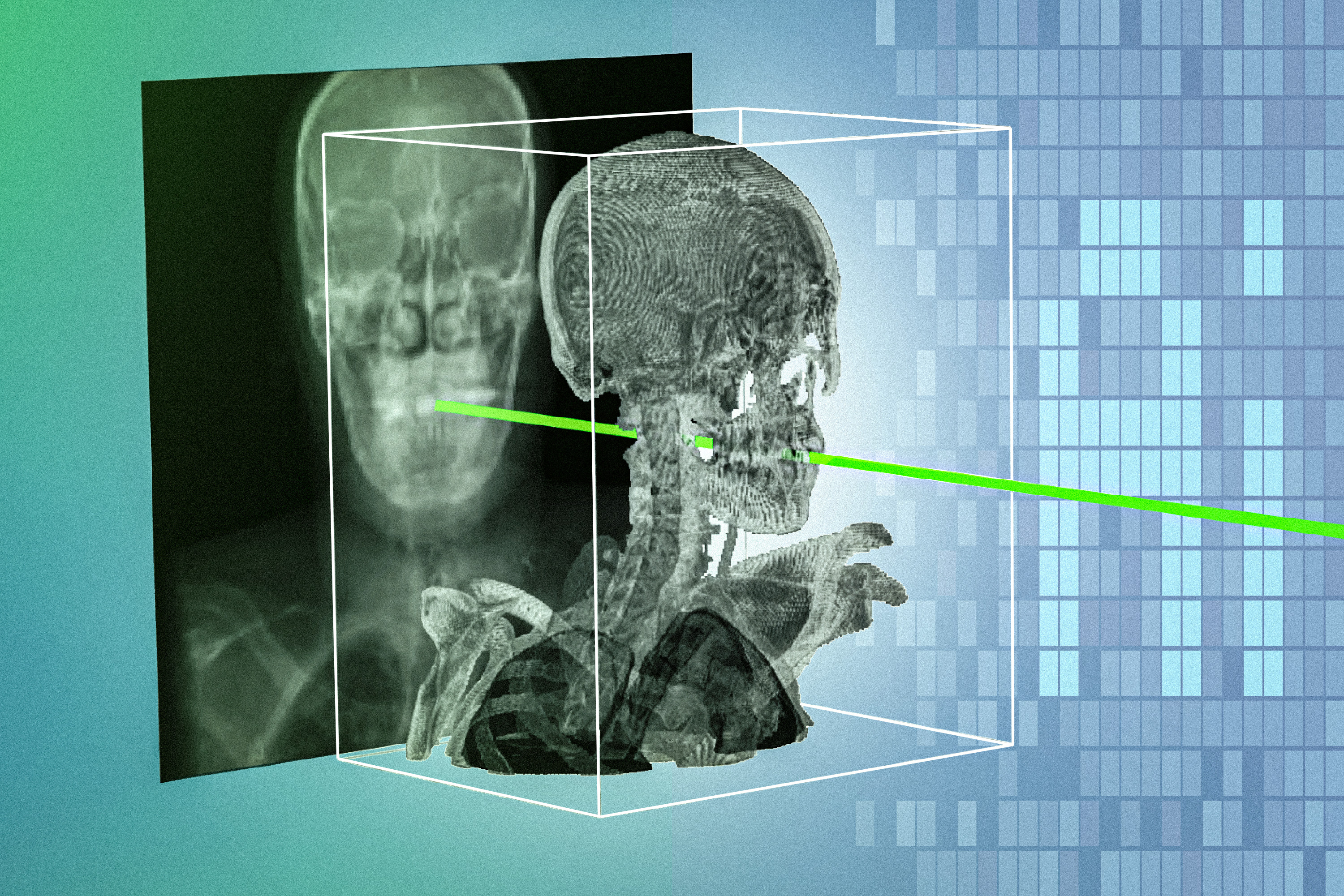
Researchers created a new technique that accurately and rapidly matches X-rays captured during surgery with a patient’s preoperative 3D medical scan. This method could make it easier for clinicians to precisely pilot minimally invasive surgical tools, leading to faster and safer procedures.
Clinicians perform many minimally invasive surgeries using real-time X-rays to help them steer devices like catheters and endoscopes through tiny incisions. But since X-rays are flat images, it can be challenging to determine exactly where surgical tools are located and oriented within the patient’s body, increasing the risk of complications.
To help localize surgical devices, clinicians may manually align X-rays with preoperative 3D medical images, such as CT scans or MRIs. Artificial intelligence tools designed to streamline this process struggle to align images robustly for all patients, making them infeasible in practice.
This new system, developed by scientists and clinicians at MIT and collaborating institutions, uses an AI model that adapts to each patient in only about five minutes. The model automatically matches one patient’s X-rays with 3D scans in a matter of seconds, and with sub-millimeter precision.
Named xvr (which stands for X-ray volume registration), it outperformed existing AI methods by an order of magnitude across a wide range of patients, body parts, and medical procedures.
“A majority of Americans live more than an hour away from a center that can perform noninvasive procedures, like emergency stroke interventions. An hour in stroke time is incredibly substantial. Making these procedures easier by combining 2D and 3D information enables these types of highly specialized life-saving procedures to be more accessible to much broader parts of the population,” says Vivek Gopalakrishnan, a postdoc in the MIT Computer Science and Artificial Intelligence Laboratory (CSAIL); a recent graduate of the Harvard-MIT Program in Health Sciences and Technology; and lead author of a paper on xvr, which appears today in Nature.
He is joined on the paper by his advisor Polina Golland, the Sunlin and Priscilla Chou Professor of Electrical Engineering and Computer Science (EECS), a principal investigator in CSAIL, the leader of the Medical Vision Group, and co-senior author of the paper; and Neel Dey, a former postdoc in the Medical Vision Group who is now an investigator at Harvard Medical School and Massachusetts General Hospital as well as co-senior author on the paper. Additional co-authors include David-Dimitris Chlorogiannis, a researcher and clinician at Harvard Medical School; Andrew Abumoussa, a neurosurgeon at St. Luke’s Marion Bloch Neuroscience Institute; Anna M. Larson, a pediatric clinician at Shriners Children’s Hospital; Nazim Haouchine, an assistant professor of radiology at Harvard and Brigham and Women’s Hospital; Darren B. Orbach, a physician and scientist at Boston Children’s Hospital; and Sarah Frisken, an associate professor of radiology at Harvard.
Making X-rays more informative
In many minimally invasive surgical procedures, like angioplasty to open blocked arteries, clinicians insert instruments through a tiny incision and use a high-speed mobile X-ray scanner to generate images that allow them to visualize the procedure from any angle.
But to guide surgical tools without accidentally damaging other tissue, clinicians must align real-time X-rays with the patient’s preoperative MRI or CT scan. This process, called registration, helps them determine where the tool is in relation to anatomical structures.
“It takes decades of training for a clinician to become skilled enough to see grainy, 2D images and understand how everything is oriented. We want to make these 2D X-rays more informative, so it becomes safer and easier to do these life-saving procedures,” Gopalakrishnan says.
Manual registration methods are slow and burdensome, requiring the clinician to guess the position of a surgical instrument by punching numbers into a computer or clicking anatomical landmarks on a screen.
To streamline the process, researchers are developing AI models that can predict 2D/3D registration. But people have such diverse anatomy that a model which works well for some patients may fail for others.
A lack of high-quality annotated medical image data makes it difficult to train a deep-learning model robust enough to adapt to many patients, Gopalakrishnan says.
Rather than trying to make a machine-learning model that can be applied to all patients, the researchers built a model designed to adapt extremely well for the specific patient.
“We tailor this one specific model for this one specific patient, and it doesn’t matter if it works on other people because there will be different models for those people,” Gopalakrishnan adds.
Patient-specific machine learning
Xvr takes one patient’s preoperative 3D scan, like an MRI or CT, and uses it to generate thousands of synthetic X-rays from many angles, producing about 1,000 images each second. It uses a physics-based simulation of the X-ray process to ensure these synthetic images are realistic.
“Instead of generating data from nothing, like some types of generative AI, this physics simulation is entirely based on the CT scan or MRI from this patient. Because xvr creates patient-specific data in a purely physics-based manner, there is no room for hallucinations,” Gopalakrishnan says.
The xvr framework uses these simulated data to train an AI model that can accurately align this patient’s 2D X-rays with their 3D image scan in a matter of seconds.
But while such a registration model is highly accurate, it would take about 12 hours to train from scratch for each patient, making it impossible to deploy in an emergency. To make the process faster, the researchers used xvr to pretrain a more versatile AI system, called a foundation model, that can quickly adjust to each new patient.
They collected whole-body 3D medical scans from more than 2,000 patients covering a wide range of ages, image modalities, and regions. Xvr used these diverse data to generate synthetic X-rays and train a foundation model to perform 2D/3D registration.
This pretrained model can adapt to a new patient in about five minutes, and performs registration with the same accuracy as if it had been trained from scratch.
“So now you can get patient-specific accuracy but also in a very rapid time frame,” Gopalakrishnan says.
The team tested the model on the largest available dataset of real 2D/3D registrations, incorporating data from five hospitals that covered dozens of bones and organ systems in adult and pediatric patients.
Xvr significantly outperformed other AI-based methods in accuracy and robustness, while operating fast enough for emergency surgeries. The model could also be used to improve the performance of robotic surgery technologies.
In the future, the researchers hope to focus on making xvr faster for real-time deployment, conducting further studies to verify its reliability in additional situations, and extending the system to handle more complex scenarios, like moving body parts.
“For the past two years, we’ve been carefully developing this algorithm and validating it. Now, we are collaborating closely with surgical robotics companies and clinical groups to turn this research into useful tools for navigation or deployment,” Gopalakrishnan says.
This work was funded, in part, but the National Institutes of Health (NIH), the MIT CSAIL-Wistron Program, the MIT-IBM Computing Research Lab, the MIT Jameel Clinic, the MIT Health and Life Sciences Collaborative, and the Chou Family Transformative Resea

Get In On Pre-Order Discounts for the New Mac Mini and Mac Studio Before They Launch Next Week
Note: MacRumors is an affiliate partner with Amazon. When you click a link and make a purchase, we may receive a small payment, which helps us keep the site running.
All of these deals are pre-order discounts on the 2026 Mac mini and Mac Studio, which officially launch on September 22. Regarding the Mac mini, you can get the 16GB RAM/256GB SSD Mac mini for $879.99, down from $899.00, and the 16GB RAM/512GB SSD model for $1,069.99, down from $1,099.00.
In terms of upgrades, Apple said the Mac mini with the M6 chip delivers up to 40% faster CPU performance, up to 4× faster performance for AI tasks in particular, up to 2× faster graphics performance, and up to 2× faster storage speeds compared to the previous-generation model with the 10-core M4 chip, 32GB of unified memory, and 2TB of storage.
If you're on the hunt for more discounts, be sure to visit our Apple Deals roundup where we recap the best Apple-related bargains of the past week.
Deals Newsletter
Interested in hearing more about the best deals you can find in 2026? Sign up for our Deals Newsletter and we'll keep you updated so you don't miss the biggest deals of the season!
This article, "Get In On Pre-Order Discounts for the New Mac Mini and Mac Studio Before They Launch Next Week" first appeared on MacRumors.com
Discuss this article in our forums
15 leaders on the economic indicators companies should watch
If you’re only focused on a few economic metrics to run your business, you may miss what’s right in front of you that can help you course correct and drive growth. Some useful economic indicators don’t show up in financial news. Others get media coverage, but leaders may overlook them thinking “that doesn’t apply to us.”
We asked members of the Fast Company Impact Council what economic indicators companies should pay more attention to. Fifteen of them weighed in with the data they think deserves more attention or a closer reading.
1. SPEED OF REGULATORY CHANGES
I believe we should focus on the speed of regulatory changes rather than traditional charts and data. In fast-paced fields like artificial intelligence and data, rules change so quickly that companies often struggle to keep up. A business might look successful today, but one new regulation can completely change what it is allowed to do. Therefore, watching regulatory trends gives you a better view of your future than looking at quarterly financial reports. Companies that pay attention to these changes early stay ahead, while others are left striving to catch up. — Denas Grybauskas, Oxylabs
2. HEALTHCARE COSTS
The fastest growing, least managed, and most unsustainable cost for business today is healthcare. The United States spends more than $5 trillion on healthcare each year. Companies are experiencing significant cost increases with no end in sight. Employers have the power to break—not just bend—the cost curve, and they may be the only ones who do. Leveraging innovative and AI-powered benefits solutions, employers can take the power into their own hands and build a future that makes it easy for their people to access high-quality, affordable healthcare while reducing costs to their businesses. — Glen Tullman, Transcarent
3. LABOR-FORCE PARTICIPATION RATES
I suggest that companies pay close attention to the labor-force participation rate. Especially by region and demographic group. The unemployment rate is calculated only from people in the labor force who are working or actively seeking employment. Participation shows how much of the population is engaged. Leaders should pair occupation-level job postings, skills, and wage data to create a clear picture of labor supply and where talent pipelines are breaking down. — Paul Toomey, Geographic Solutions
4. AI TIME-TO-FIRST REVENUE
Artificial intelligence is dramatically compressing the distance from idea to first dollar, so it’s crucial to measure your company’s time-to-first revenue. In science and deep technology, AI is poised to accelerate discovery and R&D: There, the measure to watch is cost per experiment. Every physical experiment tends to cost months and serious money, but AI models and automation are beginning to compress that loop and its cost by orders of magnitude. Cost per experiment sets how many shots on goal you get before the money runs out. Measuring and managing that cost can help you turn your moonshot into an investable venture. — Andrea Carafa, UC Santa Cruz
5. COST AND AVAILABILITY OF MONEY
For companies connected to real estate, design, construction, or other capital projects, the most revealing indicator is often the cost and availability of money—not simply the headline interest rate. Credit conditions influence whether organizations can fund expansion, workplace investment, and transformation. But financial signals should be read alongside policy direction and workforce expectations. The numbers tell us what is possible. Cultural and political context helps reveal what is likely. — Susan Watts, SPACECRAFT
6. TEACHER RETENTION DATA
An unexpected economic indicator is teacher retention data. It sounds like an education metric, but it’s a regional workforce indicator hiding in plain sight. A district losing experienced teachers loses the pipeline that feeds local employers—the students who would have graduated ready for skilled trades, healthcare, advanced manufacturing, or technology roles. Companies track unemployment and job openings closely. Few track teacher attrition, even though it moves years ahead of the labor numbers everyone else watches. The right question for any company hiring in a given region: Is the local teacher shortage about to become our hiring shortage? — Kellie Lauth, MindSpark
7. INDICATORS THAT DRIVE THEIR BUSINESS
No single economic indicator matters in isolation because every indicator is ultimately a proxy for human behavior. Companies should focus on the indicators that best reflect the people who drive their business—customers, employees, investors, or partners—and interpret them through the lens of their mission, strategy, and objectives. Purpose first, systems second. Tools, including economic indicators, only have value when they improve decisions. — Andrea Montecchi, Oliver Wight Americas
8. FOUR INDICATORS OF A PRODUCTIVE WORKFORCE
Strong health systems, education access, food security, and resilient local infrastructure are leading indicators of a productive workforce and a stable economy. Investing in children isn’t separate from economic growth. It’s a strong predictor of both. — Michele Walsh, UNICEF USA
9. THOSE THAT AFFECT YOUR CUSTOMER
If you’re selling toys to parents, watch wages, childcare costs, and consumer sentiment, not headline GDP. We build software for founders and small teams, so I track small business optimism and early-stage funding activity. Those indicators tell me whether clients will greenlight new work next quarter. Pic