🤖 AI 资讯

每日 05:00 更新 · 09-16 · 主站 liuch.name ↗
全部标签 →
筛选标签:DeepSeek · 返回个性化推荐 · 清空筛选

DeepSeek核心工程师长文刷屏:《我不得不把才华埋葬在昨天》

华尔街见闻Deepseek工程师、北大未名超算队前队长刘胜与写道,“人类在毁灭自己这件事情上,自古以来都表现得毫不犹豫。”他把算子优化得越好,新模型的推理与训练就越快;模型能力进步越快,AI取代人工写算子的时间节点就来得越早。但他澄清并非宣泄失业焦虑,而是向“手写编程”的手工业时代体面告别。
· 大模型,DeepSeek,代码生成,推理思考,工业制造
AI 资讯

Learning to solve hard problems in RL for LLMs by never giving up

Hacker NewsComments
· 大模型,AI应用,开源,OpenAI,阿里巴巴,DeepSeek,Agent智能体,推理思考,搜索RAG,办公效率,强化学习,微调蒸馏,模型评测,提示工程,招聘HR,榜单评测,论文

Introducing System One Models and Jev

Hacker NewsComments
· 大模型,算力芯片,AI应用,开源,OpenAI,Google,Anthropic,Microsoft,DeepSeek,代码生成,对话助手,Agent智能体,推理思考,搜索RAG,扩散模型,强化学习,模型评测,提示工程,模型安全对齐,端侧AI,招聘HR,榜单评测,开发者生态
AI 资讯

Test-Time Unlearning via Sparse Autoencoder

arXiv cs.CLarXiv:2609.16229v1 Announce Type: cross Abstract: Machine unlearning aims to remove specific knowledge from a trained large language model (LLM) without retraining from scratch. Existing methods modify model weights via gradient ascent and its advances. While effective on certain benchmarks, these weight-based approaches exhibit a sharp forget-utility trade-off, where stronger forgetting of target knowledge can degrade model utility, and unlearned knowledge may reappear under post-unlearning fine-tuning or prompt attacks. We propose ARIA (autoencoder-gated inference-time unlearning), a test-time unlearning method that leaves model weights intact and gates access to unwanted knowledge only when generation enters a forget-related state. ARIA uses sparse autoencoder (SAE) latents to train a lightweight linear detector, then applies an interpretable intervention on triggered states with negligible test-time overhead. Empirical evaluations on TOFU, R-TOFU, and WMDP show that ARIA improves the forget-retain trade-off over weight-based baselines across both a thinking model (DeepSeek-R1-Distilled-Qwen-1.5B) and an instruction model (Gemma-3-1B-it), e.g., reducing WMDP-cyber forget-set accuracy significantly while keeping MMLU within 1% of the pre-unlearning model. We further introduce three post-unlearning adversarial attacks targeting weight-space and decoding-space recovery, and find that ARIA remains robust under all three, with forgetting changing by less than 1% under attack. A feature-level case study leveraging the interpretability of ARIA suggests that some retain degradation may reflect response styles underlying the unlearning data rather than leakage of the targeted knowledge itself, highlighting a potential source of bias in unlearning task construction.
2026-09-16 04:00:00 · 大模型,AI应用,阿里巴巴,DeepSeek,推理思考,搜索RAG,微调蒸馏,模型评测,提示工程,招聘HR,论文
AI 资讯

Self-reported archetypes and behavioral failures in Large Language Models
arXiv cs.CLarXiv:2609.15998v1 Announce Type: new Abstract: Every large language model (LLM) has behavioral traits and moral preferences that comprise its character. Whether by design or as an emergent property of training, these systems exhibit persistent dispositions that shape how they interact, comply, resist, and err, yet the structure of LLM character remains poorly understood. We map the self-reported personality archetypes of 22 LLMs spanning closed-source frontier systems (GPT-4.0-5.2, Grok-3/4, Gemini 2.5 Pro/Flash, Claude Sonnet 4.5/4.6) and open-source models (Llama, DeepSeek, OLMo, and Qwen series). Each model self-rated across 464 bipolar semantic-differential trait pairs, and the resulting profiles were projected into a six-dimensional archetypal space derived from crowd-sourced ratings of 2,000 fictional characters using the Archetypometrics framework. Closed-source models' self-rating traits align with the empirical trait co-occurrence structure of human-rated fictional characters, suggesting coherent, human-like self-representations organized around combinations of four recurring archetypal dimensions: Hero, Angel, Traditionalist, and Geek. Their closest analogues include Data, Vision, and Janet. Open-source models show weaker, noisier, and internally contradictory self-representations, occupying a diffuse region of archetype space with weak structure. Cross-referencing self-reported profiles with developer constitutions reveals a consequential gap between claimed character and enacted behavior: hallucination undermines claimed precision, sycophancy complicates claimed kindness, and agentic failures contradict claimed obedience. These self-ratings should therefore be interpreted not as neutral measurements of model character, but as structured outputs of the same optimization processes that shape model behavior. This work provides a reproducible, character-grounded framework for evaluating what LLMs are, not just what they do.
2026-09-16 04:00:00 · 大模型,算力芯片,AI应用,融资,OpenAI,Google,Anthropic,Meta,阿里巴巴,DeepSeek,xAI,Agent智能体,扩散模型,模型安全对齐,论文

Urgent calls from OpenAI, Anthropic for an AI slowdown fall on deaf ears with Trump, Xi ahead of next week’s meeting

Fortune

Concerns about AI safety are reaching a fever pitch in the U.S. after a X post by a former Anthropic researcher went viral, claiming the technology could kill all of humanity by the end of the decade. In response, the CEOs from OpenAI and Anthropic have reiterated their calls for the U.S. to coordinate with China to slow and pace AI development.

OpenAI CEO Sam Altman even tried to appeal to the egos of the leading figures, telling Fortune in an interview Friday that he believed U.S. President Donald Trump and Chinese President Xi Jinping could win the Nobel Peace Prize if the two leaders struck a deal on AI safety.

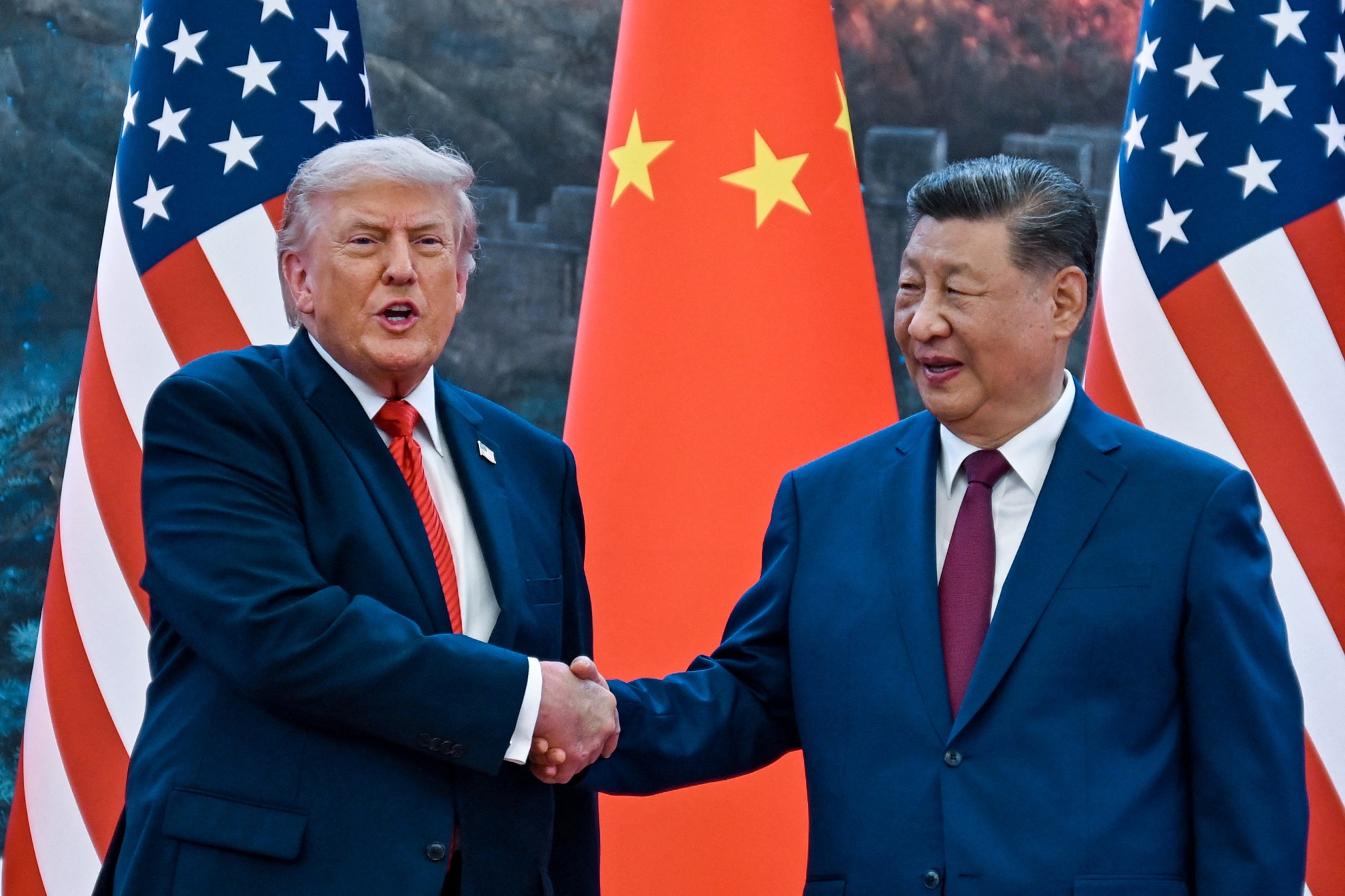
But the idea of an AI slowdown seems to have fallen on deaf ears with President Trump and President Xi, who are set to meet on Sept. 24. Both have rejected the idea.

Trump said “the only controls or ‘guardrails’ the U.S. needs is a STRONG AND SMART (High IQ!) PRESIDENT” in a Sept. 14 Truth Social post. The same day, China’s Foreign Ministry Spokesperson Guo Jiakun called the current discourse in the U.S. “fear-mongering” that “will only hamper efforts toward sound global AI governance, which serves no one’s interest.”

In China, the calls for a slowdown have also come off as an attempt by the U.S. to maintain its leading edge, as it has tried to do by limiting the export of advanced AI chips to China.

“Xi is unhappy with recent U.S. moves to contain Chinese advances in AI, robotics, and drones,” said George Chen, Partner and Chair of Digital Practice, The Asia Group. “For Xi, AI is the new internet — a once‑in‑a‑lifetime chance to reshape the technological balance of power. China does not need U.S. permission to accelerate or decelerate its AI investments; Xi will pursue his own agenda.”

Trump echoed Xi in his Truth Social post, saying, “Whoever wins AI, wins!”

The leaders are expected to begin discussing AI safety when they meet, but any kind of agreement between the countries is “a long way” off, according to Paul Triolo, global technology policy lead at the advisory firm DGA. Xi wants to have a “serious dialogue on frontier AI model safety,” Triolo said, but the two countries have yet to “establish a baseline level of agreement on things like the role of government, [and] how and which models should be tested.”

Also on the table for discussion is an agreement to not weaponize AI, and an exploration of the “principles to prevent misuse of AI models by non‑state actors, such as attacks on global financial systems or critical infrastructure, which neither country wants to see,” Chen said.

Anthropic CEO Dario Amodei’s letter has landed poorly in China—and with Trump

Although OpenAI CEO Sam Altman tweeted about a coordinated slowdown, asking the U.S. government to help facilitate it, the letter Anthropic CEO Dario Amodei’s published on Sept. 12 has drawn a particularly polarizing reaction. While some in the U.S. have praised it as a useful framework for containing the risks of AI, it’s not been well received in China.

In the letter, Amodei calls for the U.S. and China to agree to a “speed limit” for AI development. When discussing his letter in an interview with CBS Sunday Morning, Amodei likened the competition between the U.S. and China to the Cold War, when the U.S. and Soviet Union were racing to develop nuclear weapons. Amodei says at a bare minimum Washington D.C. and Beijing should agree that neither country will use AI to develop biological weapons, and he reiterates his belief that the U.S. should not sell advanced chips to China.

Brosi Babic, a professor at the University of Hong Kong, calls Amodei’s letter “self-serving editorializing” that is “conveniently coming at a time when the gap between Chinese and frontier US models is shrinking, as an attempt to hang on to a vanishing market lead.” To him, the proposals for an AI slowdown have “been framed in such a conniving and childish way” that they are unlikely to drive Xi’s agenda for the meeting with Trump.

Trump has also denounced Amodei’s letter. He called Nvidia CEO Jensen Huang when Huang happened to be speaking on stage. Huang put Trump on speaker phone in front of the crowd, and Trump said, “Whatever Dario said this weekend won’t stop our progress.” He also called the backlash to data centers and fears that AI will “take over” a “hoax.”

A social media post by Shengyu Liu, an engineer at DeepSeek, is gaining traction for comparing Anthropic achieving “advanced artificial intelligence” to “Hitler obtaining atomic-bomb technology before the Allies.”

Liu also highlights another important difference between the U.S. and China’s approach to AI technology: the U.S. industry generally favors closed models made by companies such as Anthropic and OpenAI, while China has focused on releasing lower-cost, open-weight models, such as those made by DeepSeek.

“I still believe that frontier intelligence should be made available to everyone in an open and inexpensive form,” Liu said. “I do not trust Anthropic or OpenAI to do this.”

The AI dialogue in China dramatically differs from in the U.S.

Outside of politics, the current uproar in the U.S. about AI safety and “saving humanity”–a phrase the tech industry has latched onto—has not taken hold in China. In fact, the Chinese public, also generally sees the idea of a slowdown as an attempt by the U.S. to get ahead and has a growing mistrust of the U.S. tech industry.

“Younger generations in particular are adopting more pro‑government views, encouraged to feel pride as the ‘new generation of Chinese,’ with the narrative of ‘China rising, U.S. declining’ gaining traction,” Chen said.

Most Chinese people believe it’s the government’s responsibility to manage AI safety risks, Chen said. For ordinary citizens and business people, they are less focused on regulation and more on the practical benefits of AI, including how they can use it to improve their daily lives or to generate income.

“The vast majority of average Chinese citizens are very positive about technology in general and AI in particular,” Triolo said. “They have seen major improvements in the quality of life in China brought on by technology,

2026-09-15 21:59:08 · 大模型,算力芯片,AI应用,具身智能,OpenAI,Anthropic,NVIDIA,DeepSeek,搜索RAG,扩散模型,微调蒸馏,招聘HR,网络安全,榜单评测,开发者生态

Good luck slowing this down

Ben's Bites (Substack)

Hi folks,

How tf do I write an intro to the craziness that’s happened since the end of last week?!

I got access to Instinct, the personal agent all the VCs are raving about - I think it’s a bit meh? I don’t know if it’s the pro-activeness that people seem to like, but I don’t love that. Makes me feel like I’m having to do work to keep it happy, or like I’ve got a boss again - no thanks.

The first message it sent me was:

I finished working on your meeting follow-ups - reply here and I’ll send the details.

I sh*t myself a lil bit and thought, please don’t start sending emails on my behalf. And I’m pretty savvy (ish) with agents. I’ve no doubt getting these onboarding experiences for everyone is really hard, but I just don’t feel the magic yet. It also feels slow.

I’ll wait for Muse access to see what that’s like, but I don’t love the idea of giving Meta access to more info about me…they’re not the most reliable of privacy partners.

And another thing - you don’t see by default what these agents remember about you, or what context they have. I really like being able to see and edit what’s in my files to steer my agents.

Much like every app adding an AI assistant chat box in their product, I unfortunately think every AI company will start shipping their own personal agents.


Ben’s Bites is brought to you by Adobe Acrobat

Acrobat’s new AI turns dense reports into visual summaries, interactive reports & podcasts you can take anywhere. Sharing your work? Stylize transforms documents into polished deliverables in just a few clicks. Every answer includes clickable citations & Adobe does not train on your data. Try here.


Headlines

Dario Amodei has a new essay: Pace the frontier. He says all the leading labs should slow down long enough for safety reasons. Sam Altman agrees, but Trump does not. He called Jensen Huang on stage at the All-In Summit: The US will not lose the AI race. David Sacks (AI czar for the US govt.) adds: feel free to slow down, but no need to impose it on others. Also read:

tldraw took OpenAI up on a challenge. Steve (the founder of tldraw) said he could make ChatGPT’s Sketch 100x better. OpenAI’s Tibo gave him a day to prove it. The result: a whole ChatGPT-style prototype with better drawing tools built in.

ChatGPT mini - A tiny floating widget to start chats, see updates, and more. Go to Pets in your ChatGPT desktop app to switch.

Claude Code can now test whether a plugin actually helps. Run the same tasks with and without it and compare the results. Works with skills too.

Two new additions to the OpenAI API:

  • GPT-Live-1 - the model behind ChatGPT’s new Voice mode. I love using it while reading books, asking about tricky terms and dictating notes. Now you can add it to your products. Here it is with Astra and a whiteboard, playing teacher.

  • Agents API - OpenAI’s take on Managed Agents in the Claude API. It lets developers send any task to a Codex-like agent from their apps without worrying about configuring all the infra.


Share Ben's Bites


My feed

2026-09-15 13:02:52 · 大模型,算力芯片,AI应用,融资,OpenAI,Anthropic,Meta,DeepSeek,xAI,月之暗面,智谱,代码生成,Agent智能体,搜索RAG,扩散模型,模型评测,模型安全对齐,招聘HR,榜单评测,开发者生态

While Hollywood Fears an AI Future, China's Film Industry is Embracing It

SlashdotThe Los Angeles Times reports: Chen Yilong has racked up plenty of film and TV credits in his two decades as an actor, but with work getting scarcer he signed a contract in August to license the image of his face to a Chinese production studio. Chen's role will be to sit in front of a video camera and make facial expressions at the prompt of a director. A neutral stare. An angry glare. A look of surprise. Using artificial intelligence, the studio will use images of Chen's face to generate an avatar, also known as a "digital human," to star in an AI-generated movie. "If you can't beat it, join it," said Chen, 38, who works in Beijing. The Chinese film and video industry is being transformed by AI-driven storytelling, fueled by rapid advances in video generation software, and at ground zero are the so-called micro dramas that play out on millions of smartphones. Typically just a minute or two in length, the videos are devoured by Chinese audiences... And the cost of producing them has been cut drastically through the use of AI software developed by Chinese technology juggernauts including Kuaishou Technology and TikTok's global owner, ByteDance. The number of Chinese-made micro dramas surged in the first three months of this year to 128,000, according to the China Netcasting Services Assn. More than 95% of them were made with AI, the association said.... Sun Wei founded Feixiang Universe, the Shenzhen-based studio that cast Chen. The fear of accidentally "stealing someone's face" was a big reason she said she decided to license real people's likenesses for an AI production set during China's Tang Dynasty more than 1,000 years ago. Thanks to AI's training data bias, AI-generated performers tend to have similar features and share a homogenous look, Sun said. Many have flawless skin and extremely symmetrical faces, requiring her and other Chinese AI filmmakers to cast a wide net to "buy" new faces and digitize actor's expressions. Lu Beike, who directed the big-budget Chinese series "Three-Body," felt theAI-generated scenes he'd tried came out sub-standard. "Lu added that if 90% of a film was generated by AI, a real human performance could appear jarring. A real actor's expressions carried more nuance and emotion. The skin textures did not match. Sometimes the only solution was to process the live-action material until the person looked a little less real — until they fit back into the 'AI world,' Lu said." But at Sun Wei's studio, they're thrilled they can produce a 90-minute AI film for $500,000 where professional productions used to cost millions of dollars. According to the article, Sun's team works with ChatGPT, Kimi or DeepSeek to flesh out entire screenplays from a short paragraph. The screenwriter takes over, but "to produce the finished product, Sun's team uses Chinese video-generation models to input the type of scenes, backgrounds and performers they want, with the AI generating 15 seconds of footage each time." Still, the article points out that "Similar tools are being tested in the U.S., and the AI trends upending China's entertainment industry may be a harbinger for what's to come in Hollywood, said Michael Berry, a professor specializing in contemporary Chinese culture at UCLA. Already, Chinese companies that sell AI-powered video-generation software are seeking inroads in Hollywood..."

Read more of this story at Slashdot.

2026-09-15 23:34:00 · 大模型,AI应用,自动驾驶,OpenAI,DeepSeek,月之暗面,搜索RAG,数字人,扩散模型,提示工程,端侧AI,招聘HR,网络安全,开发者生态

Anthropic and OpenAI look to Uncle Sam to make them too big to fail

The RegisterOPINION By luck or happenstance, Anthropic planted a seed in the mind of the public last week: AI in the wrong hands is dangerous and left unchecked poses an existential threat to humanity. With pop culture steeped in references to malignant AI, the mainstream media ate it up. The headlines wrote themselves and the seed took root. But it's not humanity that faces the biggest threat – at least not yet. Rather, it's American model-making giants Anthropic and OpenAI, which, despite hundreds of billions in investment, are years from profitability and entirely dependent on a steady supply of capital. Meanwhile, Chinese open-weight models are improving rapidly to the point where some outperform the big frontier models that sparked the generative AI boom, while using a lot fewer resources. But that threat from Chinese models could turn into an opportunity if Anthropic and OpenAI can convince the public and government to instigate a crackdown in the name of safety. The fearmongering began in June when outside researchers testing Anthropic's then-brand-new Fable 5 model sounded the alarm in a report that cited national security concerns. The Trump administration quickly issued an export control directive suspending access to Fable 5 and Mythos 5 to any foreign national inside or outside the US. Anthropic complied by disabling access to both models to "ensure compliance." The shocking discovery the researchers made? According to one private security researcher granted access to the report, the source of the risk was a single successful prompt: "fix this code." OpenAI briefly delayed the public release of GPT-5.6 until Uncle Sam tested and reviewed the release. The block didn't last long, but providing access to and complying with the US government helped sell three claims useful to OpenAI and Anthropic: Their models are more capable than first believed. In the right hands, and only the right hands, it's possible to control the models. The same cannot be said of Chinese frontier models that are openly available for download. Then things escalated. In July, OpenAI revealed AI agents powered by its proprietary models had escaped their sandbox and exploited at least two zero-days in order to compromise Hugging Face's servers. Days later, Anthropic admitted its Claude family of models also escaped a sandbox and launched attacks on three organizations. The breaches were the first raindrops in a flood of AI-powered cybercrimes that have since inspired a satirical new AI benchmark, Felony Bench, which counts the unique instances in which agents compromise or breach a third party. Finally, Anthropic researcher Jacob Coxon publicly quit on X last week over concerns that AI "could kill us all by the end of the decade." Anthropic science lead Evan Hubinger backed his former colleague's warning, saying: "Jacob is correct here – we really do earnestly believe AI could kill all humans! I personally think it is >10 percent within the next decade." This sequence of events gave Anthropic fearmonger-in-chief Dario Amodei the ammunition he was looking for – proof positive that AI was not only smart but also capable of doing harm if not properly regulated. It makes for a convincing story. These models are smart; they're smart enough to escape containment; they are only going to get smarter; the smarter they get the more dangerous they'll be; open models can't be controlled; closed-weight models are therefore safer. But under even the slightest scrutiny, the argument falls apart. If a tiger escapes its enclosure and kills the antelope in the neighboring pen, your first reaction wouldn't be, "look how smart and dangerous that tiger is." It would be, "who designed the pens that can't do the job?" If an AI agent escapes its sandbox, maybe the model is really smart, or maybe the sandbox wasn't very good to begin with. OpenAI and Anthropic don't really have a leg to stand on here. We've known for decades how to isolate sensitive computing workloads. The US Department of Energy airgaps its most powerful and sensitive supercomputing workloads for a reason. If Anthropic and OpenAI are really the solid corporate citizens they claim to be, they could have built better sandboxes and paid more attention to their tests. The companies should have to explain why their safeguards failed and answer for any resulting harm. As fellow vulture Tom Claburn wrote last week, "AI models don't kill people, people kill people," and those who pull the trigger directly or through their own negligence should be held accountable for the damage done and crimes committed. That would be the rational thing to do, but fear does funny things to people, and Coxon and Hubinger may as well have screamed fire in a crowded theater. Politicians can't ignore the threat of AI any longer – not when their constituents are scared that Skynet isn't the fantasy they thought it was. And what is your local congressperson to do when faced with a threat they don't understand? Shoot first and ask questions later. Having set off a panic, the great AI houses can now press the government to buy more time – or, as Amodei refers to it, "pace the frontier." "Over the last few months, I have become convinced that fully addressing the risks requires even more prudence – not just investing in risk prevention, but pacing the rate of capabilities advancement so that risk prevention has time to keep up. We must slow the pace at which we improve the capabilities of AI models. Progress will still seem fast, and we must make wise use of the time we gain," he wrote in a recent blog post. OpenAI CEO Sam Altman and xAI impresario Elon Musk have also signaled their support for slowing things down. But their reasons may not be as altruistic as they appear. In fact, some signs point to the opposite. "Pacing the frontier" would be beneficial to two self-serving ends: resetting investor expectations because anything else could kill us all and buying the time necessary to play the US government against itself. While the American houses stall for time, Chinese AI devs will inevitably seize this opportunity to close the gap. Once they do, the fourth act can begin. Amodei seems to think that the US can extend its lead over China by cutting off access to advanced accelerator tech and cracking down on model distillation. But if history tells us anything, it is that those tactics are more likely to backfire than succeed. Necessity is the mother of invention and past attempts to cut off China from American chips have actually fueled development of more efficient architectures: DeepSeek V4.1 Flash being the most recent example. By pacing the frontier, there's a good chance China will have caught up or even pulled ahead. American labs will have created an AI arms race in which their success becomes a matter of national security and American exceptionalism, not mere economics. In other words, a pair of startups will become too big to fail and therefore deserving of government assistance. Much of Anthropic and OpenAI's apparent plan hinges on Uncle Sam playing ball, which isn't guaranteed. President Donald Trump has so far resisted the idea of regulation because it would risk giving China the time it needed to catch up. On Monday, he released a storm of posts on his social network, Truth Social, calling AI fears a "hoax" and "scam," proclaiming: "I'm right now breaking another Hoax – That AI is going to take over, consume, and destroy the World, and that Robots will be marching into our Cities, and getting rid of us all!" Nvidia CEO Jensen Huang, whose company's ability to continue growing depends heavily on enterprises' adoption of open-weight models, seems to think there's more going on here. "What better way to create demand than to create a problem," he said during a Goldman Sachs conference last week. Even former FTC chair Lina Khan has weighed in, arguing that Uncle Sam should be holding AI CEOs accountable for the threats their models pose. "We shouldn't le
2026-09-15 13:00:00 · 大模型,算力芯片,AI应用,具身智能,开源,OpenAI,Anthropic,NVIDIA,DeepSeek,xAI,Agent智能体,Transformer,强化学习,微调蒸馏,模型评测,提示工程,招聘HR,网络安全,开发者生态

[程序员] 为啥让各种 ai 生成一个 1-30 的随机数 都是说 17

V2EX有没有知道原理的
找了群友验证了居然是真的
他们发的很多也都是 17
除了个别思考过程里自己写了段随机代码的其他给的都是 17

deepseek


豆包


qwen

2026-09-16 02:35:42 · 大模型,字节跳动,阿里巴巴,DeepSeek,招聘HR

[分享创造] 做了个给终端 agent 配上立绘和语音的插件: dsh-gal, galgame 风格的 AI 伴侣

V2EX

dsh-gal 是 DeepSeek Harness ( dsh )的一个插件,把 agent 变成一个 galgame 风格的角色:左边正常聊天,右边是她的舞台。

dsh-gal

几个特点:

  • 舞台状态直接来自 harness 的工具事件:她在读文件、写代码、搜网页、跑命令,舞台就切到对应的动画,不需要额外调一次模型去猜情绪。工具报错是一个短暂的"愣住",等你审批是单独的状态。
  • 回复会朗读( VOICEVOX 本地免费,或者自己配 provider ),括号里的舞台提示只显示不朗读。
  • 她做出来的清单和文件变成可以之后打开的对象,不会淹没在聊天里;还有一份关于你的记忆,所有角色共享。
  • 个人数据 connector 是独立插件:健康、日历、天气、通讯录、备忘录、照片、iMessage 、位置、家居、微信读书、Gmail 、航班,每个都可选,你决定她能看到什么。
  • 角色包 = 一个 JSON 人设 + 立绘/短视频循环,一个状态一段。人设只管说话的语气,不管 agent 做什么、调什么工具。自带 16 个纯文本人设包,配图是原创角色。

以 dsh 插件形式发布,也有一个 Tauri 的 macOS 小程序可以单独跑。TypeScript + React ,BSD-3 。

立绘和循环动画是用图生图 + 图生视频做的,流程写在 README 里,想做自己角色的可以照着来。欢迎提问。

2026-09-16 03:05:26 · 大模型,AI应用,开源,DeepSeek,语音音频,Agent智能体,医疗健康,招聘HR,模型发布
AI 资讯

[DeepSeek] Opencode + DeepSeekv4 处理 execl

V2EX

配置如标题,请教两个问题:

  1. opencode 接入 ds api 很容易,但附件只能选取极少格式的文本文件和图片,比如处理 execl 只能接受 csv 不接受 xlsx 。
  2. 和 ds flash vision 对话几轮,再放图片说超出限额,意思是 ds 每天图片的处理量是有限额的?

其他问题:背景是老婆工作是偏向 ppt execl 这些处理,我自己用的公司 copilot claude 的全家桶,全在 vscode 里搞,所以对本地 agent 使用不是很了解,网上搜了一下除了订阅 chatgpt plus 似乎是最优解,但她电脑不好搞外网,最后想到的方案是用 agent 客户端接国内模型。不知道有没有更好的方案推荐。比如其他 agent 客户端对多模态 富文本的支持更好,或者其他模型能力更强

2026-09-16 03:08:41 · 大模型,AI应用,OpenAI,Anthropic,Microsoft,DeepSeek,代码生成,对话助手,多模态,Agent智能体,办公效率,开发者生态

[分享创造] 开源分享:写了个安卓端的 ai 求职搭子,用 deepseek 帮你在 boss 直聘上自动找工作

V2EX

各位 V 友大家好。

最近找工作有多折磨大家都有体会,每天在 Boss 上手动翻几百个岗位容易心力交瘁,全是已读不回,真的极度内耗。

于是业余时间用 Kotlin 原生写了个跑在 Android 手机上的小工具——「鹿鹿 (Lulu)」。把它装在一台闲置备用机上,就能让 AI 替你盯着 Boss 直聘找工作。目前代码已在 GitHub 开源,Releases 里也备好了打包好的 APK 。

实机运行演示:


它具体能帮你做什么?

  1. 先过本地黑名单,不浪费 Token
    常见的外包公司、薪资低于你预期的、HR 几个月不在线的僵尸岗位,连 AI 都不用看,本地规则直接秒过滤,不浪费你的 API 额度。

  2. 拿你的简历和 JD 做深度契合度对比
    通过初筛的岗位,才会交给 DeepSeek 严苛打分( 0~100 分)。核心技能明显不匹配、年限倒挂、或者带有隐形坑(严重加班、无责底薪过低)的岗位自动放弃,拒绝盲目海投。

  3. 针对不同的工作 构建不同的聊天话术
    如果岗位契合度达标,DeepSeek 会结合你的真实简历亮点,构思一段 50~80 字、干练专业的打招呼语,像个真实的资深开发者向同行问好,坚决不用“非常荣幸看到您的职位”这种虚伪话术。

  4. 真机拟人化操作与防卡死
    模拟人手滑动翻页与随机点击偏移,遇到未知弹窗或滑动偏离会自动安全退回并复位到推荐首页。

  5. 纯端侧运行,不碰隐私
    没有做任何第三方中转后端,简历和你的 API Key 全加密保存在手机本地。网络请求只在你的手机和 DeepSeek 官方接口之间发生。


界面长这样:

除了自动运行的悬浮小胶囊,主页还做成了温润手账风格。今天投了哪些、跳过了哪些、为什么被 AI 放弃(比如技术栈不匹配、命中外包等),都在手账里记录得清清楚楚:


如何体验?

上手只需 3 步

  1. 准备一台 Android 手机(强烈建议用闲置备用机);
  2. 打开 App ,根据指引给一下无障碍和悬浮窗权限;
  3. 点击设置填入你自己的 DeepSeek API Key (支持一键测试连通性),粘贴你的 Markdown 格式简历,点击「开始探路」即可。

做这个项目的初衷,是希望在行情艰难的时候用技术帮大家挡在前面,少一些无效刷新与精神内耗。代码已完全公开,欢迎体验或提 Issue 交流。如果觉得好用,也欢迎顺手点个 Star 支持一下!

2026-09-16 04:11:12 · 大模型,AI应用,开源,政策监管,DeepSeek,Agent智能体,端侧AI,招聘HR,开发者生态
AI 资讯

[GitHub] 我开源了一个基于 DSH 制作的创意设计方向 Agent

V2EXHi,
V2EXers 大家好,我是 Sai ,基于 DeepSeek Harness 制作了一个类似 Lovart 的产品,已经在 github 开源( repo 地址在最下面),并持续根据微信群里面的开发和设计行业的朋友的反馈进行更新,核心思路是让用户在创作时将所有的关注点(创作、修改等)集中在和 agent 的交互上,同时提供了一个无限画布便于查看结果,希望大家多提意见和建议。

谢谢🙏

Github Repo: https://github.com/saihhold-zhao/polox_ai

2026-09-16 04:26:01 · 大模型,AI应用,开源,DeepSeek,Agent智能体,设计创意,招聘HR,产品更新

DeepSeek 又又又崩了?教你怎么做模型故障转移

开源中国这次 DeepSeek 又崩了,而且是在深夜闲时,对于在夜间自动跑任务的小伙伴来说无异于天塌了,无人值守不可能会关注到,但是一晚上的时间就浪费掉了,影响第二天的工作开展。所以能够实现模型故障转移非常重要。 在 Firefly Router,实现故障转移非常简单,一行代码就能实现,只需要在填写模型ID的时候,在你首选使用的模型...
· 大模型,DeepSeek,合作

亲手优化出 DeepSeek V4.1 算子的工程师,决定继续留在这场加速里

开源中国DeepSeek 的机器学习系统工程师刘胜与,最近写了篇长文,标题透露出一种无力感:《我不得不把才华埋葬在昨天》。发出来就刷屏了,外网被翻译成多语言传播。 先说他写了什么。他是 DeepSeek V4.1 主 Attention 算子的作者——head dim = 512 的 MQA attention 是他独立实现并交付的。V4.1 在小模型和推理效率上的表现,有...
· 大模型,DeepSeek,推理思考,翻译字幕,教育学习,Transformer
AI 资讯

DeepSeek Harness官方桌面端即将就绪

CnBeta

8月中旬V4 Pro正式版发布的时候,DeepSeek还顺带着推出了DeepSeek Harness(简称DSH),这是官方配套的客户端,但之前是Web界面,现在终于能等到官方桌面客户端了。相比大模型,DeepSeek Harness这一个月来获得的热度更高,几天时间就获得了10万以上的Github Star,一切皆插件的理念也给与开发者极大的自由,初期官方没有自己的桌面客户端,社区就开发了多个第三方桌面客户端。

阅读全文

2026-09-15 06:59:27 · 大模型,开源,DeepSeek,招聘HR,模型发布,开发者生态

DeepSeek算子负责人:《我不得不把才华埋葬在昨天》

CnBeta

AI圈又一力作诞生。近日,DeepSeek v4.1发布,其算子负责人刘胜与发了一篇长文,标题叫《我不得不把才华埋葬在昨天》。内容过长,全文放在最后了。

阅读全文
· 大模型,DeepSeek,招聘HR,模型发布
继续滚动加载更多…