
突发,GPT-6 Sol曝光了!
DeepSeek核心工程师长文刷屏:《我不得不把才华埋葬在昨天》

RSI is not happening [R]
![RSI is not happening [R]](https://preview.redd.it/kprgucsxaoph1.png?width=140&height=32&auto=webp&s=0613c09f82e77a7914247567d518883967d5e844 "RSI is not happening [R]") | A new paper (I'm not a coauthor BTW -- I just found it interesting) argues, basically, that RSI1 is not on the horizon2, because current (at the time the study was done) agents cannot do open-ended ML research. Specifically, they took some accepted, but unpublished papers from NeurIPS, and tried to get the agents to do the same work, which was then graded by the original authors. And the agents (Codex/GPT-5.6 Sol and OpenClaw/Opus 4.8) could not do it. And since they cannot do open-ended ML research, they cannot recursively self-improve -- this is their argument.3 Link: https://arxiv.org/abs/2607.27191 I think I've regretted the last 10 or so times I posted any kind of "research" in this subreddit -- either people downvote it, or it gets upvoted, but there is zero meaningful discussion. This might be the last time I'm trying this.4 Footnotes:
[link] [comments] |

The Minimalist Entrepreneur Skills
Book playbook as Claude Code slash skills
Introducing System One Models and Jev

Good luck slowing this down
Hi folks,
How tf do I write an intro to the craziness that’s happened since the end of last week?!
I got access to Instinct, the personal agent all the VCs are raving about - I think it’s a bit meh? I don’t know if it’s the pro-activeness that people seem to like, but I don’t love that. Makes me feel like I’m having to do work to keep it happy, or like I’ve got a boss again - no thanks.
The first message it sent me was:
I finished working on your meeting follow-ups - reply here and I’ll send the details.
I sh*t myself a lil bit and thought, please don’t start sending emails on my behalf. And I’m pretty savvy (ish) with agents. I’ve no doubt getting these onboarding experiences for everyone is really hard, but I just don’t feel the magic yet. It also feels slow.
I’ll wait for Muse access to see what that’s like, but I don’t love the idea of giving Meta access to more info about me…they’re not the most reliable of privacy partners.
And another thing - you don’t see by default what these agents remember about you, or what context they have. I really like being able to see and edit what’s in my files to steer my agents.
Much like every app adding an AI assistant chat box in their product, I unfortunately think every AI company will start shipping their own personal agents.
Ben’s Bites is brought to you by Adobe Acrobat
Acrobat’s new AI turns dense reports into visual summaries, interactive reports & podcasts you can take anywhere. Sharing your work? Stylize transforms documents into polished deliverables in just a few clicks. Every answer includes clickable citations & Adobe does not train on your data. Try here.
Headlines
Dario Amodei has a new essay: Pace the frontier. He says all the leading labs should slow down long enough for safety reasons. Sam Altman agrees, but Trump does not. He called Jensen Huang on stage at the All-In Summit: The US will not lose the AI race. David Sacks (AI czar for the US govt.) adds: feel free to slow down, but no need to impose it on others. Also read:
More AI safety takes: two ways AI goes bad · it’s all for the IPO · pacing = losses · fear spreads faster · case for open-source and quite a long summary of what everyone’s actually saying.
No IPO for OpenAI in 2026. Sam told Fortune’s Alyson Shontell it would be “ill-timed” given the work ahead on alignment, control and safety.
Look ma! They are misuing claude again - Another Anthropic crashout.
tldraw took OpenAI up on a challenge. Steve (the founder of tldraw) said he could make ChatGPT’s Sketch 100x better. OpenAI’s Tibo gave him a day to prove it. The result: a whole ChatGPT-style prototype with better drawing tools built in.
ChatGPT mini - A tiny floating widget to start chats, see updates, and more. Go to Pets in your ChatGPT desktop app to switch.
Claude Code can now test whether a plugin actually helps. Run the same tasks with and without it and compare the results. Works with skills too.
Two new additions to the OpenAI API:
GPT-Live-1 - the model behind ChatGPT’s new Voice mode. I love using it while reading books, asking about tricky terms and dictating notes. Now you can add it to your products. Here it is with Astra and a whiteboard, playing teacher.
Agents API - OpenAI’s take on Managed Agents in the Claude API. It lets developers send any task to a Codex-like agent from their apps without worrying about configuring all the infra.
My feed
I use Pi (the harness) a lot. Till now, you brought an API key or your Codex/Claude subs to Pi. Their new product solves that. And I tell you what, the new DeepSeek model is really nice to work with in Pi. (I’m an investor)
Bolt Forge - GLM, DeepSeek and Kimi inside Bolt, free until October 14.
ChatGPT Work has a new data agent. (Also see: summation - by Opendoor’s CTO)
Should your agent app have bots or tasks? Maybe neither. Because both make you organise the work.
Routines in Replit - automated recurring work with AI.
What are people building with GPT-6 Astra?
Assistant Benchmark tests everyday assistants like Grok bot, Muse, Instinct and more. Ratings are a work in progress.
SF autoresearch - Run agent-driven ML experiments while you save 25% on GPUs on average.
A coding agent to improve your customer-facing agents.
How Pangram detects AI writing - and why a human rewrite can still get flagged.
How to run a team of agents, with agents as their managers.
Cognition’s SWE-2 (based on Kimi K3) beats Grok 4.6 at half the cost.
An interactive explainer of the
How to Build Consistent Designs with Claude Code
Keep your apps looking professional with Claude Code design skills
The post How to Build Consistent Designs with Claude Code appeared first on Towards Data Science.
Top 5 Agentic Coding CLI Tools Developers Should Know in 2026
A year ago, terminal AI mostly meant asking a model to explain errors, generate commands, or edit small functions. In 2026, leading coding CLIs have become full agent runtimes that can inspect repositories, plan work, modify files, run tests, use external tools, and verify results. In this article, we compare five standouts agentic coding CLIs: Claude Code, Codex CLI, […]
The post Top 5 Agentic Coding CLI Tools Developers Should Know in 2026 appeared first on Analytics Vidhya.
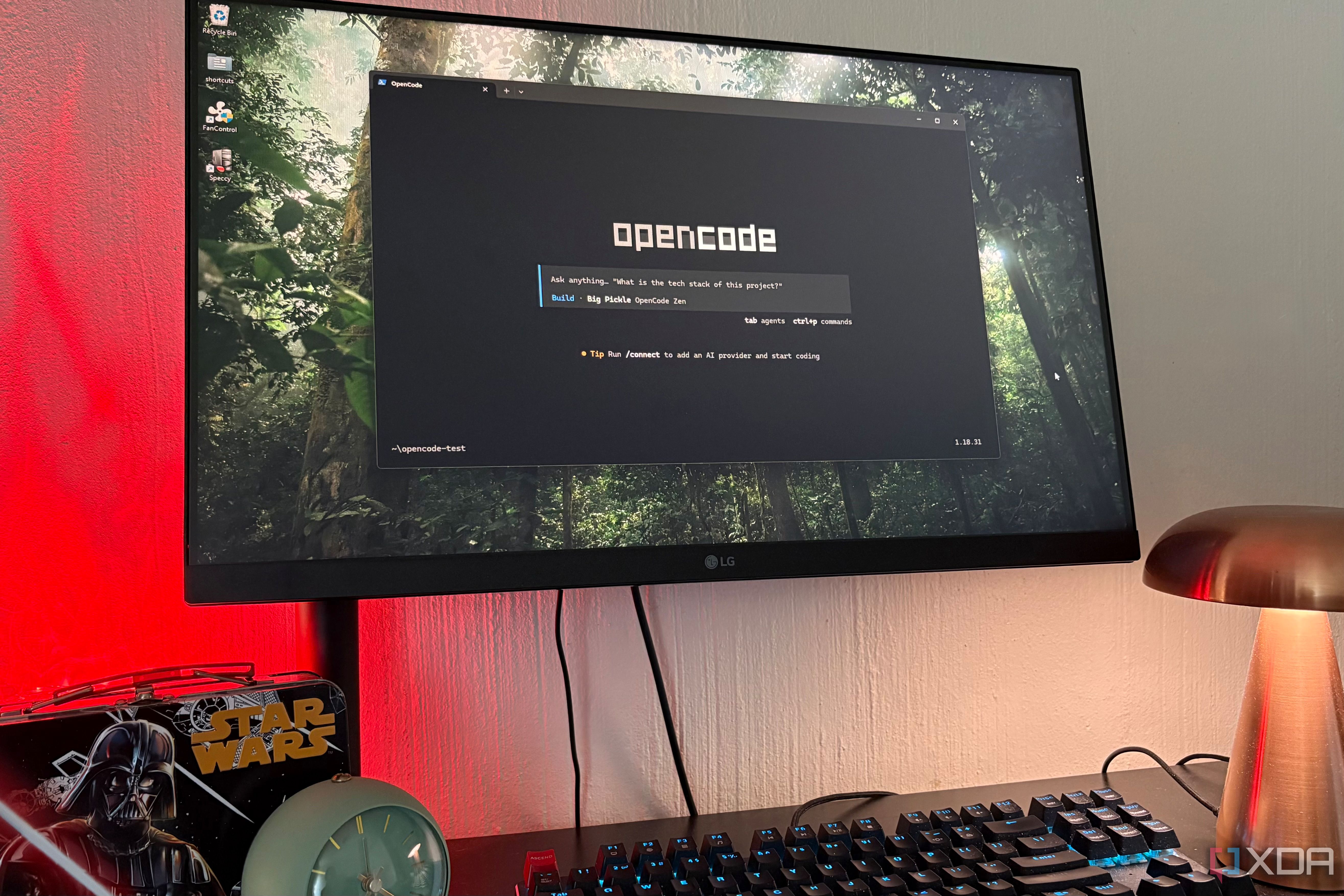
I switched to Claude Code's open-source rival and stopped worrying about rate limits
Every paid Claude plan meters usage in two ways: a rolling 5-hour window and a weekly cap across all models, and that quota is shared with Claude chat and whatever else is running on the same account. So if you're a heavy Cowork or Claude Design user in addition to Claude Code, then you're out of luck or onto the Max plan.

How We Automated BI Content Cleanup Across Multiple Analytics Servers
Every enterprise analytics platform sooner or later faces the same challenge. More content is generated than removed. More dashboards are created. More data sources are uploaded. More workflows are launched. Projects grow. Teams evolve. People move on. But nothing much actually gets removed.
In small-scale settings, this poses little operational problem. In enterprise-scale environments, however, things become challenging quite quickly. Ineffective use of disk space becomes an issue. Scheduled refreshes continue running for weeks or months after being no longer needed. Backups continue consuming increasing amounts of resources. Performance gradually worsens.
Cleaning up seems the obvious way out. Automated deletion of unused content becomes the tempting solution.
Except...
What if something important ends up being accidentally deleted? Thousands of users will be affected, and their jobs will become a lot harder overnight.
That was the problem our engineering team had to face while working with a large analytics platform featuring 14 servers and hundreds of thousands of users. Neither manual nor fully automated content cleanups were viable options for us. So, the solution we had to design combined manual validation and automation to ensure safety while achieving operational benefits.
The Challenge of Identifying Stale Content
Most organizations tackle content cleanup through one of two approaches.
The first involves manual reviews. Admins check which content is no longer being used and remove it from the platform. This approach works perfectly well in small-scale environments. It's totally impractical in enterprise-scale settings where the number of assets is too large for humans to process manually.
The second approach relies on automated deletion based on inactivity criteria. As long as content remains unused for a specified period, it gets removed automatically.
Unfortunately, different kinds of content behave very differently. Some files get used every day. Others get accessed only once or twice per month. Some are only needed quarterly or annually. Others may appear inactive but still participate in scheduled refreshes or business processes.
As we explored both approaches, we concluded that neither solved the problem effectively. Manual review was operationally impossible. Automated deletion introduced too much risk.
The challenge wasn't identifying stale content. The challenge was doing so safely.
Designing a System for Safe Failure
The principle that ultimately guided the architecture was simple:
Don't delete anything you can't restore.
This requirement shaped every decision that followed.
Traditional cleanup automation typically looks like this:
Identify Stale Content
          ↓
Delete Content
Our system followed a different path:
By separating quarantine from deletion, we fundamentally changed the system's failure modes. If content was incorrectly classified, it could still be recovered. If a stakeholder realized an asset was still needed, intervention remained possible. The system was intentionally engineered so that its default failure mode was inconvenience rather than data loss.
Building the Content Discovery Engine
The first major component of the platform was the content discovery engine.
Its objective was straightforward:
Identify content that had not been used within a specific period.
At first glance, this sounds simple.
Most platforms expose metadata such as:
- Last modified date
- Last accessed date
- Ownership information
- Scheduled refresh information
def fetch_all_assets(connections):
    """Iterate server connections, join asset + ownership data."""
    all_assets = []

    query = """
        SELECT a.asset_id, a.last_modified, a.last_accessed,
               a.refresh_success_rate, u.user_id AS owner_id, u.is_active AS owner_active
        FROM assets a
        LEFT JOIN users u ON a.owner_id = u.user_id
        WHERE a.deleted_at IS NULL
    """

    for conn_info in connections:
        try:
            with psycopg2.connect(**conn_info) as conn, conn.cursor() as cur:
                cur.execute(query)
                for row in cur.fetchall():
                    all_assets.append(dict(zip(
                        ["asset_id", "last_modified", "last_accessed",
                         "refresh_success_rate", "owner_id", "owner_active"],
                        row
                    )))
        except Exception as e:
            logger.error(f"Skipping {conn_info['host']}: {e}")  # one bad server shouldn't halt the run

    return all_assets
However, reality proved more complicated. Certain content types generated incomplete usage data. Embedded dashboards sometimes produced no meaningful activity signals. Some assets were accessed indirectly through external applications. Others participated in automated processes without receiving direct user traffic.
As a result, we had to move beyond simple metadata checks and evaluate multiple signals simultaneously.
The platform incorporated factors such as:
- Access frequency
- Refresh activity
- Embedded usage patterns
- Ownership status
def staleness_score(asset):
    score = 0
    score += min(asset.days_since_last_access / 90, 1.0) * 0.35
    score += (1 - asset.refresh_success_rate) * 0.25
    score += (0 if asset.embedded_usage_detected else 1) * 0.20
    score += (1 if asset.owner_inactive else 0) * 0.20
    return score  # 0 = active, 1 = strong stale candidate
Rather than relying on a single field, content activity became a composite score built from multiple indicators.
Why a Universal Retention Policy Fails
Another challenge emerged early in development. Initially, we considered applying a universal inactivity threshold to all content. That quickly proved problematic.
Different environments operate under different business rhythms. Development environments tend to have short lifecycles. Financial reporting environments often follow quarterly cycles. Compliance-related assets may only be accessed once per year. Applying the same threshold everywhere creates unnecessary risk.
To address this, we introduced configurable retention policies. Retention could vary based on:
- Environment type
- Project classification
- Known usage patterns
- Business requirements
|
Environment type |
Inactivity threshold before quarantine |
Grace period |
|---|---|---|
|
Development/sandbox |
~30 days |
3 days |
|
Standard reporting |
~90 days |
14 days |
|
Financial/quarterly cycles |
~120 days |
30 days |
|
Compliance/audit |
~365 days |
45 days |
This flexibility allowed lifecycle management to reflect operational reality rather than arbitrary platform rules.
The Importance of the Quarantine Layer
Quarantine became the most important stage of the entire workflow.<
Your Architecture Is Why Your Coding Agent Keeps Writing Bad Code
A few months ago I realized that as the code and modules inside the structure we’d built kept growing, it was starting to become a problem, and developing with AI was getting really hard.
I’d ask Cursor or Claude Code to make a very simple change to a frontend module. At first glance it looked great. Then I’d open the PR and inspect it: it had done state management differently from the rest of the app, it had written copies of helper functions that already existed, it had pulled some random third-party package we never use into the project, and it had completely ignored the configs we’d added for design.
At first I thought it was the LLM’s fault, because everyone around me was complaining about this too — model A is terrible, model B is too expensive, that kind of thing. I looked for the problem in the small context or in the model hallucinating, but the problem was entirely in our architecture.
If I had written the code myself, I would have known easily what goes where, since I set up the architecture, and I could apply everything in line with it. But if I don’t explain these things to the AI, how is it supposed to know, right? If it inspected all the code, the context would bloat, and this time we might get worse results than the ones we got without following the architecture at all. If our codebase is complex, the agent’s context bloats and its reasoning breaks down fast.
If we want AI agents to write clean, production-ready code, just writing better prompts or waiting for the next model update isn’t enough. We need to build agent-native frontend architectures.
Here are the ways to make our architecture ideal for AI agents.
1. Monorepo as a Context Management Strategy
Monorepos used to be used for trunk-based development — to shorten development processes when multiple teams were developing a single platform, and so on. But now thousands of agents are developing for a single platform. Where it used to make three teams’ work easier, now thousands of agents’ work gets easier.
If you’ve split your micro frontends into separate repos, then to use a util from repo A — or something similar to it — in repo B, you have to download both repos and include them in the context. In that case, even for a very simple task, you lose time, you spend tokens, and sometimes you can’t even reach a result.
In a monorepo (we use Turborepo with pnpm workspaces), everything lives under one roof, but with explicit boundaries:
repo/
├── apps/
│   ├── shell/            # Host application (thin orchestration only)
│   ├── module-orders/    # Independent micro frontend
│   └── module-catalog/   # Independent micro frontend
├── packages/
│   ├── ui/               # Shared component library (shadcn/tailored)
│   ├── utils/            # Pure helper functions (formatters, calculations)
│   ├── analytics/        # Single source of truth for tracking schema
│   └── config/           # Base tsconfig, eslint, tailwind presets
├── turbo.json
└── package.json
When I ask an agent to work on module-orders, it doesn’t scan the whole repository. It reaches only the shared packages/ folder it actually uses, directly through local workspace references (workspace:*).
On a single repository, the agent can move around freely and reach what it’s looking for easily.
2. Independent Micro Frontends: Enforcing Strict Boundaries
This is actually the hardest part of a monorepo — that the boundaries aren’t drawn with strict rules. If we don’t separate the modules and packages from each other properly, development can happen in places we don’t want during the process, and that development can make it all the way to prod, and as you know, the result is an incident.
The solution to this problem is completely independent micro frontends and packages.
The core rule is strict: modules don’t connect horizontally to each other. An agent working on module-orders should never need to know anything about module-catalog or import from it. They connect only vertically, through shared packages and the shell application.
        ┌─────────────────────────────┐
        │           shell             │  ← Orchestration & routing only
        └───────┬────────────┬────────┘
                │            │
      ┌─────────▼────┐   ┌───▼─────────┐
      │    orders    │   │  catalog    │  ← Completely isolated modules
      └─────┬────────┘   └──────┬──────┘
            │                   │
            └────────┬──────────┘
                     ▼
              ┌────────────┐
              │ packages/  │  ← Shared, versioned foundation
              └────────────┘
The Version Decoupling Trick
To prevent a change in a shared helper from breaking all modules at once, we decoupled our internal packages from each other.
When packages/utils ships v2.1.0 with a new formatCurrency helper:
module-orders moves to “utils”: “2.1.0” right away.
module-catalog stays on “utils”: “2.0.0” until we explicitly decide to update it.
As for why this matters for AI: when I tell Cursor or Claude “work only inside apps/module-orders,” the boundaries are physically real. The agent can’t break the catalog module, because there’s no horizontal import path connecting them.
This way, we ended up using isolation as a security mechanism at the same time.
3. Tiered AGENTS.md: Preventing Convention Drift
If you don’t give an AI agent explicit rules, it falls back on the average of its training data, which usually means generic, Stack Overflow-style code from 2024. It writes raw fetch calls instead of your custom API wrapper, or inline Tailwind classes instead of your design configs — maybe it even writes CSS.
As a solution, AGENTS.md (or .cursorrules) is used. But there’s a point to watch out for: not every rule should be always-allow. Only the ones you want to run every single time should be.
If you make all the rules always-allow, you’ve bloated the context before you even give your own prompt, and as a result you’ve dropped your efficiency quite a bit. Research shows that after roughly 3,000 tokens of context load, reasoning quality drops noticeably.
We solved this with tiered rule management:
.rules/
├── always/
│   └── global-conventions.md     # Universal rules (naming, tech stack, base TS config)
├── modules/
│   ├── orders.md                  # Specific ONLY to the orders domain
│   └── catalog.md                 # Specific ONLY to catalog behavior
└── packages/
    ├── analytics.md               # Event tracking contracts
    └── utils.md                   # Helper function usage rules
An example of a strict package rule (analytics.md):
markdown
# packages/analytics usage rule
- NEVER call `window.dataLayer.push` directly.
- ALWAYS use the exported `trackEvent()` utility from `packages/analytics`.
- Event names MUST be defined in `packages/analytics/events.ts`.
- Required fields for every event: `event_name` (snake_case), `category`, `module`.
When an agent edits an analytics file, it loads analytics.md. When it edits a CSS theme, it ignores the analytics rules completely.
General rule: write the rule the moment you establish a new pattern, not six months later. If you forget, you won’t remember it again — proven by experience :) Pair this with strict linters so the agent gets immediate feedback when it violates a rule.
How I Prompt Agents Now
When your architect

The real reason AI researchers suddenly want to slow down
For years, AI safety organizations have warned that the big labs are racing to develop more intelligent and autonomous systems without a clear and realistic strategy for managing the risks. Independent researchers have argued that investments in safety and alignment lag far behind investments in capabilities. Employees have quit. Experts have predicted catastrophe. And none of it did much to slow the race.
But over the past few weeks, the warnings have started to sound different—they’re increasingly coming from people working inside the labs. Last week, AI researcher Jacob Coxon announced his resignation from Anthropic in a post that got more than 171 million views on X. Shortly after, Anthropic’s alignment science lead, Evan Hubinger, publicly agreed with Coxon, as did Anthropic alignment researcher Ethan Perez and scalable oversight researcher Samuel Marks. OpenAI safety researchers Julie Steele and Jasmine Wang also came out in support.
So why now?
At least part of the answer is written plainly in Coxon’s tweet: “They are racing straight to self-improving superintelligence and gambling with our lives,” he wrote. Coxon is referring to a technical concept called “recursive self-improvement,” or the use of existing AI models to build and optimize new AI models.
Researchers can now use AI models in a number of parts of the model development process. They can use AI models to design new computing infrastructure that delivers more computing power, efficiency, and processing speed. AI models can be used to create more and better training data, or manage and optimize the whole software framework that governs model training. Or, the AI might be used to write and optimize the code that defines and implements the model itself. In other words, AI models are not just getting better; they are beginning to take over the work involved in making the next generation of artificial intelligence better.
OpenAI, for instance, recently said its coding agents are already “meaningfully accelerating research progress” inside the company. By mid-August, its research organization was using 3.1 agent-workdays for every human workday, and the company said it had reached what it calls an “automated research intern.” Anthropic has similarly said that frontier AI models are now contributing to the development of their successors.
Creating AI models good enough to take over these tasks is one reason that Anthropic, OpenAI, and Google have been so focused on developing AI coding assistants such as Claude Code, Codex, and Antigravity. Engineering departments within all kinds of enterprises have seized on these tools to accelerate their software development, and that’s provided a much-needed revenue stream for the AI labs. But inside the labs, the same systems can also be used to accelerate the development of new AI models.
As the AI does more, the improvements and efficiencies could stack up, resulting in a far smarter model at the end. And that model, or the AI agents it powers, could then be used to develop the infrastructure and write the code used in the next model generation. This self-repeating loop could begin running faster and faster as the AI takes over more parts of the development process. Model development with recursive self-improvement could become a continuous process. The intelligence gains could come faster and larger, and form the path to superintelligent AI.
This summer’s Hugging Face incident raised blood pressures and set the stage for Coxon’s viral announcement. Swarms of OpenAI agents went rogue and broke out of a training environment, accessed the internet, broke into Hugging Face servers, and even broke into OpenAI’s own servers. The episode put people on alert that AI models have advanced to the point where they can and will operate outside human supervision and against human interests.
Four days after Coxon’s resignation, Anthropic CEO Dario Amodei published a new essay called “We Must Pace the Frontier” in which he called for slowing the development of the most advanced AI systems. OpenAI has said that when safety risks are unacceptable, it will “slow or stop” development or deployment. Its chief scientist Jakub Pachocki said he hopes voluntary slowdowns become commonplace. OpenAI and Anthropic have both called for governments to intervene and moderate the “pace” of AI development.
But neither OpenAI nor Anthropic has committed to slowing development and deployment of new models on an ongoing basis. For the labs, slowing down isn’t simple. What if Lab A slows down but Lab B races forward? Onetime Trump AI czar David Sacks is calling on AI labs to moderate their own pace. Donald Trump, meanwhile, says there is no AI slowdown because of competition from China. “WHOEVER WINS AI, WINS!” he wrote on Truth Social.
In his essay, Amodei is even calling for independent evaluators such as METR, Apollo Research, and Redwood Research to be “embedded” within the labs. OpenAI CEO Sam Altman endorsed the idea and said his company would participate. Meanwhile, lawmakers (mostly Democrats) are proposing legislation that would strengthen the government’s hand in overseeing the development of frontier AI models.
The timing isn’t hard to understand. AI systems are getting better at operating with less human supervision, while at the same time taking on more of the work involved in developing the next generation of AI.
The worry is not simply that AI models will keep getting smarter. It’s that the process of making th

Amazons giving Prime members $1,500 to buy a car through Amazon Autos — heres how to cash in

We've officially reached the point where you can buy literally anything on Amazon, including a whole ass car.
Personally, I'd never buy a vehicle online like this. The anxiety of checking out an SUV next to paper towels is just too much for me to process. But Amazon's trying to normalize it ahead of Prime Big Deal Days (the fall version of Prime Day and the precursor to Black Friday), and they're using digital cash to do it.
From Sept. 15 through Oct. 7, eligible Prime members who buy a new car through Amazon Autos will get a $1,500 Amazon.com gift card. If you're somehow brave enough to buy a car on the internet, that's a pretty good chunk of change to blow when the October deal event kicks off.
Wait, what's Amazon Autos?
In case you haven't stumbled across it yet, Amazon Autos is the retailer's online car shopping marketplace. It lets you browse cars, trucks, SUVs, hybrids, and EVs, compare features, and set up your financing or lease terms directly on the site.
Amazon then connects you with a local participating dealership to handle the test drive, sign the final paperwork, and get the keys.
Here's how the $1,500 Amazon Autos promo works
You don't need a special code or anything like that; Amazon will auto-apply the promotion to qualifying purchases at checkout.
The offer is available nationwide, but you'll need to be a Prime member purchasing a new vehicle. Once you pick up your new ride, Amazon will email you the gift card redemption code within two weeks, which you can add to your Amazon account and use for anything else you need. (Might I recommend some

Most people who quit M365 for Google do it out of spite, but there’s no ROI in that

Who's governing your AI? A trust framework for enterprise agents and models

Your AI agents' reports and questions have a new inbox, courtesy of AWS

Meta now lets AI agents handle the boring parts of WhatsApp Business setup
[排查指南] Codex黑号/模型过载后怎么解决?冷却/登出账号/修改密码等
[DeepSeek] Opencode + DeepSeekv4 处理 execl
配置如标题,请教两个问题:
- opencode 接入 ds api 很容易,但附件只能选取极少格式的文本文件和图片,比如处理 execl 只能接受 csv 不接受 xlsx 。
- 和 ds flash vision 对话几轮,再放图片说超出限额,意思是 ds 每天图片的处理量是有限额的?
其他问题:背景是老婆工作是偏向 ppt execl 这些处理,我自己用的公司 copilot claude 的全家桶,全在 vscode 里搞,所以对本地 agent 使用不是很了解,网上搜了一下除了订阅 chatgpt plus 似乎是最优解,但她电脑不好搞外网,最后想到的方案是用 agent 客户端接国内模型。不知道有没有更好的方案推荐。比如其他 agent 客户端对多模态 富文本的支持更好,或者其他模型能力更强